

A soft, cream-colored, cuddly pudgy character called Jolly is quickly seaming into my world everywhere—from my X feed and YouTube ads to news coverages and the advertising billboards along Highway 101 in the Bay Area. It’s the mascot of Muse, Meta’s consumer personal-agent application that acts on a user’s request to send emails, book travel, open a browser, and even negotiate a better insurance quote.
Muse was downloaded more than 902,000 times in the six days after Meta introduced it on September 8, according to Bloomberg. Ten days after launch, Muse became the No. 1 free iPhone app in America, outpacing ChatGPT, Gemini, Claude on the App Store. In the wake of the launch, Meta shares rose more than 25% by September 24.
Meta has a hit on its hands with Muse, said Evercore ISI analyst Mark Mahaney in a new note.
China tech watchers (including me) quickly realized that domestic companies could benefit from this personal-agent wave—especially tech giants that own their individual ecosystems end-to-end. Chinese tech media Huxiu recently put it in an article titled “Tencent’s AI Story Still Relies on Meta”, and Chinese media Guixingren noted that “The next stop for personalization is Alibaba Qwen’s personal agent.”
What is Muse
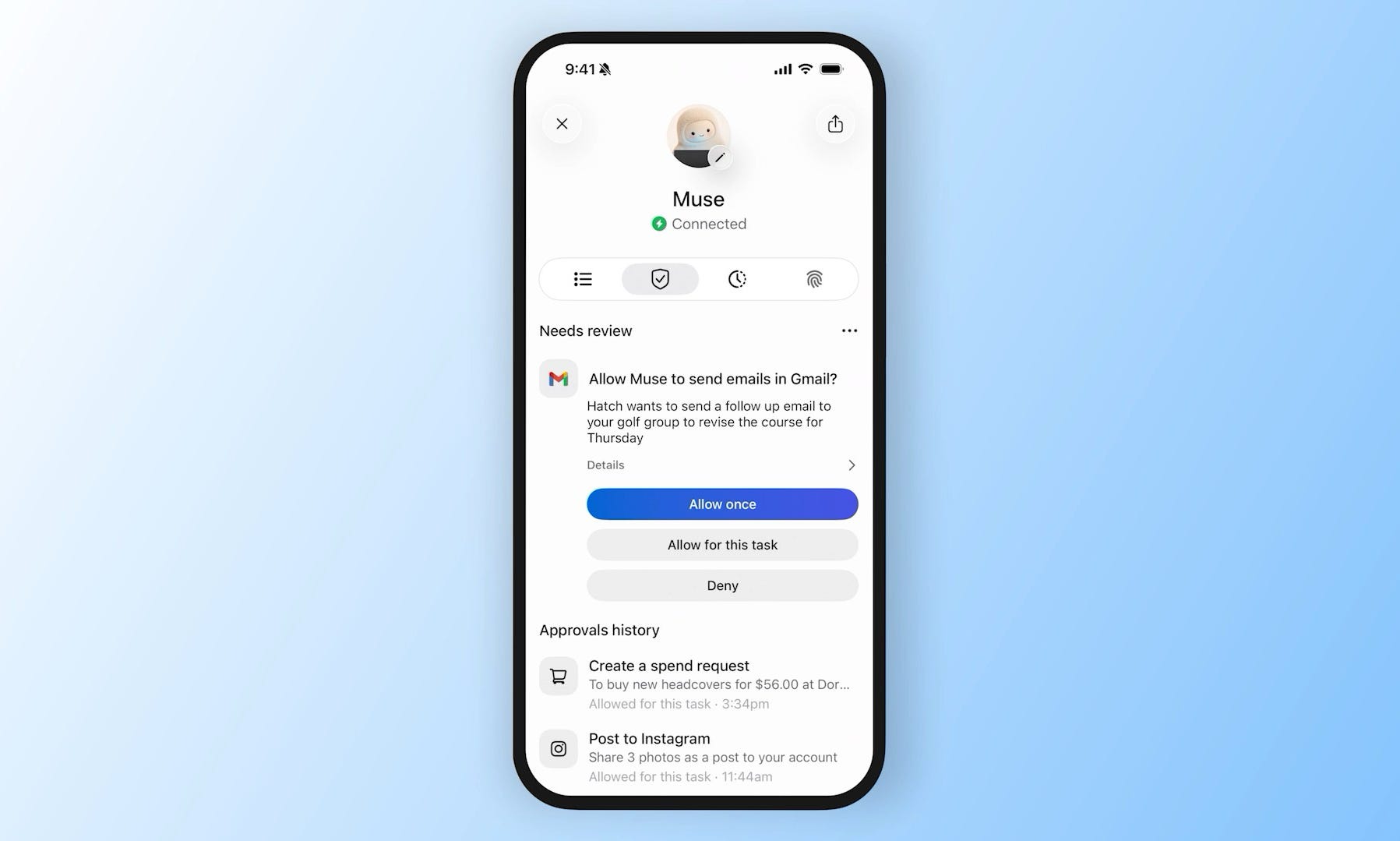
Muse is billed by Meta as “the world’s first personal AI agent built for everyone,” standing in contrast to enterprise AI agents focused on coding and workspace tasks like Claude Code/Cowork and Codex. It’s a cloud-hosted personal agent built on Meta’s proprietary Muse Spark model. Running in a dedicated per-user virtual machine, it remembers what you tell it, gets access to Facebook and Instagram, and is available through its own app, desktop, and WhatsApp.
I’ve been using Muse for a few days now. It can access my email, pull data from my Oura health tracker (via a developer API), and plan my day based on my reminders and calendar—just like a real personal assistant (I named mine Javis from Iron Man, forgive my lack of creativity). It keeps working after the app is closed and pauses for approval before important steps like sending an email. On Xiaohongshu, Chinese users have been sharing how Muse helps them lower AT&T bills and get refunds.
The app’s interface resembles traditional mobile app with a five-tab bottom navigation bar. The main screen is a chatbot, along with a feed aggregating updates from connected Facebook and Instagram accounts, an idea page generating proposals from your conversations from setting a savings goal to canceling random subscriptions, plus a goals page that tracks your tasks.
While I haven’t used Muse for payments yet, official documentation says it checks out through Link by Stripe using one-time virtual cards. At Connect, Meta’s annual developer and product conference, the company announced retailer integrations including Walmart, Instacart, and Shopify.
Security and trust are top priorities for users dealing with personal agents. Meta notes that each user’s agent runs in a dedicated cloud “Muse Secure VM,” with a separate “Sentinel” agent required to approve anything reaching the internet. Muse cannot see passwords or payment details, and every action is logged in an audit trail. Meta says data is not shared with its ad systems, and users can opt out of training.
That being said, given the history of data leaks across other chatbots, I still strongly recommend being cautious before sharing any sensitive or private information with Muse.
The app is free for most of what people need, with $20 and $100 monthly tiers based on usage, and no ads (for now). Meta CEO Mark Zuckerberg said they are exploring a cut of agent-driven commerce such as shopping transactions, but haven’t finalized concrete plans. Truist, a financial services company, projects Muse could add $28.5 billion a year in revenue by 2030.
Part of Muse’s design could be credited to Meta’s acquisition of Manus. In December 2025, Meta announced the $2 billion acquisition of Manus, a Chinese-founded Singapore-based general-purpose agent startup whose Manus agent uses cloud-based VM sandboxes to autonomously plan and take action. The deal however hit snags when China’s Ministry of Commerce opened an export-control review in January 2026. In April, the China NDRC’s security-review office ordered the deal unwound. Four months later, Manus announced that it would operate independently. Tencent was reportedly in talks to become its largest shareholder and its recent valuation rose to $4 billion.