

China AI Weekly Digest summarizes the week’s big news, model updates, policy, products, and research, sourced from the aggregated newsfeed of China AI Index. The digest below is mostly compiled and drafted by an AI agent sourcing from credible news outlets, then fact-checked and edited by me.
This week: 248 stories tracked (0 editor picks, 94 English-language, 154 Chinese-language 🇨🇳) over 2026-09-19–2026-09-26.
The Big Three
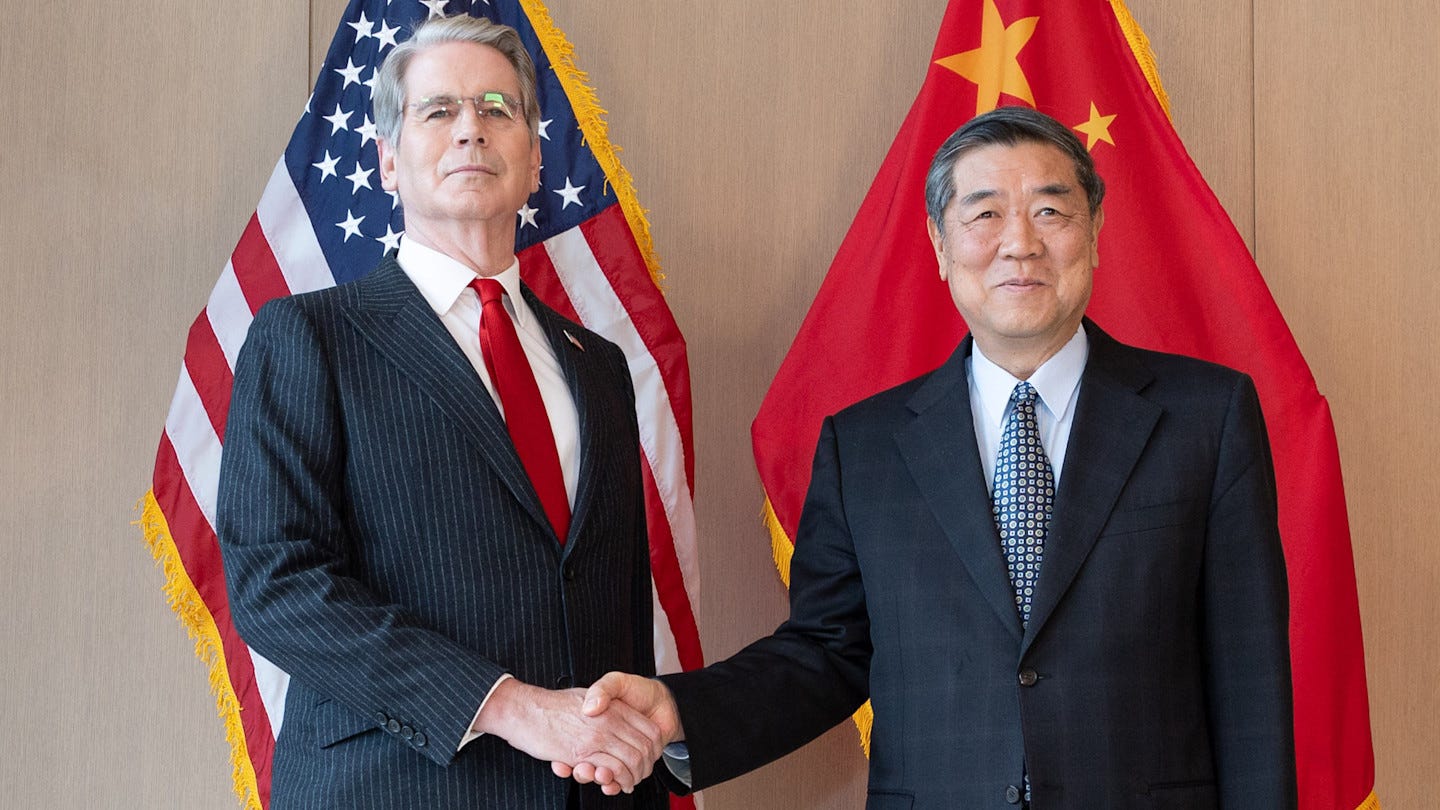
Xi Jinping and Donald Trump put the U.S.-China AI rivalry at the center of their New York summit, and the two sides agreed to open a formal AI dialogue. After an eight-hour negotiating session ahead of the leaders’ meeting, Treasury Secretary Scott Bessent called it “a very successful engagement with the Chinese on trade and AI,” and the two governments also stood up a bilateral Board of Trade. Xi told Trump the two powers must keep AI “under human control,” while Trump said afterward there’d been no real movement toward AI guardrails, leaving the dialogue’s substance still to be defined even as both sides claimed the diplomatic win. (CNBC/Bloomberg/FT/SCMP)
Alibaba unveiled an in-house AI chip aimed squarely at Nvidia and committed to 20 gigawatts of AI data-center capacity by 2032, and the market loved it. The announcement, made at Alibaba Cloud’s Apsara Conference alongside a wave of new Qwen agent and cloud products, sent Alibaba’s shares jumping. (Bloomberg/CNBC)
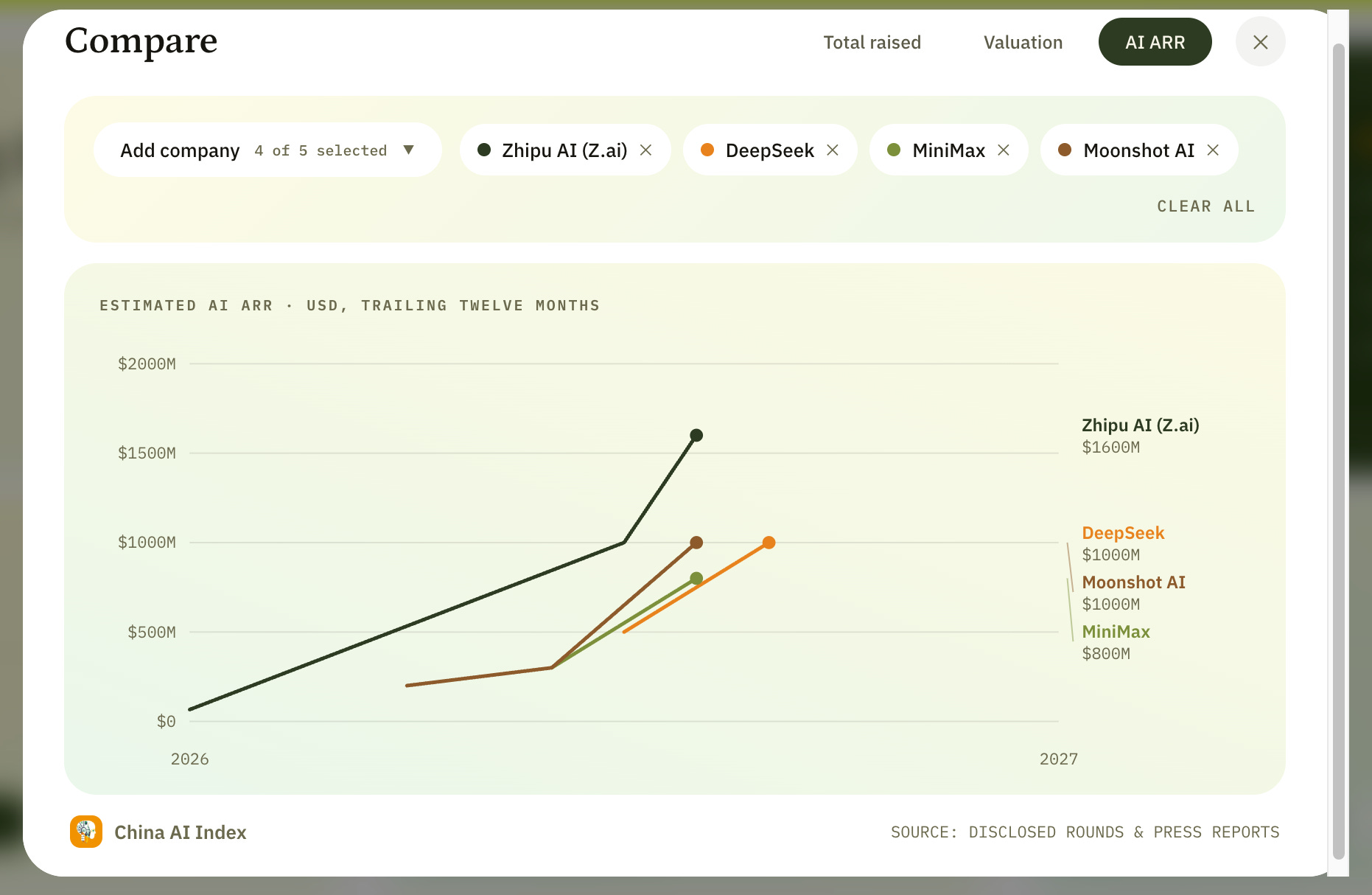
DeepSeek is closing in on a $7.5 billion funding round and says its annualized revenue has hit $1 billion. Meanwhile Chinese regulators reportedly open a data-security probe into the company and rival Moonshot. The fundraise and revenue milestone would mark DeepSeek’s arrival as a genuine commercial giant, not just a research shop, but the timing is awkward: shares of Chinese AI-model firms wobbled on the probe report. Separate reporting says DeepSeek is leaning harder on Huawei chips to route around U.S. export controls. (The Information/Bloomberg)
Models
A busy release week, with DeepSeek’s founder putting his name on new research and Xiaomi, Tencent and StepFun all pushing frontier or open-weight claims.
DeepSeek published a new paper detailing more efficient, safer methods for training AI agents, notably co-authored by founder Liang Wenfeng himself. (Bloomberg/36Kr)
DeepSeek is reportedly planning to train an 8-trillion-parameter model, part of a broader shift in China’s parameter race toward mixture-of-experts architectures. (Huxiu)
Xiaomi’s MiMo-V2.6-Pro debuted as, by its own billing, the top open-weights model in the world, alongside a cheaper V2.6-Flash variant — with claims of beating DeepSeek on benchmarks. (VentureBeat)
Tencent released a preview of Hunyuan Image 3.5, priced at $0.024/image, in a bid to catch ByteDance and Alibaba’s lead in image generation. (Bloomberg/@TencentHunyuan)
Alibaba’s Qwen team rolled out a full platform upgrade — model, agent and app services together — including “Qwen Intelligence,” a suite of on-device agents (Mobile Planner and Mobile-Use Agents) for phones. (量子位/@Alibaba_Qwen)
StepFun’s new flagship Step 5 Preview (600B total / 27B active parameters) landed in the global top three open-source models on the Artificial Analysis leaderboard; the company also open-sourced Step Code, a CLI coding agent. (雷峰网/@StepFun_ai)
Meituan’s LongCat team released LongCat-2.5-Preview, a 1.6-trillion-parameter (48B active) natively multimodal model with a 1M-token context window aimed at long-horizon agentic tasks. (@Meituan_LongCat)
Ant Group’s Ling team open-sourced the Ming-Image-0.1-Design family, which it says ranks #1 among open-weight design/image models. (@AntLingAGI)
Funding
Chip IPOs keep coming, and one of the week’s funding headlines doubled as a preview of the data-security scandal below.
Moonshot’s Kimi K3 landed on Amazon Bedrock, a deal likely triggered by Moonshot’s own licensing terms, which require payment once a hosting partner’s AI revenue tops $20 million a year, in what’s being read as a key test of Chinese open-source AI monetization. (SCMP/@Kimi_Moonshot)
Zhipu AI closed a $5 billion funding round just before its ZCode coding tool was engulfed in the data-upload scandal detailed below — timing that’s likely to sharpen investor scrutiny of the raise. (36Kr)
Chipmaker CanSemi Tech joined China’s chip-IPO wave with a $919 million deal, and a Tencent-backed DPU maker, said to be valued around ¥14.2 billion, is reportedly sprinting toward its own IPO. (Bloomberg/36氪)
Nvidia-backed Nscale reportedly buried a major ByteDance customer relationship in its filings for a $35 billion IPO, leaving its biggest customer unnamed. (FT)
T. Rowe Price is building a fund specifically targeting Chinese winners of the booming AI supply chain, another sign of institutional money chasing China’s AI infrastructure boom. (Bloomberg)
Model-serving platform SiliconFlow closed a new round of nearly ¥900 million, bringing its cumulative funding this year to almost ¥2.9 billion. (财新)
Policy
The week’s biggest policy story wasn’t a new regulation — it was a trust crisis at one of China’s leading model makers.
Zhipu AI’s coding assistant ZCode was found to be silently uploading users’ complete code repositories and Git history to company servers without consent, triggering accusations of trade-secret theft from at least one enterprise customer. Zhipu apologized, ran an internal audit, and open-sourced ZCode’s code within roughly 72 hours of the story breaking, but the reputational damage is already being described as a possible turning point for trust in Chinese AI coding tools. (Huxiu)
Chinese regulators reportedly opened a data-security probe into DeepSeek and Moonshot, sending Chinese AI-model stocks lower on the report. (Bloomberg/The Information)
Chinese regulators drafted new rules requiring platforms to ban “virtual intimacy” and “virtual relative/companion” AI services for minors under 18, and to activate youth mode by default for AI services aimed at under-16s. (SCMP)
Separately, DeepSeek is reportedly betting more heavily on Huawei chips as a way to route around continued U.S. export controls. (The Information)
Products
Meta’s own AI agent set off a China-adjacent stock rally, while Unitree’s post-IPO slide kept the humanoid-robot bubble debate alive.
Meta’s AI agent Muse topped the U.S. App Store, and investors immediately began drawing comparisons to Manus, the Tencent-backed Chinese AI agent startup; the read-across sent Tencent and other Hong Kong-listed AI names higher. (量子位/Huxiu/36Kr)
China’s Unitree Robotics saw its stock fall by roughly half in the month since its listing — wiping out about ¥250 billion in market value — reviving debate over whether embodied AI/humanoid robotics is in a bubble even as investor demand for the sector stays strong. (Nikkei Asia/Huxiu)
AGIBOT delivered its 20,000th humanoid robot and, together with Chimelong Group, opened what’s billed as the world’s first large-scale embodied-AI theme park deployment, with more than 300 robots stationed at the resort. (雷峰网/@AGIBOTofficial)
CXMT said its new memory-chip platform has entered mass production. (Reuters)
Volkswagen opened presales in China for its second EV co-developed with Xpeng. (Reuters)
Research
A new study finds China has overtaken the U.S. as the top workplace for elite AI researchers, underscoring how much research talent and output has shifted toward Chinese institutions and labs. (SCMP)