

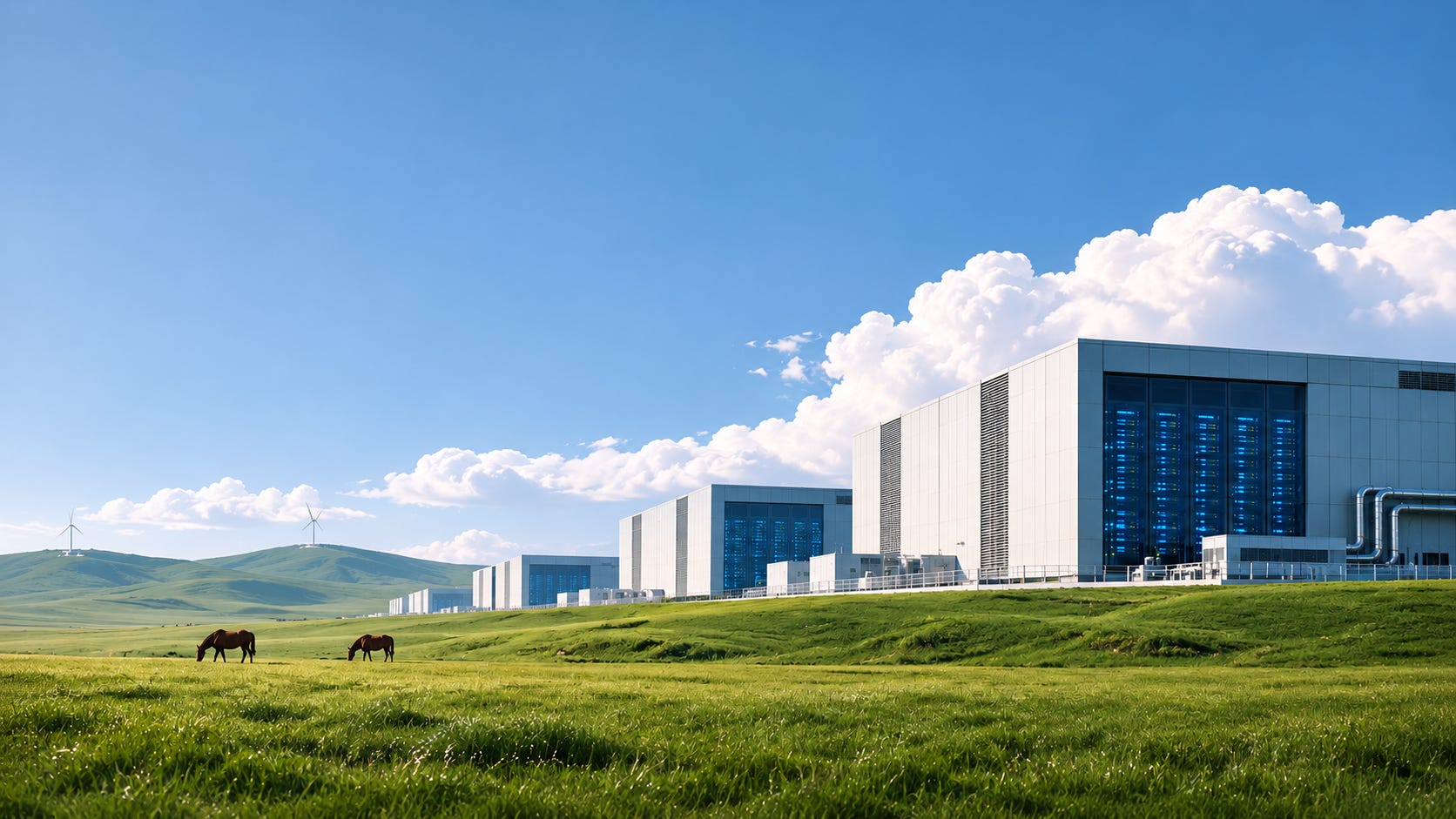
Ulanqab is a city few people outside China have heard of. But thanks to the AI boom, this once-unknown city in Inner Mongolia has made headlines in major international media outlets.
With its cool climate and cheap electricity, Ulanqab is an ideal place to house tens of thousands of AI chips. Building massive data centers on the grasslands, far from residential areas, also reduces immediate noise and complaints.
As computing power and investment pour into the city, Ulanqab has also become a magnet for young workers seeking opportunities in the AI boom.
I found this first-person article from Chinese outlet Daily People fascinating. It tells the story of Ulanqab’s transformation from a modest agricultural city into one of China’s emerging AI computing hubs, through a local data center worker. Below is the translation (generated by AI, edited by me).
Few would have imagined that a small Chinese city, long dependent on agriculture and livestock farming and consistently ranked near the bottom in economic output, would become an unlikely beneficiary of the AI boom.
In 2023, Chinese short-video platform Kuaishou began operating its first self-built data center in Ulanqab, a city in northern China’s Inner Mongolia region. This April, AI startup DeepSeek advertised several high-paying data center positions there, offering senior operations and maintenance engineers monthly salaries of up to 30,000 yuan ($4,200). In July, reports emerged that DeepSeek was planning to build a massive AI data center in the city.
In just a couple of years, data centers have sprung up across Ulanqab. Once-deserted grasslands are now dotted with sprawling server facilities.
In the past, most data centers in Ulanqab were used for cold storage, which requires relatively little real-time human intervention. Jobs were scarce, wages were modest, and few people would travel there specifically to work in data center operations.
But as demand for facilities processing data in real time has surged over the past two years, young workers from across China have flocked to the grasslands, hoping to land jobs keeping the servers running.
Training programs have proliferated, while social media posts advertising data center jobs in Ulanqab paint an enticing picture: low barriers to entry, quick training, opportunities for workers with vocational college degrees, strong demand and generous pay.
The reality, however, is more complicated.
The labor market is rapidly becoming saturated, and employers are raising their hiring standards. Positions once open to vocational college graduates from any academic background increasingly require relevant qualifications. Some employers are considering hiring only bachelor’s degree holders. China’s notorious unofficial hiring cutoff at age 35, long associated with white-collar jobs in major cities, has also reached these remote grassland facilities.
Among job seekers, Ulanqab’s data center employers have developed an informal hierarchy. ByteDance, the parent company of TikTok, is regarded as the “Tsinghua University” of the industry—a reference to one of China’s most prestigious universities. Huawei, meanwhile, is known as its “Whampoa Military Academy,” a reference to the institution that trained generations of Chinese military leaders.
As AI continues to advance, that hierarchy could change again.
Zhang Liwei (a pseudonym) has worked in data center operations and maintenance for five years, rising from an entry-level shift operator to shift supervisor and engineer. A Ulanqab native, he has witnessed his hometown’s transformation from a modest agricultural city into one of China’s emerging AI computing hubs—and watched young people arrive from across the country in search of jobs. Here is his story, told in his own words.
Watching Over Servers on the Grasslands
This is my fifth year working in data center operations in Ulanqab.
For years, hardly anyone knew what I did for a living. I never expected my job to suddenly become so popular.
Over the past two years, data centers have become a hot topic. Relatives have even come to me asking how their children can get into the industry, sometimes taking out notebooks to write down my advice.
Even elderly residents in my neighborhood have heard about data centers.
Once, when I was coming home from work, an older woman struck up a conversation and asked what I did. When I told her I worked in operations and maintenance, she was surprised.
“Is that the data center thing?” she asked. “I’ve seen videos about it. Lots of rich people are coming here to invest.”
Construction of data centers in Ulanqab began accelerating after 2024. Last year in particular, scaffolding and green construction netting seemed to be everywhere.
It reminded me of China’s massive infrastructure-building campaigns during the COVID-19 pandemic. One building would go up, and before you knew it, another would appear.
Most of these data centers are concentrated on the grasslands south of the city, with facilities packed closely together.
Those areas used to be vast stretches of wasteland where hardly anyone went. Growing up, I always assumed they would remain abandoned forever.
I never imagined they would one day become standardized industrial parks, much less that Ulanqab would become so closely associated with AI.
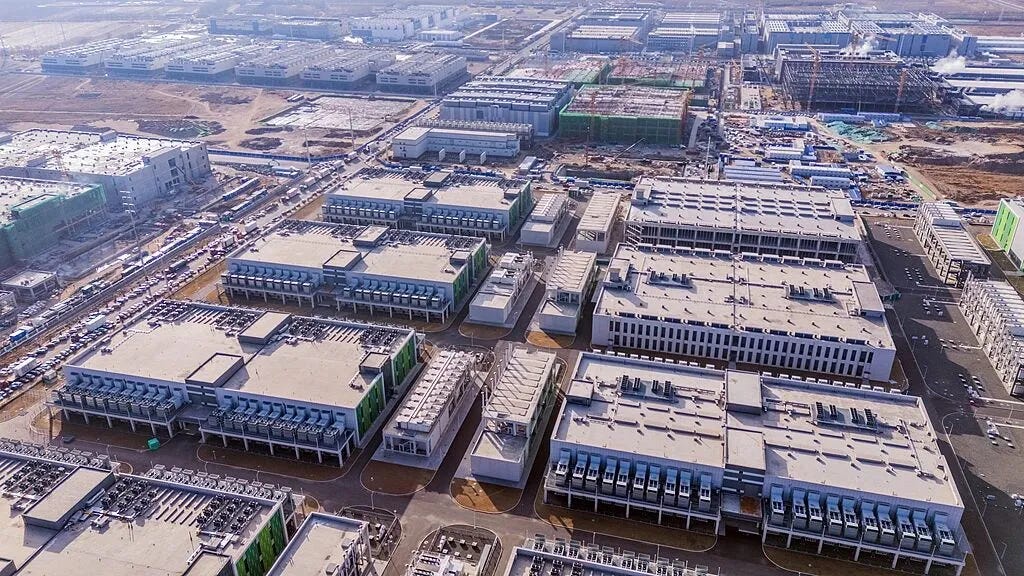
Ulanqab had never seen anything like it—or this much investment. Projects worth billions of yuan were suddenly arriving in the city.
There’s an old saying that Ulanqab has three treasures: Potatoes, oat noodles and heavy sheepskin coats. For a long time, agriculture and livestock farming were the backbone of the local economy.
It was around 2013 that Ulanqab began positioning itself as a hub for big data.
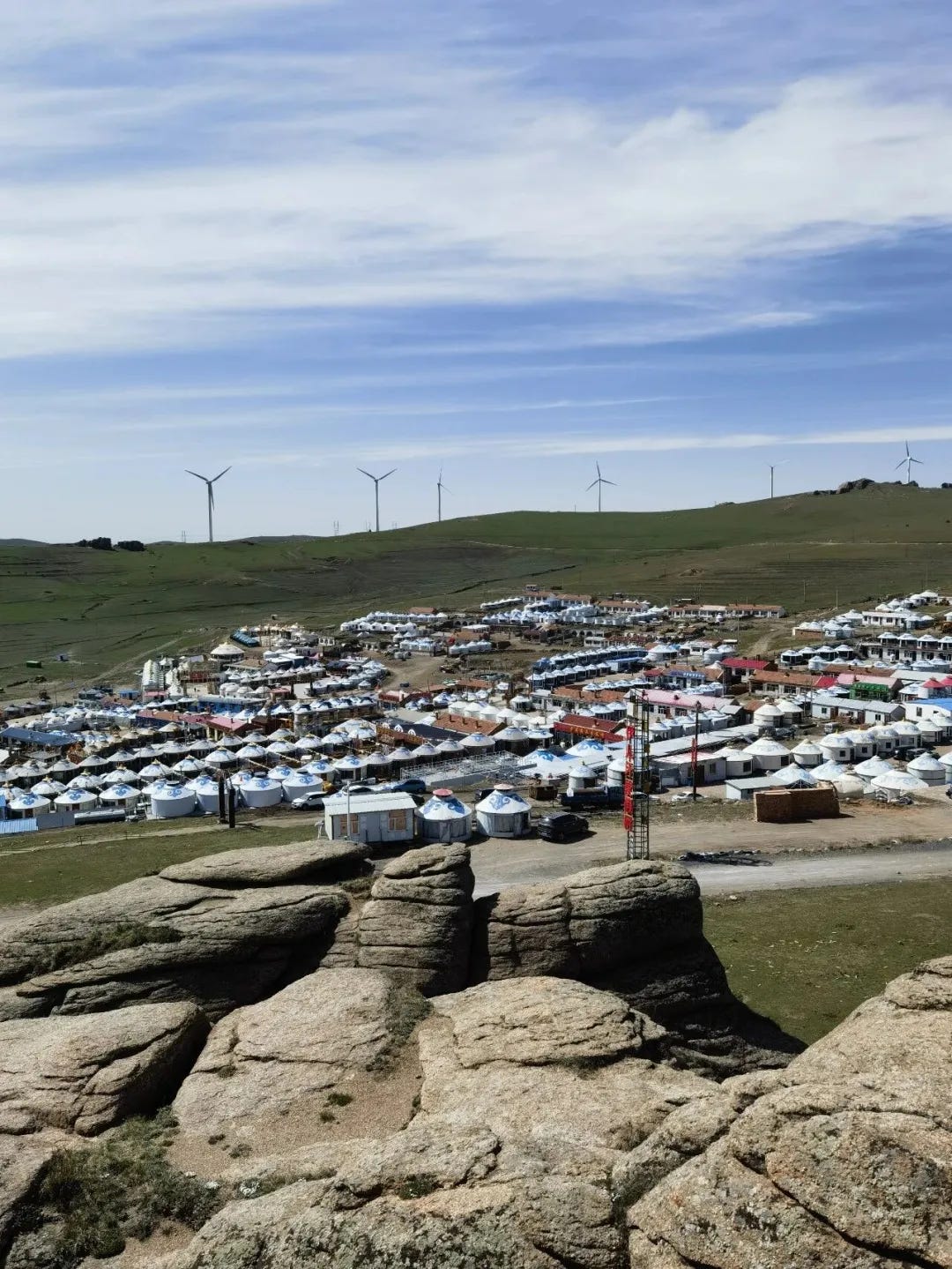
Electricity here is cheap. Wind turbines are everywhere, turning the region’s strong winds into power. Compared with industrial electricity rates in eastern China, power can cost roughly half as much.
The climate is also cool, with low temperatures that make the area ideal for housing server racks. The natural cooling helps reduce energy consumption, making Ulanqab well suited for computing infrastructure.
In 2022, China formally launched its nationwide “East Data, West Computing” initiative, aimed at shifting computing workloads from the country’s economically developed eastern regions to resource-rich western areas.
Ulanqab became part of a national computing hub under the initiative. Its development priorities gradually shifted from conventional data centers toward high-density AI computing clusters.
Over the past two years, the changes have been extraordinary.
Hiring has also surged. My company alone recruited several thousand people last year, including more than 1,000 interns.
But the hiring standards have risen. In 2024, some companies were still recruiting people with virtually no qualifications. By last year, they were hiring only vocational college or university graduates with relevant academic backgrounds, and applicants had to be under 35.
I’ve heard that next year, some employers may stop accepting vocational college graduates altogether and require bachelor’s degrees in fields such as big data.
For people without relevant qualifications, training programs have become one of the few ways to enter the industry.
Since last year, all kinds of training centers have opened. Many are run by current or retired data center workers. Because the instructors often know operations managers at data centers, they can sometimes refer trainees for jobs. But at best, those connections only secure an interview.
The courses aren’t cheap. One former colleague left his job to start a training business. He charges nearly 20,000 yuan ($2,985) per student and opens a class only when 60 people have enrolled.
That means a single class can generate more than 1 million yuan in revenue. And he runs more than one class a year. His training center is among the larger ones in Ulanqab’s Jining district, employing more than 40 engineers as instructors.
The data center boom has also revitalized Ulanqab’s housing market and brought more people into the city. There’s a residential complex near the data center where I work. Annual rents used to be just 4,000 to 5,000 yuan ($600-$750). After the data center opened, they jumped to more than 10,000 yuan ($15,000).
Housing prices have also risen. In one resettlement housing complex about a 10-minute drive from the data center, prices used to be well below the citywide average. Last year, they climbed to nearly 2,000 yuan ($300) per square meter.

In the past, when people asked what I did for a living, I struggled to explain it. I’d usually say, “It’s kind of like watching security cameras in a residential complex.”
These days, telling people I work in data center operations feels prestigious. When my colleagues and I go out to eat, people joke that we wouldn’t trade our jobs even for an “iron rice bowl”—the Chinese term for a secure government or state-sector position.
Apparently, data center workers have also become more desirable in the marriage market. I’ve had women in my neighborhood whom I’d never met approach me to introduce potential partners. I was so startled that I quickly turned them down.
The work can be stressful, but outside the job itself, there’s little to worry about. Most residential complexes near the data centers have been leased by the companies as employee housing. When you join, you can get access to a 120-square-meter apartment shared by two employees, each with a separate bedroom.
In the past two years, many data center campuses have also built their own employee dormitories, often with even better facilities. Some feel almost like hotels. On our days off, my colleagues and I go into the city. It takes about half an hour to reach the busy downtown area, where we can go to bars, sing karaoke or play pool.
Most of my coworkers come from outside Ulanqab. Many had never seen grasslands before moving here. Sometimes we go camping together on the grasslands nearby.
Data center operations is actually a great job for saving money. The cost of living in Ulanqab is low. When I was in vocational college, I could get by on 500 or 600 yuan ($75 to $90) a month. Even after starting work, I spent only a little more than 1,000 yuan ($149) monthly.
Now I earn more than 10,000 yuan ($1,493) a month, which allows me to put aside a substantial amount of money.
Earning More Than 10,000 Yuan a Month—But One Mistake Can Be Disastrous
I studied renewable energy at a vocational college, a field that had almost nothing to do with data center operations. Before graduation, I was an intern on an automobile assembly line. The factory operated three shifts. Robots assembled the cars, while my job was to stand nearby and tighten screws.
I spent 12 hours a day doing that. It was exhausting and monotonous. After six months, a coworker told me that data centers seemed poised for growth and were hiring operations staff. Neither of us had ever heard of the job. We knew absolutely nothing about it.
But I didn’t want to keep working on the assembly line, so I figured I might as well take a chance.
Back then, the entry requirements were almost nonexistent. Age, education and work experience barely mattered. Even someone over 35 with no background in the field could get hired. Once you joined a data center, experienced workers would teach you everything from scratch.
The pay wasn’t great at first. I started as an intern earning 2,000 yuan ($300) a month. After graduating six months later, my salary increased to 4,500 yuan ($672). More than a year later, it rose to a little over 5,000 yuan ($746).
Operations and maintenance is actually a broad category covering several positions. At the bottom are shift operators, who must work overnight shifts and earn the least. Above them are deputy shift supervisors and shift supervisors, followed by assistant engineers, engineers and, at the top, operations managers.
For my first few years, my salary remained fairly low. I worked hard to move up, switching between data center companies and even spending some time working at a facility in southern China.
The turning point came in 2023. At the time, I was still working in the south. I’d been promoted from shift operator to shift supervisor and was earning around 6,000 yuan ($896) a month.
The data center operations community is small. When something happens at a data center in Ulanqab, word quickly spreads to workers in Hebei, Shaanxi and eventually across the country.
In the second half of 2023, I started hearing former colleagues say things like, “Zhonglian Data is about to take off. VNET is about to take off. Ulanqab is finally going places.” The more I heard, the more anxious I became. I thought I needed to prepare for another job change and get back to Ulanqab before I missed the boom.
I’d assumed that even if new data centers opened, they would be relatively small facilities. I never imagined that the companies arriving would be major technology players.
Previously, most of Ulanqab’s data centers had been used for traditional cloud services and cold storage. By 2024, however, the new projects were almost entirely focused on AI computing and GPU clusters. The customers were coming to Ulanqab to run large AI models.
The first phase of Kuaishou’s large, self-built data center in Ulanqab began operating in 2023. In 2024, the company completed the main structure of the project’s second phase, a 4 billion-yuan ($597 million) expansion designed to accommodate 150,000 servers. Established digital infrastructure companies also signed a series of AI computing deals.
At the 2024 China Green Computing Power and Artificial Intelligence Conference, Ulanqab secured five projects with combined investments of 28.2 billion yuan. The partners included major Chinese data center companies such as VNET.
This year, Ulanqab’s ties to the AI industry have grown even stronger. In April, DeepSeek advertised positions in Ulanqab for senior data center delivery managers and senior operations engineers, offering monthly salaries of 15,000 to 30,000 yuan ($2,239 to $4,478), with 14 months of pay a year.
In July, Bloomberg reported that DeepSeek planned to build a massive AI data center in Ulanqab with a power capacity of approximately 1 gigawatt. The project would combine company-built facilities with leased capacity, with some computing resources expected to come online between late 2027 and early 2028.
In August, ByteDance’s cloud computing arm, Volcano Engine, also formally signed an agreement to establish operations in Ulanqab.
Since returning to Ulanqab, my salary has increased significantly. When I first moved back, I was promoted to assistant engineer and began taking home more than 10,000 yuan ($1,493) a month. My pay has risen by several thousand yuan since then.
There are still entry-level shift operators earning 5,000 to 6,000 yuan ($746 to $896) a month, but overall, salaries across the industry have been increasing.
According to Ulanqab’s statistics bureau, the average monthly wage at privately owned urban businesses in 2025 was only about 4,768 yuan ($712). That makes data center operations a relatively high-paying profession here.
Above the entry-level shift operator positions, experienced assistant engineers can generally earn more than 10,000 yuan ($1,493) a month. Engineers with management expertise can earn over 20,000 yuan ($2,985).
Reaching the top end of DeepSeek’s advertised 30,000-yuan ($4,478) salary range requires a much broader skill set. Candidates typically need hands-on experience managing large GPU-based AI computing facilities—expertise that remains relatively scarce in Ulanqab.
So what exactly does someone working in data center operations do?
People online sometimes joke that we’re basically security guards or warehouse gatekeepers. There are some similarities. After all, we’re all looking after something.
You can think of a data center as a giant parking lot. Customers park their cars with us, and it’s our responsibility to make sure nothing gets stolen or goes wrong. In return, we collect a “parking fee.”
Inside a data center, the most common things you’ll see are rows upon rows of server racks. Those racks support much of our everyday digital lives.
When we scroll through short videos, shop on Taobao or chat with an AI assistant, the requests travel to data centers, where servers housed in those racks power the applications. Our job is to make sure those racks never lose power, overheat or suffer water damage. We have to keep them running around the clock.
The basic logic of our work may resemble that of security guards, but the technical knowledge required is much broader. There are four essential areas we need to understand: Heating, ventilation and air conditioning; fire safety; low-voltage systems; and electrical engineering.
Data centers are filled with electrical equipment. If a fire breaks out, we need to know how the fire protection systems work. Much of our time is spent monitoring screens, so we need to understand low-voltage systems and be able to interpret alarms.
Power outages are one of the biggest threats to data centers. Facilities rely on batteries, generators, transformers and other electrical systems. Without electrical engineering knowledge, we wouldn’t even know how to respond to certain warnings.
To keep servers at safe operating temperatures, data centers also use chillers, precision air conditioners and other cooling systems. All of that falls under HVAC engineering.
But the biggest difference between our work and ordinary security jobs isn’t just the technical complexity. It’s the responsibility. Even a minor mistake inside a data center can turn into a major problem for the people using the services it supports.
I’ve worked on facilities serving Alibaba, Kuaishou and Douyin Huoshan, another ByteDance short-video platform. I remember a serious incident involving a coworker when we were responsible for a short-video platform’s data center.
Shift operators generally work two days on and two days off, rotating through day and night shifts. You’re not allowed to sleep during a night shift. But one of my coworkers accidentally fell asleep.
While he was sleeping, one of the power feeds in the electrical distribution room failed. The backup power redundancy didn’t prevent the outage, and the servers went down. For users, it was as if they were scrolling through videos and suddenly lost their connection, leaving their screens black.
After investigating the cause, the customer reportedly contacted the police and filed a lawsuit against the employee. I heard that compensation was calculated by the second, with penalties running into tens of thousands of yuan for every second of downtime. If a particular operator was found responsible, that person could be held liable for an enormous amount of compensation.
One operator’s mistake could also cost an entire team its jobs. I experienced a major incident myself when I was still relatively new to the industry.
An emergency suddenly occurred. Normally, electricity flows through a transformer, an uninterruptible power supply, or UPS, and a power distribution unit in the server rack before reaching the servers. The UPS acts somewhat like a filter, stabilizing irregular power and protecting equipment from surges.
One day, a UPS suddenly triggered an alarm. My job was to shut down and isolate the faulty UPS. If it failed completely, the servers connected to that power path could be forced to rely on a single power supply, eliminating redundancy and creating a risk of downtime. That would have been a major incident.
Emergency response procedures in data centers follow strict time limits. We have two minutes to issue an initial alert, five minutes to verify the fault and 10 minutes to address it.
During that emergency, the shift supervisor, operations manager and customer immediately joined a conference call. Everyone was waiting for me to shut down and isolate the equipment. But I panicked. I couldn’t find the correct equipment number.
My supervisor kept shouting over the radio: “What are you doing? Shut it down! Shut it down!”
My heart was pounding. My mind went blank, and the more nervous I became, the harder it was to do anything. Eventually, I used my personal phone to make a video call to my supervisor, who guided me through shutting down the equipment.
By the time I ran back to the control room, my socks were soaked with sweat. Only afterward did I learn that if I had failed to handle the situation properly and the customer had found out, our entire shift team could have been fired.
To minimize the risk of mistakes, operations workers face rigorous assessments. We conduct inspections every day. If an inspection report contains even a single missing or incorrect word, we can be fined 200 yuan ($30). Sometimes we get a harsh scolding as well.
Every month, we take professional examinations, including oral interviews and written tests. The passing score for the written exam is at least 80 out of 100. Fail, and you can be dismissed.
We also carry out three or four rounds of emergency drills every day, rehearsing virtually every scenario that could go wrong. Customers conduct surprise inspections each month to make sure even the smallest problems are caught.
The Barriers to Entry Keep Rising
Over the past two years, if you searched online for data center operations jobs, you’d mostly find advertisements from training centers or recruitment posts. The messages were almost identical: Low entry requirements. Vocational college graduates welcome. Huge labor shortages. Generous compensation.
In the past, most of those claims were true. But this year, the labor shortage has largely disappeared.
Last year, my company hired several thousand people. This year, it hired only three new workers, all of them locals. The first wave of expansion and construction has ended. Projects were approved two years ago, built last year and staffed shortly afterward. By this year, Ulanqab’s data center labor market has gradually become saturated.
Companies are also increasingly reluctant to hire people with no experience. Most positions now require at least some prior industry exposure.
I’ve since been promoted to engineer, which means I no longer have to work night shifts. And I’ve gradually come to understand why hiring complete beginners can be risky. Inexperienced workers are more likely to make mistakes, and when something goes wrong, everyone else has to help deal with the consequences.
Even though I don’t work night shifts anymore, I still have to respond immediately whenever a work-related message comes in, to prevent small problems from becoming serious incidents. I think the job has left me with a kind of conditioned response. No matter what time it is, if my phone makes a notification sound, I wake up immediately. Sometimes, even when I’m on vacation, I wake up several times in the middle of the night, worried that something might have gone wrong.
I’m planning to change jobs again soon. This time, I want to work at a ByteDance data center.
There’s an unspoken hierarchy among data center operators. At the very top is ByteDance. It’s like the Tsinghua University of the operations industry, a reference to one of China’s most prestigious universities.
Salaries are higher there. I’ve heard workers can earn around 20,000 yuan ($2,985) a month. But the selection process is much more demanding. You need detailed technical knowledge and the ability to think like a manager.
For example, you’re expected to design the routes shift operators follow during inspections, determine the order in which equipment should be checked and explain why those procedures make sense. Working at ByteDance carries a certain prestige. When you tell people that’s where you work, they look at you differently.
The next tier is Huawei. Huawei is like the Whampoa Military Academy of data center operations, a reference to the institution that trained generations of Chinese military leaders.
Its salaries aren’t necessarily the highest, but its standards are exceptionally strict. New employees have to pass examinations before they’re allowed to operate equipment. If they fail, all they can do is stand to the side and watch. They aren’t even allowed to touch the machinery.
One of the most distinctive things about Huawei’s data centers is the sophistication of their equipment. Huawei builds its own data centers and prioritizes equipment from Huawei Digital Power for core power distribution and cooling systems.
For other components, including protective relays and low-voltage electrical devices, it purchases equipment from major international manufacturers such as Siemens. The thinking is that if you’ve operated equipment from the world’s leading brands, you’ll have no trouble working with other systems.
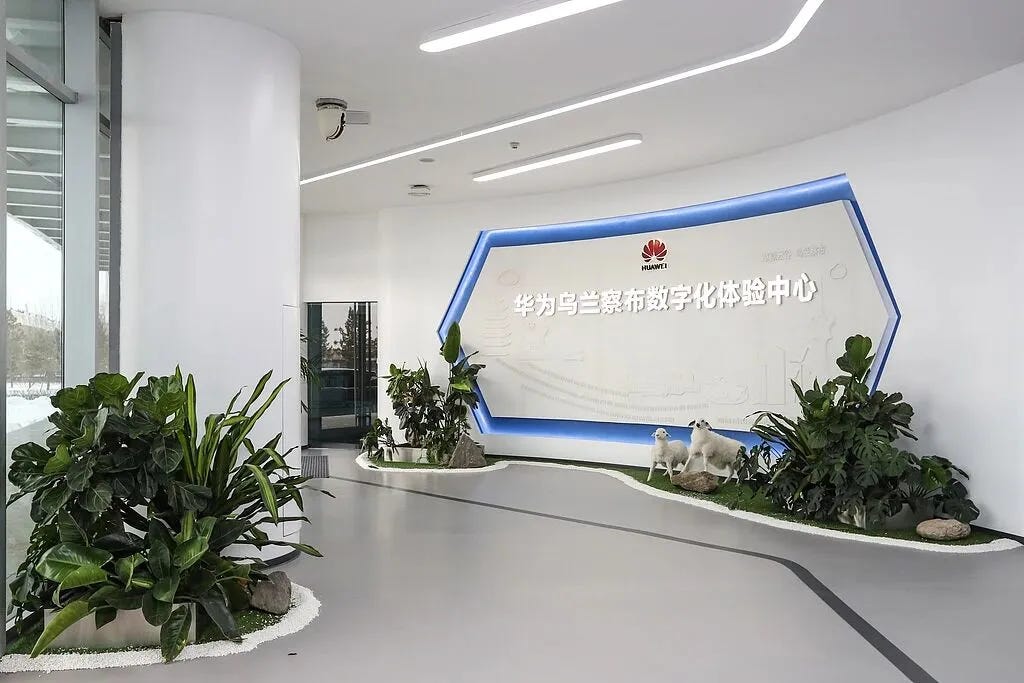
Spending some time working at Huawei is like adding a prestigious credential to your resume. It can help you secure promotions and salary increases when moving to other companies. Below Huawei in the informal hierarchy are companies such as CDG, Zhonglian Data and VNET.
Hiring in the industry has also become much more specialized over the past two years. In 2024, Jining Normal University led the establishment of the Inner Mongolia Beijiang Computing Power Research Institute.
Ulanqab Vocational College also partnered with Huawei to establish a digital intelligence industry college. The program uses a recruitment-oriented training model, enrolling 500 students annually to prepare them for specific industry jobs.
That same year, the vocational college partnered with Zhonglian Data to establish Zhonglian Data College. Its first employer-sponsored training cohort began in 2026, recruiting students through a school-enterprise partnership.
If I were trying to enter this industry today with the qualifications I had five years ago, I would probably have almost no chance. Even entry-level shift operator jobs no longer accept applicants over 35.
There are still no age restrictions for engineers and managers. But I don’t know whether the anxiety surrounding China’s notorious age-35 hiring barrier will eventually reach those positions, too.