

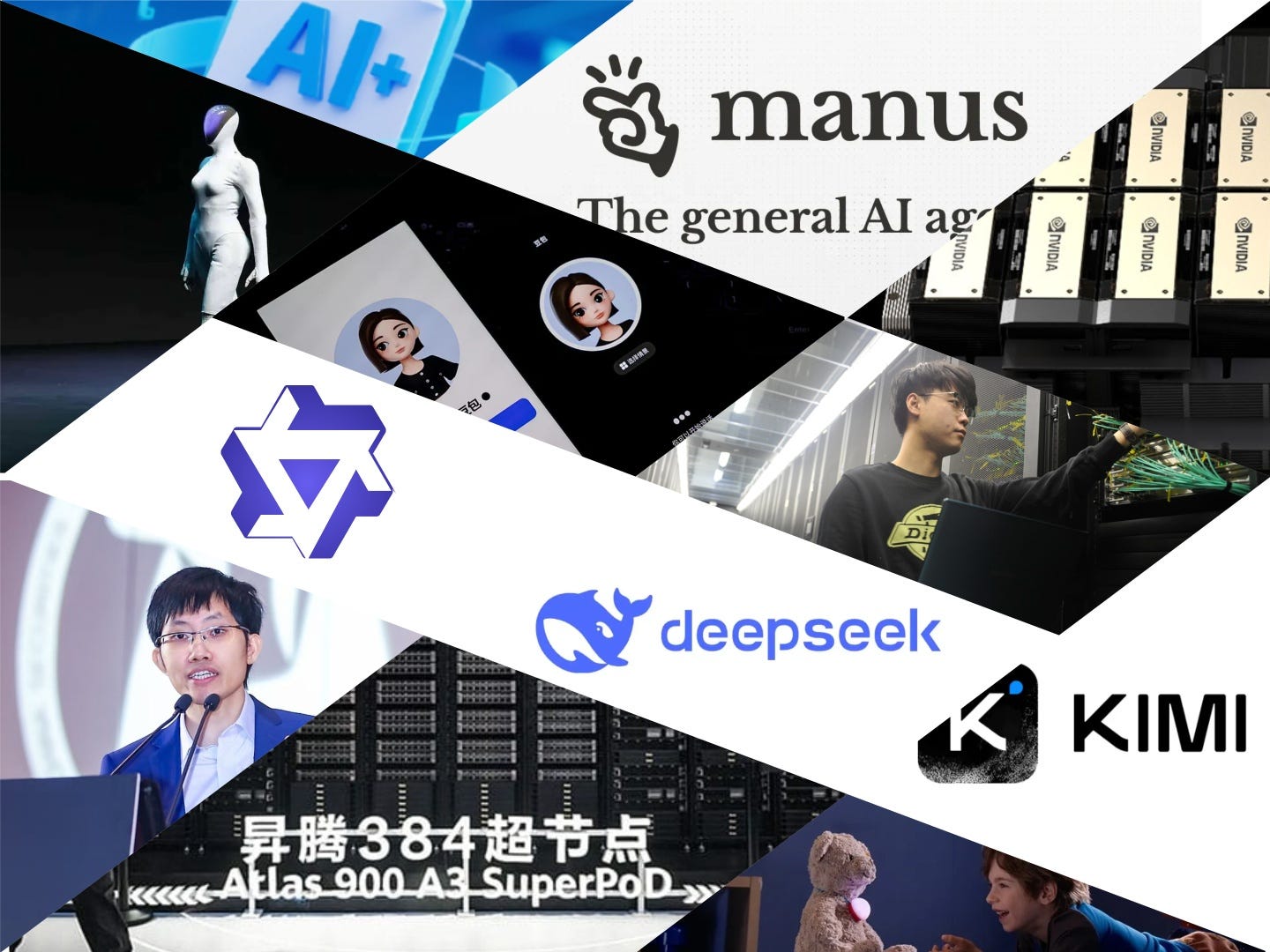
2025 was my first year outside the AI industry, no longer working as a reporter or in PR, but I’ve stayed close to this world that still captivates me. What struck me most this year was how much more attention people are paying to China’s AI world, thanks largely to the breakthrough LLMs from DeepSeek and Qwen.
As I sat down to recap China’s AI for 2025, I was surprised by how varied the stories turned out to be. They range from chip developments, models, consumer applications, new hardware, regulations, data center expansions, and the movement of talent. But I didn’t just want to catalog the important stories. I wanted to share the ones that felt fun, novel, and genuinely eye-opening.
Honestly speaking, I don’t have a rigorous methodology here. My selection process was quite subjective, a blend of instinct and research. These are the stories that made me sit up and take notice. My hope is that even if you haven’t followed a single China AI story this year, reading this one article will give you a grasp of where the country’s AI landscape is headed, and why it matters.
Finally, thank you for reading my newsletters. May the joys of the holiday season fill your heart and carry into the new year. Wishing you and your family happy holidays and a wonderful year ahead! 🎊🎈

1. DeepSeek-R1 Shook The World

On January 20, 2025, nine days before Chinese New Year, one day before the U.S. announced its ambitious Stargate project, DeepSeek, a then unknown Chinese AI lab, released an open-weight LLM trained to perform multi-step reasoning like OpenAI’s o1 model.
DeepSeek-R1 showed near-frontier reasoning performance on math, logical reasoning, coding tasks, and multi-step planning questions, the first time ever for an open LLM. In many public benchmarks, it matched or came close to OpenAI’s o1, outperformed most open models available at the time, and clearly surpassed models that lacked explicit reasoning training.
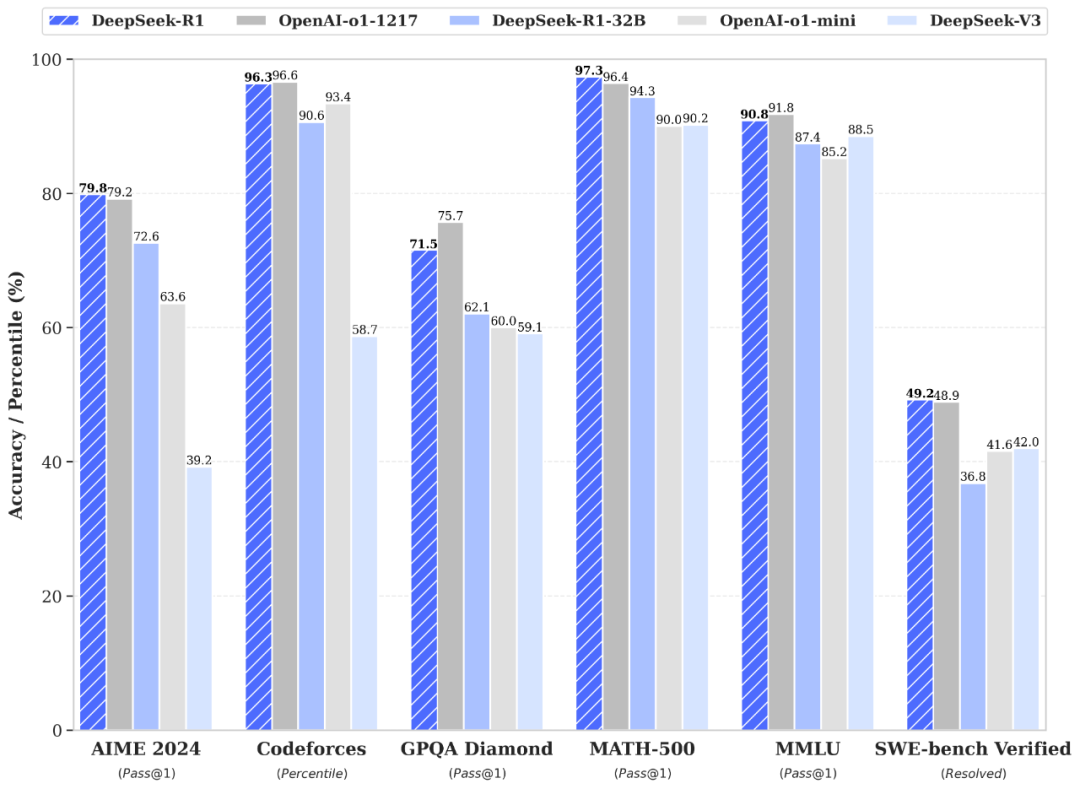
DeepSeek researchers independently discovered that applying reinforcement learning (RL) directly to the base model—without relying on supervised fine-tuning (SFT) as a preliminary step—worked effectively in training reasoning abilities of LLMs, and that reasoning abilities from larger models could also be distilled into smaller ones.
But the most staggering detail was the training cost: DeepSeek-V3, the base model for R1, cost under $6 million, and R1 cost under $300,000. In terms of inference, DeepSeek-R1 cost $0.55 per million input tokens, and $2.19 per million output tokens. In comparison, o1 charges $15.00 per million input tokens and $60.00 per million output tokens.
Without any PR or marketing, the DeepSeek chatbot app skyrocketed to the top of iOS free app charts in both the U.S. and China. U.S. tech stocks experienced a significant downturn afterward due to investor concerns over DeepSeek’s competitive advancements. Silicon Valley’s tech giants scrambled to understand how this Chinese startup achieved such results.
In China, companies and institutions raced to integrate DeepSeek-R1 into their applications—it was the first time Chinese users had access to a ChatGPT-level AI. DeepSeek CEO Liang Wenfeng, also the founder of High-Flyer, a Chinese quantitative fund and DeepSeek’s primary backer, became a favored guest at high-level meetings with China’s top leadership.
The release of DeepSeek-R1 upended multiple AI narratives: that only spending hundreds of millions could produce a frontier LLM, that only Silicon Valley companies had talents to train competitive models, that the U.S.-China gap in AI was widening due to chip shortages.
Throughout the rest of 2025, DeepSeek continued churning out notable models, including DeepSeek-V3.2-Thinking and DeepSeek-Math-V2, which won the International Olympiad in Informatics. Yet the widely anticipated DeepSeek-V4 and DeepSeek-R2 remained under development. Rumors suggested they were falling below expectations.
2. Chinese AI Labs Dominate Open LLMs
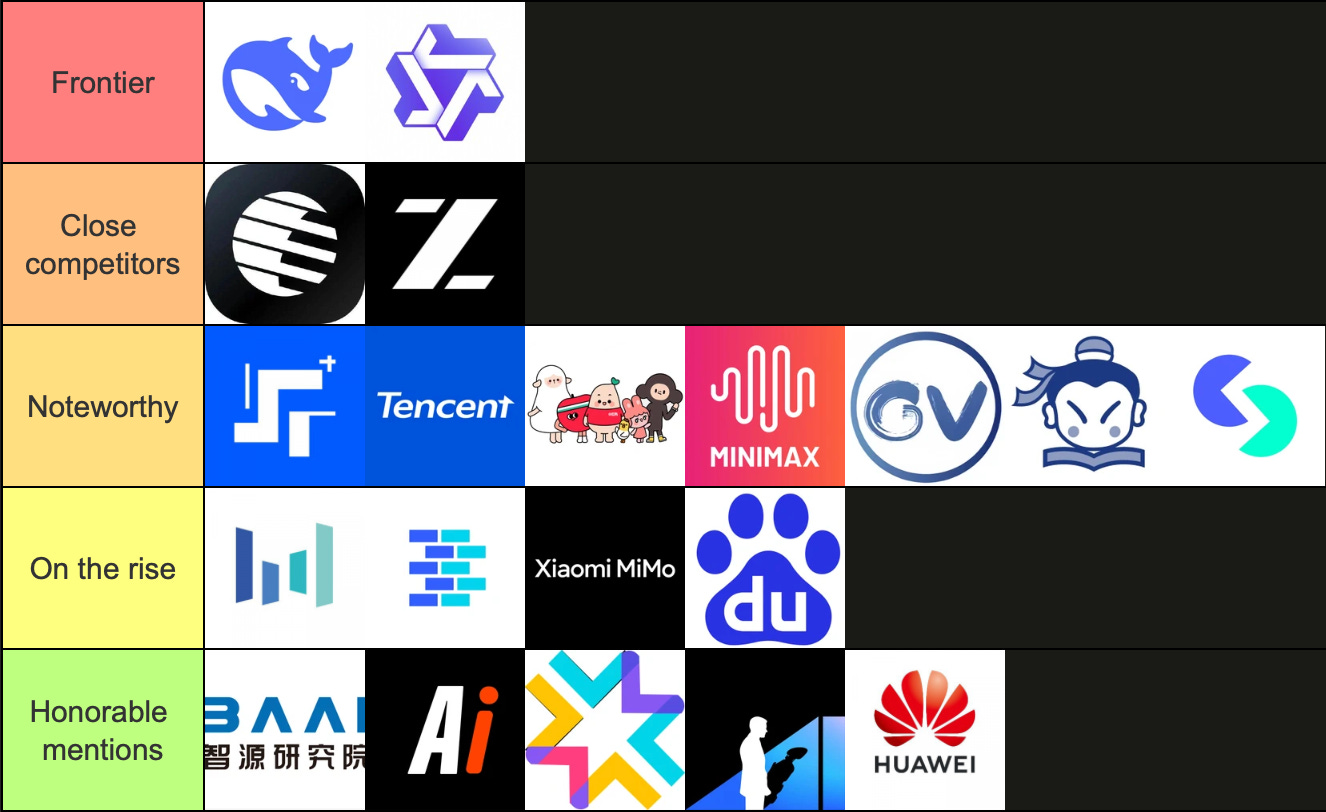
Throughout 2025, the AI world realized that DeepSeek-R1 wasn’t just a one-off phenomenon, but as part of a broader wave of frontier open-weight models from China’s leading AI labs.
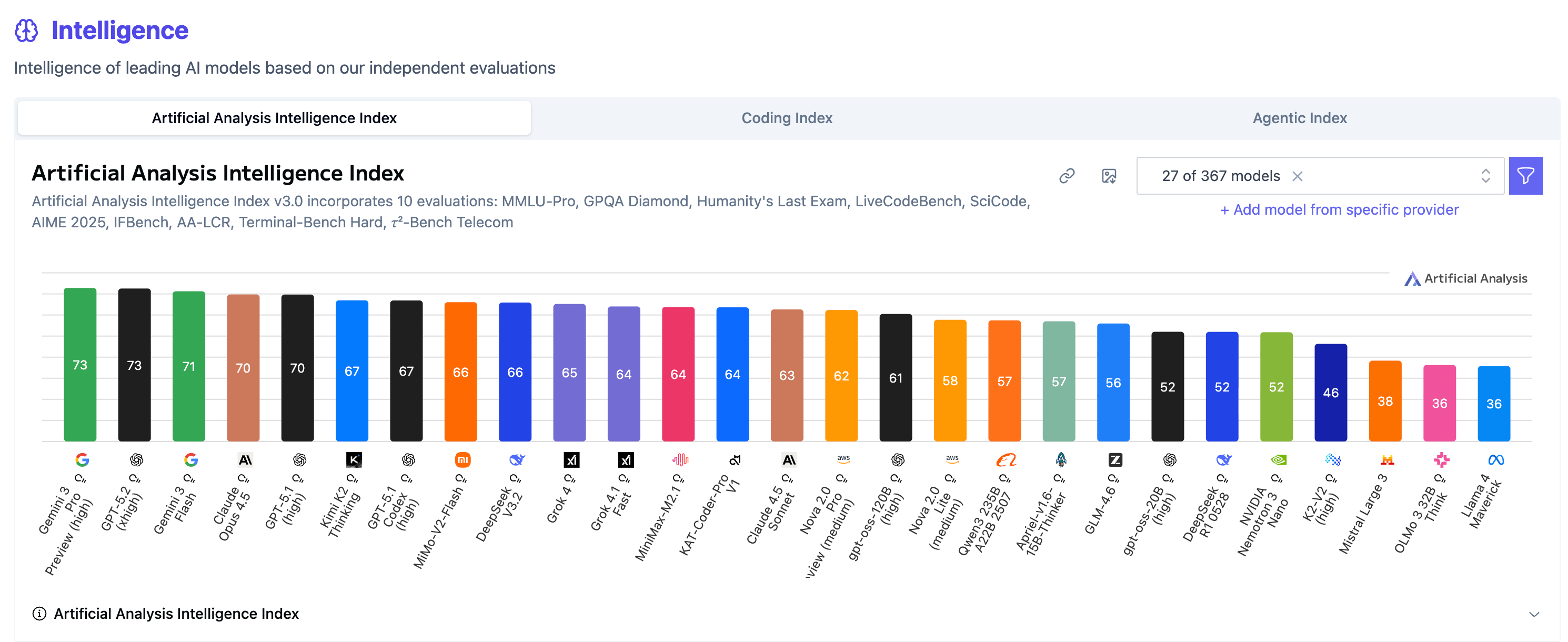
In July 2025, China has overtaken the U.S. in cumulative open model downloads, according to a16z. By the end of 2025, all top open-source models originated from Chinese companies such as MiniMax, Alibaba, DeepSeek, and Zhipu AI (Z.ai), according to the Artificial Analysis Intelligence Index.
Leading the charge is Alibaba with its Qwen family of models. By the company’s count, Qwen has become the world’s largest open-source model ecosystem, accumulating over 400 million downloads and spawning 140,000 derivative models. Developers and enterprises worldwide have built AI products on Qwen’s foundation, from Japanese customer service chatbots to integrated automotive assistants.
Alibaba’s latest LLM, Qwen3-Max, features one trillion parameters and outperforms rivals including Claude Opus 4 and DeepSeek V3.1 on agent benchmarks. Unofficial stats suggest Alibaba has shipped 357 models in under two years, from vision-language models to coding models. The company’s Qwen3-Next, which introduced architectural innovations, delivers 10 times faster inference speeds while slashing training costs to roughly 10% of its predecessor’s expenses.
Close behind are three Chinese LLM unicorns valued in the billions: Moonshot AI, MiniMax, and Zhipu AI. Moonshot released K2-Thinking in October, with specialized agentic capabilities that surpass GPT-5 and Claude Sonnet 4.5 in specific tasks. MiniMax’s M2 series, including the latest M2.1, and Zhipu’s GLM-4.7 also rank among the top open models for coding and reasoning.
Their impressive performance, combined with low inference costs, has captured Silicon Valley’s attention. Cursor and Cognition, two of the Valley’s hottest startups, are reportedly building their models and products atop these open Chinese models.
Open-source/weight has proven the most effective way for these Chinese AI labs to gain visibility in the global AI community. By sharing their innovations openly, they also benefit from building on others’ work, a particularly strategic path given chip restrictions and less capital flowing into Chinese LLM companies.
“Opening up model weights today is essentially opening access to data resources and compute resources,” explained Wang Jian, Alibaba’s former CTO who founded its cloud business. “Once the model is open, you no longer need to spend massive compute power to redo what others have already done for you.”
3. Manus and the Rise of AI Agents
On March 6, 2025, Manus, a general AI agent developed by a then-unknown Beijing-based startup called Manus AI, launched with beta and waitlist access rolling out publicly. Going beyond chatbots that only respond to specific commands, Manus was designed to take a goal like “analyze competitors and create a business report” and deliver results autonomously. It could browse the web, analyze data, generate code, plan travel, build prototypes, and write reports with minimal human direction.
On benchmarks like GAIA, designed to measure real-world problem-solving, Manus reportedly outperformed systems like OpenAI’s Deep Research across multiple complexity levels. The product quickly gained viral attention, amassing millions of users on the waitlist. However, it also sparked controversies, with skeptics arguing that Manus was just a wrapper for Anthropic’s Claude.
One month after launch, in April 2025, Manus AI raised a $75 million funding round led by Benchmark Capital, with participation from Tencent, ZhenFund, and HongShan Capital, at a valuation of roughly $500 million. To better embrace global markets, the company relocated its headquarters to Singapore in July 2025. In December 2025, Manus AI announced its ARR had reached $100 million.
Just before I was about to publish this article, Meta announced its acquisition of Manus AI. Said Bloomberg, “the deal is part of a broader push by Meta to build a business around its massive AI investment, which has captured the focus of Chief Executive Officer Mark Zuckerberg and become the company’s top priority.”

Manus wasn’t the only agent product that gained traction in 2025. Genspark, a Silicon Valley-based AI startup founded by former Microsoft and Baidu executive Jing Kun, developed an AI agent and claimed $100 million in annual recurring revenue (ARR). Other agent products like Flowith and Lovable also emerged throughout the year.
While agents still occasionally make mistakes and exhibit performance fluctuations, 2025 marked a significant milestone as we began to treat AI as a genuine assistant rather than merely a chatbot. Although it may take another decade to address all the challenges inherent in AI agents, said Andrej Karpathy, this is a promising start.
4. China’s AI Chip Industry Brace for Nvidia H200
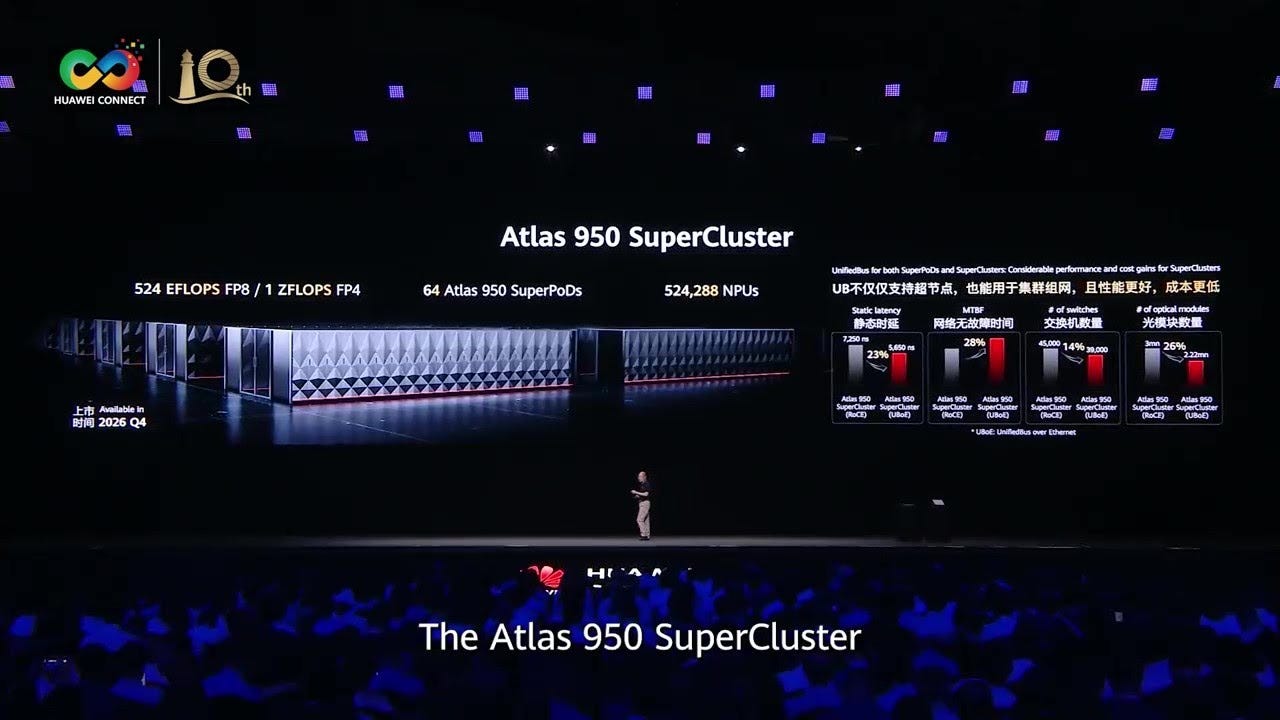
In 2025, Huawei, which for years avoided sharing details about its AI chips to prevent further U.S. sanctions, publicly laid out a multi-year roadmap for its semiconductor development. The company first unveiled its rack-scale AI supercluster CloudMatrix 384 built using the Ascend 910C in April. Then in September, the company claimed its next-generation AI chip supercluster, a supercomputer connecting hundreds of thousands of chips expected in 2026, would reach a staggering 524 EFLOPS, making it one of the world’s most powerful AI computers.
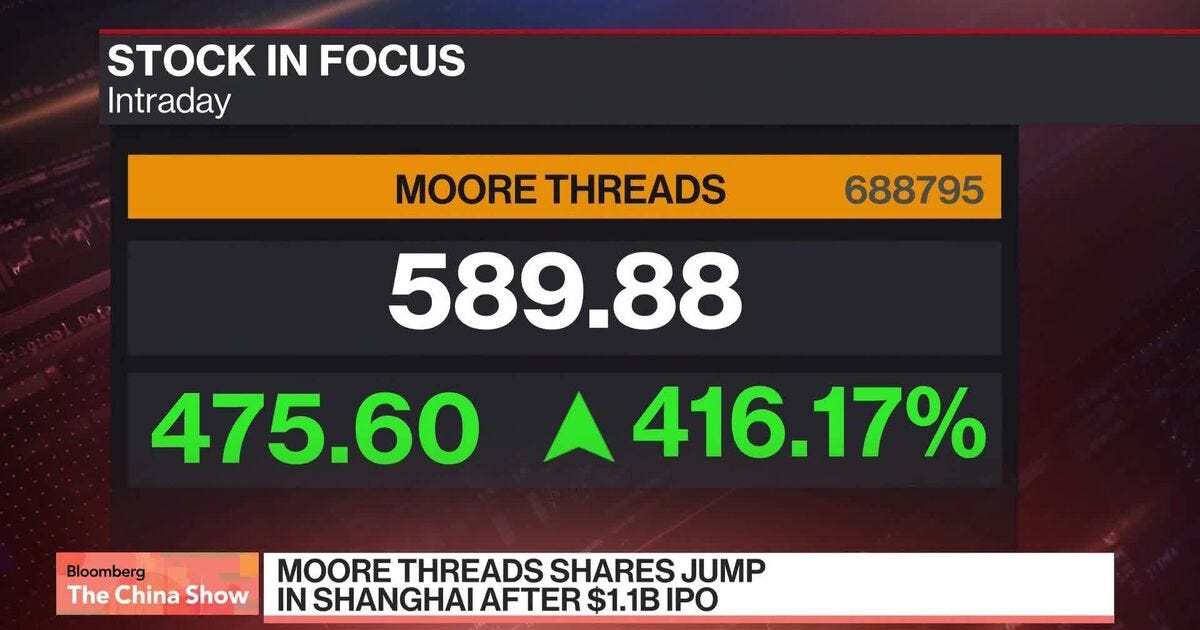
Following Huawei’s lead, Alibaba, Baidu, Cambricon, and other Chinese tech and chip companies began aggressively promoting their domestic AI hardware. In late 2025, Muxi and Moore Threads, two domestic GPU developers, successfully went public in China with skyrocketing valuations.
The context was Nvidia was only allowed to sell restricted GPUs like the H20 to China, while domestic Chinese AI chips were catching up quickly. The Chinese government realized that under current geopolitics, China could no longer bet its AI future on an American supplier. If Nvidia couldn’t sell its best hardware, domestic alternatives had to fill the void.
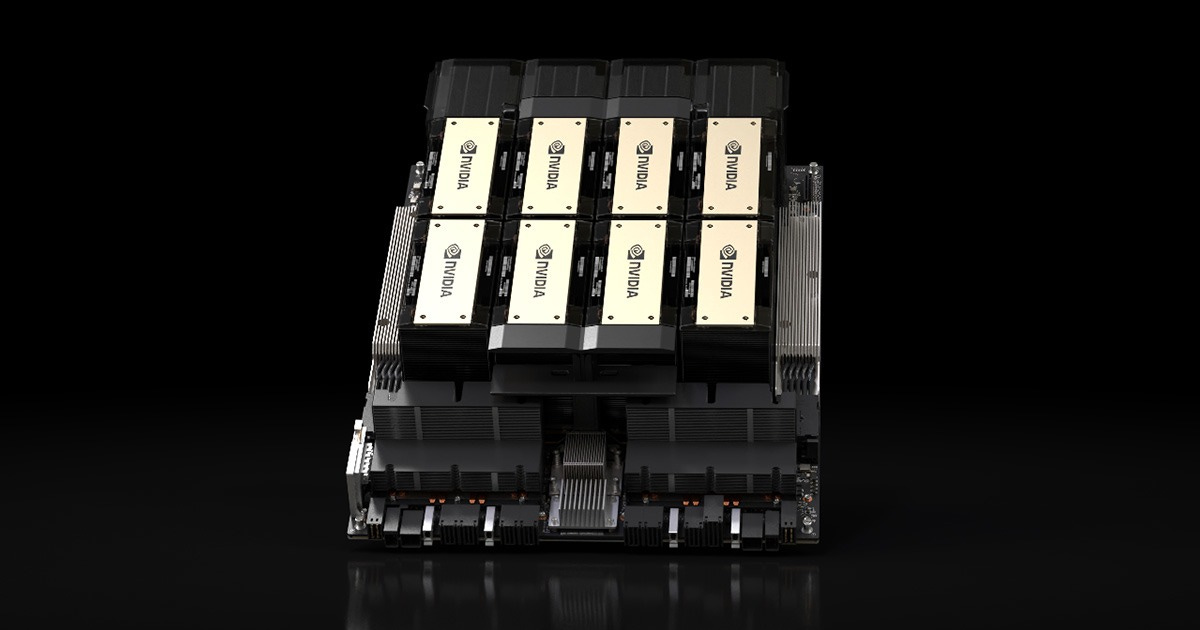
While as that was the main storyline for 2025, near the end of the year, the narrative flipped entirely. The Trump administration suddenly allowed sales of Nvidia’s H200, a high-end GPU released in 2024 built for large-scale AI inference and training. The H200 is unquestionably ahead of any Chinese AI chip currently available, both in raw performance and ecosystem support. Alibaba and ByteDance have reportedly asked Nvidia about buying H200 chips.
The reversal created a dilemma for Beijing. While it won’t simply abandon its determination to build a burgeoning domestic AI chip industry, banning the H200 risks delaying Chinese AI labs from developing more advanced frontier models. Nvidia GPUs remain the best option for pre-training large-scale models. The story is still unfolding.
5. ByteDance Put Jarvis in Phones
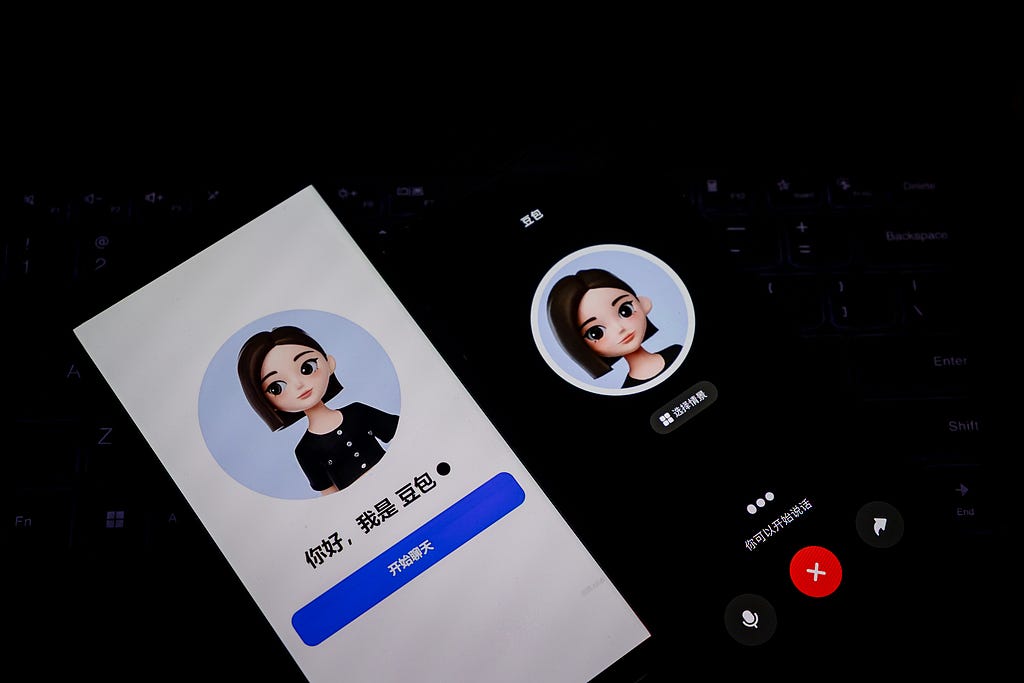
ByteDance’s chatbot app Doubao has been the undisputed champion of Chinese AI apps throughout 2025, with nearly 160 million monthly active users. And on December 1, the parent company of TikTok took another significant step forward by launching something that made iPhone’s Siri look like a toy: an AI assistant that could use your phone for you.
ByteDance partnered with Chinese telecom firm ZTE to integrate its Doubao LLM into a new smartphone prototype, marking China’s boldest experiment yet in agentic mobile AI. The Nubia M153, released as a limited prototype, features the Doubao Mobile Assistant, an AI agent that can independently execute complex tasks like “send the photos I took yesterday to my mom on WeChat” or “order pickup from my favorite restaurant nearby,” all through simple voice commands.


Doubao Mobile Assistant is essentially a graphic user interface (GUI) agent, an AI that doesn’t need APIs or require manual training to operate different apps. It simply “sees” the screen, understands the interface, learns autonomously, and switches seamlessly between apps to complete entire tasks.
The prototype, sold in probably hundreds of units only, immediately triggered code-red alerts across China’s tech ecosystem. Within 48 hours, WeChat blocked it. Alipay, Taobao, and Meituan quickly followed, preventing Doubao’s assistant from opening their apps.
“China’s mobile ecosystem is too established. Internet giants have built moats, traffic flows, and business models around their apps that are now the legacy infrastructure blocking phone AI advancement. Breaking even a small piece of this equilibrium makes everyone uncomfortable,” wrote Luo Yihang, a veteran tech reporter in China and founder of PingWest.
For ByteDance, embedding AI agents in smartphones is clearly not the endgame. It is already exploring next-generation hardware purpose-built for AI, such as AI glasses and earbuds.
6. Xpeng’s Cat Walking Humanoid
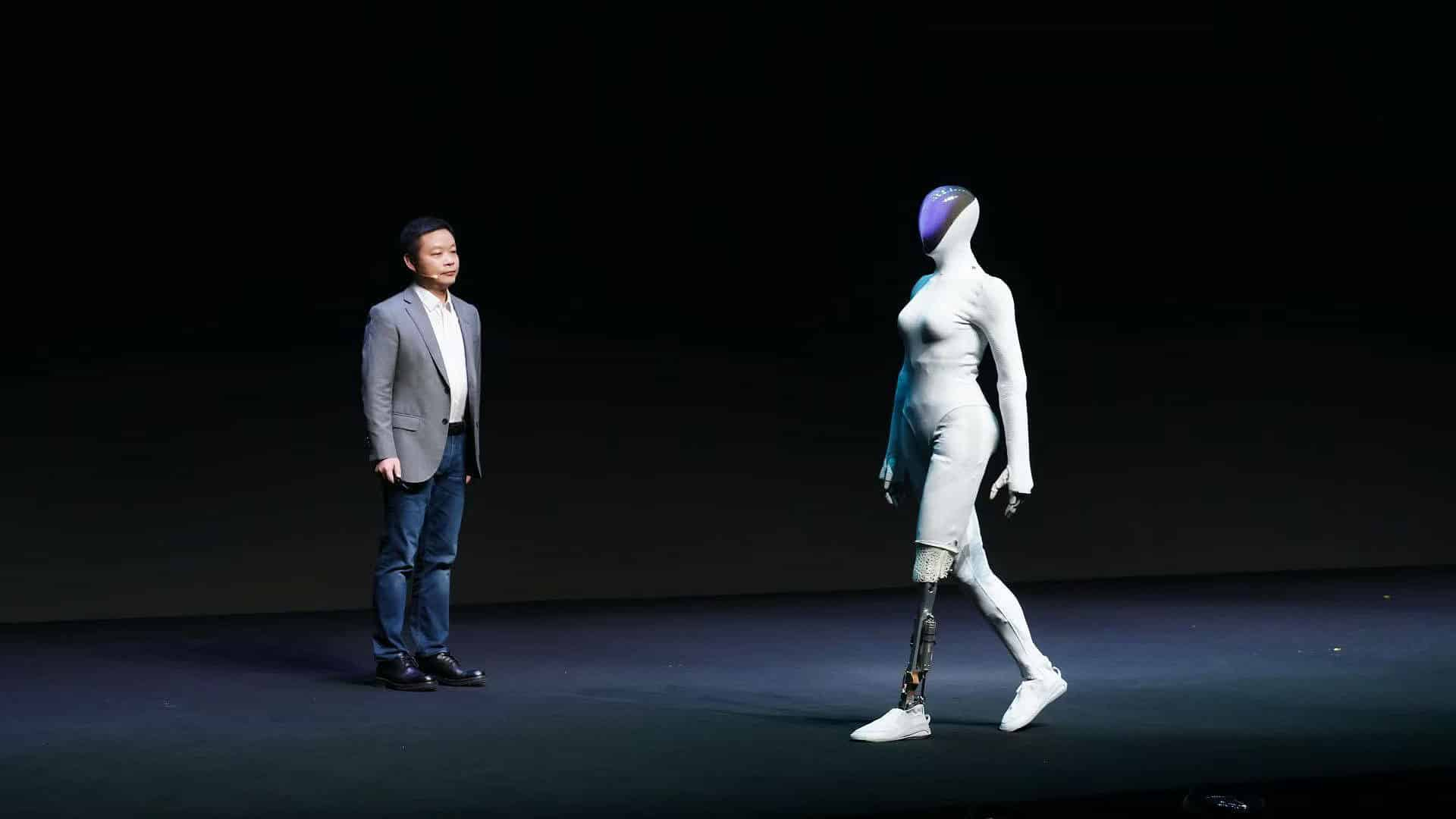
When Chinese EV upstart Xpeng unveiled its 2nd-generation humanoid robot on November 5, the machine glided across the stage with such fluid, runway-model grace that the internet refused to believe it was real. People on social media insisted IRON had to be a person in a costume. The skepticism turned the debate into one of the year’s most viral tech moments.
Xpeng CEO He Xiaopeng released a behind-the-scenes video the next morning, revealing IRON’s lattice-like artificial muscles and internal mechanics. And at a live event the following day, engineers sliced open its leg covering on stage to expose the mechanical components underneath.
The spectacle highlighted a year of remarkable hardware achievements in China’s robotics sector. If IRON’s catwalk looks like a scene from a sci-fi film, Unitree’s G1 robots performed more like a superhuman circus act. The robots can execute standing side flips, kung fu moves, and could recover balance after being kicked—feats that seemed impossible for bipedal robots just months earlier.
China even staged what organizers billed as the world’s first human-robot half marathon in Beijing in April. The winning robot, Tiangong Ultra, completed the 21-kilometer course in 2 hours, 40 minutes—slower than elite human runners, but a milestone nonetheless.
Yet beneath the viral videos and hardware achievements lies a harsh reality: giving robots the “brain” to independently complete even basic household tasks remains frustratingly out of reach.
“The biggest challenge for humanoid robots right now is still at the model level—we haven’t reached a breakthrough moment like ChatGPT,” said Wang Xingxing, CEO of Unitree.
“If you’re doing one task, or a series of very similar tasks, we can do pretty well now,” said Tan Jie, Director and Tech Lead Manager at Google DeepMind, in an interview. “But if you want true generalization—a humanoid robot that can do many different things—we’re still very far away.”
The bottleneck isn’t just model. It’s data. LLMs feast on unlimited training data scraped from the internet. Robots, by contrast, must navigate unstructured physical environments where anything can happen. They need vast amount of diverse training data that simply don’t exist yet.
China’s robotics companies have mastered the mechanics of human-like movement. The software brain that would make these machines genuinely useful is still being developed.
7. Will AI Toys Become the Next Labubu

In 2025, China’s AI toy industry evolved from simple talking gadgets to a market of 29 billion yuan ($4 billion), fueled by a surge in smart companions powered by LLMs.
One of the year’s biggest hits is BubblePal, a ball-sized gadget that clips onto any existing plushie, using AI to grant it voice and personality. Parents can select from 39 different characters ranging from Elsa to popular Chinese anime heroes. The concept resonated immediately: BubblePal sold over 300,000 units shortly after its peak release period. Haivivi, the company behind BubblePal, has raised 200 million yuan ($28.5 million) from Hongshan Capital and Westsummit Capital.
In late 2025, Huawei and rising AI startup Robopoet jointly launched Smart Dummy, an AI toy that became an instant viral sensation, selling out within minutes of release. Priced at approximately $56, this fluffy, round creature—powered by Huawei’s LLM—chats naturally, blinks its eyes, remembers previous conversations, and responds to physical interaction like head strokes or shaking.

These toys are also expanding beyond China, reaching international markets including the US, UK, and Canada, according to MIT Tech Review. Yet despite their innovative appeal, parental reviews remain mixed, with common complaints about glitchy AI performance, overly verbose responses, and voice recognition struggles with young children.
As these AI companions become increasingly embedded in daily life—entertaining children, comforting stressed young adults, and providing company for isolated seniors—a fundamental question lingers: are AI toys just a passing fad, or do they represent a sustainable business built on genuine human need?
8. AI Data Centers in China’s Desert
While Google, Amazon, and Microsoft scrambled to build hyperscaler data centers across the U.S., China was quietly turning its far northwest into an AI computing powerhouse.
In July, Bloomberg broke a story revealing China’s plans to establish data centers in the remote Xinjiang region to support its ambitious AI initiatives. Shortly after the news, state-run People’s Daily published a story highlighting Xinjiang’s accelerated deployment of computing infrastructure.
Xinjiang is rapidly emerging as China’s answer to the hyperscaler arms race, driven by abundant renewable energy, favorable climate conditions, and national “East Data, West Computing” policies that route computational workloads from China’s prosperous eastern coast to the resource-rich west.
In Karamay, a city of Xinjiang known for vast oil fields and surreal desert landscapes, local data centers had surpassed 17,000 PFLOPS of computing capacity by the end of 2024, with 80% serving eastern China and overseas clients, and plans to exceed 100,000P in the coming years.
Xinjiang’s advantages include cheap, stable green electricity from large-scale wind and solar resources, as well as a cold, dry climate that naturally lowers cooling costs. In total, Xinjiang now has 201 GW of installed power capacity, with renewables accounting for over 55%.
Xinjiang’s data center projects serve as a microcosm of the ongoing U.S.-China AI race. While the United States holds a significant lead in almost every aspect of this race, including chips, models, user scale, and commercialization, China has made substantial strides in total electricity generation and capacity. In 2024 alone, China added an impressive 429 gigawatts (GW) of new power capacity, surpassing the U.S. with only 51 GW.
9. National AI Strategy Through 2035
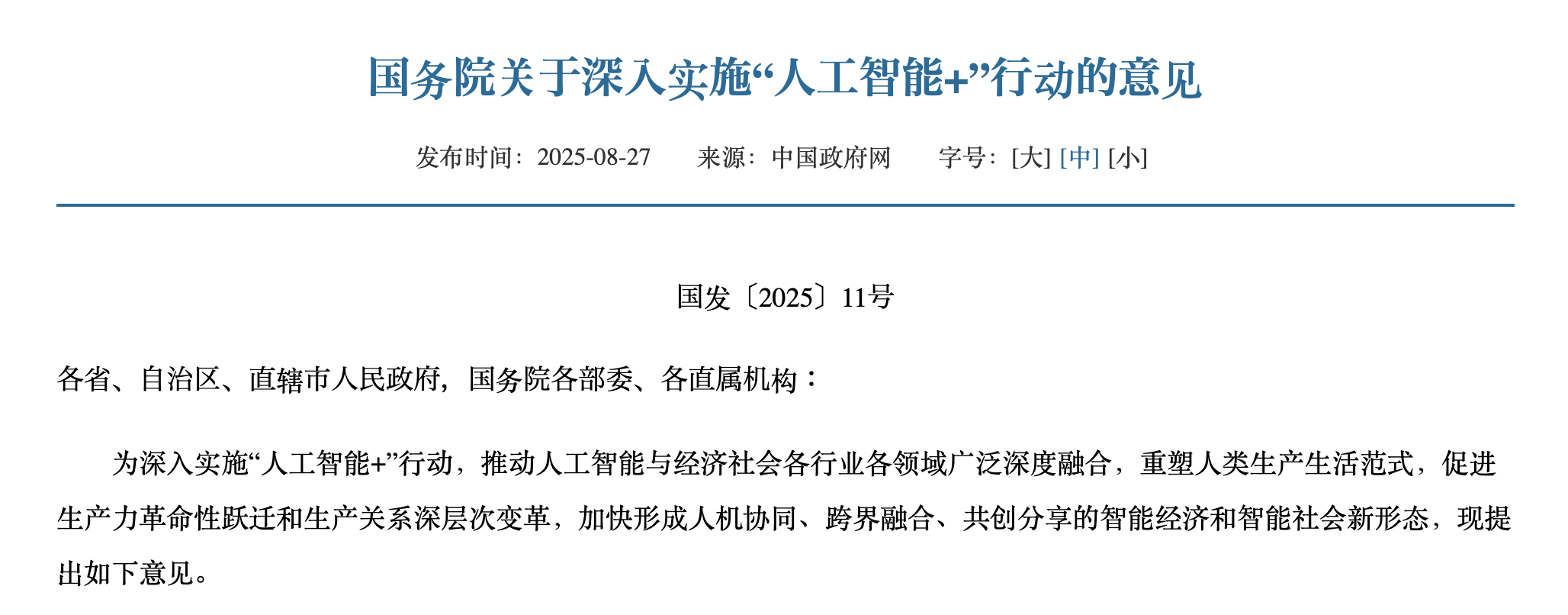
In August 2025, China’s State Council released Opinions on Deepening the ‘AI+’ Initiative, laying out China’s national AI strategy through 2035. China wants to rapidly diffuse AI throughout its economy, following the same playbook used in its “Internet+” initiative, which previously tranformed the country’s digital economy through internet applications.
The document establishes a three-stage roadmap:
By 2027, AI will be deeply integrated into six priority areas—science and technology, industry, consumption, livelihoods, governance, and global cooperation—with new-generation AI models and agents reaching 70%+ adoption.
By 2030, adoption exceeds 90%, and AI becomes a key economic growth engine.
By 2035, China enters a “full intelligent economy and intelligent society,” with AI functioning as basic social infrastructure.
The directive also focuses on strengthening AI's foundational aspects, such as models, data, computing power, talent development, and open-source ecosystems, while addressing potential risks associated with AI.
“It does not mention artificial general intelligence (AGI), superintelligence, or any other such concept,” wrote Kendra Schaefer, Director of Tech Policy Research at strategic advisory consultancy Trivium China. “The directive suggests that for China, the real AI race isn’t about beating the US to AGI supremacy. It is the race against the ticking clock of China’s demographic and economic challenges. Geopolitics and international competitiveness, while very important, are only part of the picture.”
10. Elite AI Talents Start Flowing Back to China

In 2023, some of China’s most elite AI researchers and entrepreneurs relocated to Silicon Valley to launch their own AI ventures. Jia Yangqing, former VP of Alibaba and creator of the Caffe deep learning framework, founded Lepton AI, which was later acquired by Nvidia. Jing Kun, a former Baidu executive, left his position as CEO of Baidu’s smart hardware subsidiary Xiaodu Technology to found GenSpark, which raised an oversubscribed $275 million Series B at a $1.25 billion post-money valuation.
At the time, Chinese tech companies were already sending recruiters and headhunters to hire researchers from frontier AI labs like OpenAI, Anthropic, and Google DeepMind, but with limited success. Most Chinese talent believed Silicon Valley was the best place to pursue their AI ambitions.
It still is—but the situation has begun to move in 2025. In early 2025, Wu Yonghui, vice president of research at Google DeepMind, joined ByteDance as head of Seed, the company’s AI lab. More recently, Yao Shunyu, a former OpenAI researcher, joined Tencent as Chief AI Scientist, reporting directly to President Martin Lau.
While this hasn’t yet formed a clear trend, such moves would have been unimaginable two years ago.
Great post capturing the big themes in China AI 2025
China isn't planning a D-Day invasion of Taiwan; they’re executing a slow, systematic strangulation. While the U.S. waits for domestic chip fabs to come online in 2030, Beijing is tightening the noose today using the Russian playbook. Here is why a sliver of silicon is the most dangerous geopolitical flashpoint on earth.https://triggledger.substack.com/p/the-silicon-choke-point-why-the-next?utm_source=share&utm_medium=android&r=8gc1qf