

I am bringing back my old weekly news roundup, China AI Weekly Digest, which summarizes the week’s big news, model updates, policy, products, and research, sourced from the aggregated newsfeed of China AI Index. The digest below is mostly compiled and drafted by an AI agent (given my limited capacity) sourcing from credible news outlets, then fact-checked and edited by me.
This week: 269 stories tracked (94 English-language, 175 Chinese-language) over 2026-07-25–2026-08-01.
The Big Three
Moonshot’s Kimi K3 went fully open-weight the same week the startup reportedly closed a funding round of $3.5 billion that pushed its valuation to $35 billion. The timing wasn’t a coincidence. Moonshot released the 2.8-trillion-parameter K3 as open weights, and watched it top global coding leaderboards. The open release also became a Washington flashpoint: US lawmakers are now investigating DoorDash’s use of an earlier Kimi model, and Anthropic’s Dario Amodei weighed in on the broader open-weight debate, saying he isn’t opposed to open models in principle but worries about ceding ground to Chinese labs. (Bloomberg/SCMP/TechCrunch)
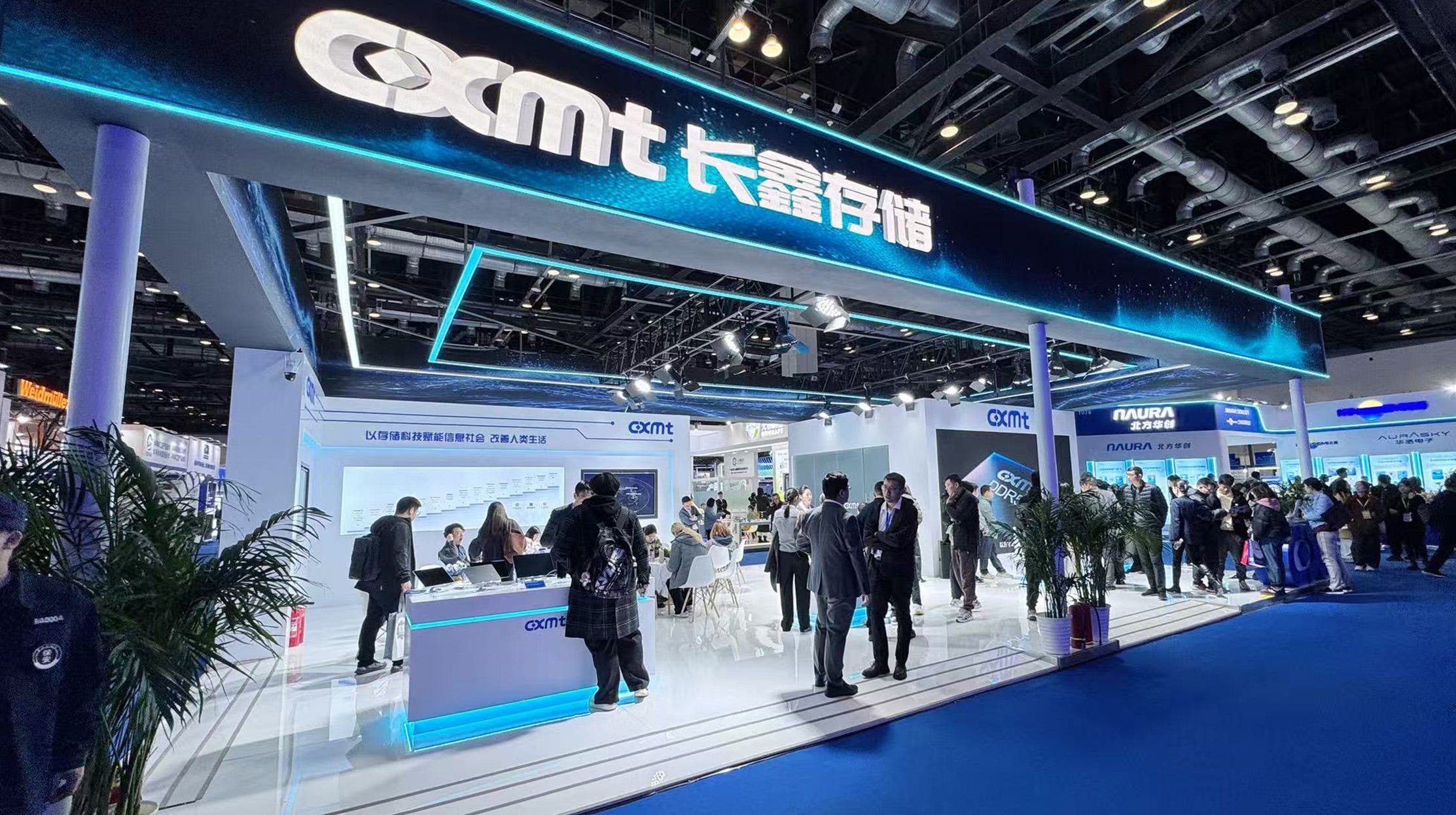
CXMT’s Shanghai listing became the year’s biggest debut, with shares surging as much as 472% to value the DRAM maker near $489 billion. The memory chipmaker’s $9.8 billion IPO—one of China’s largest ever—sent shockwaves through the global chip trade, hitting Micron and SK Hynix shares and reviving the “China chip breakthrough” narrative that’s rattled Nvidia investors all year. Founder Zhu Yiming pledged $5.6 billion in worker bonuses out of his own windfall, and semiconductor-sector profits in China are reportedly up 2,500% in the first half on the AI boom. Nomura flagged room for the stock to keep rallying; the FT cautioned the surge “isn’t the bubble signal it might appear.” (Bloomberg/SCMP/CNBC/FT)
DeepSeek had a busy week: it reportedly paused fundraising after viral leaked investor meeting posts, shipped an official V4 release, opened a V4-Flash public beta API, and began building a massive new data center in Inner Mongolia. Bloomberg reported backers were told the round was on hold following posts that went viral on social media. Meanwhile the product side kept moving fast: V4-Flash’s agent benchmarks now “far surpass” the earlier V4-Pro preview, and a V4-Pro official release is said to be coming soon. (Bloomberg/Bloomberg/Bloomberg)
Models
A packed release week across video, agents, and reasoning—with Moonshot and DeepSeek trading the spotlight and a new video-model rivalry breaking out between MiniMax and ByteDance.
MiniMax launched H3, an open-weight video model pitched as cheaper than ByteDance’s rival, hours before ByteDance shipped Seedance 2.5—dueling releases framed as a direct price-and-openness challenge; XPeng and AGIBot are among the first companies confirmed to integrate Seedance 2.5. (Bloomberg/SCMP)
Kimi K3 (2.8T parameters) is now fully open-weight and has topped global coding benchmarks; Moonshot separately open-sourced two supporting tools: MoonEP, a high-performance communication library for distributed MoE training, and AgentENV, a distributed agent-environment system built with kvcache-ai. (Bloomberg/@Kimi_Moonshot)
DeepSeek-V4-Flash‘s official API entered public beta with agent-capability scores well above the earlier V4-Pro preview; DeepSeek says a V4-Pro official release is coming “as soon as possible.” (Bloomberg/@deepseek_ai)
Huawei open-sourced openPangu-2.0-Pro, releasing full model weights, inference code, and a technical report. The 505-billion-parameter MoE model (18B active per token) supports a 512K context window and was trained entirely on Huawei’s own Ascend 910B NPUs. Huawei claims it delivers double the single-card throughput of other leading open-source models when run on Ascend hardware. (@ModelScope2022)
Moonshot is reportedly seeking additional Nvidia Blackwell chip allocations to train its next model, underscoring how compute-constrained even well-funded Chinese labs remain. (The Information)
Tencent Hunyuan open-sourced AngelSpec, a speculative-decoding framework it says delivers a 1.98–2.4x end-to-end inference speedup on its Hy3-A21B model. (36Kr/@TencentHunyuan)
Funding
Moonshot’s mega-round anchored the week, but two IPOs showed how fast Chinese hard-tech listings are moving.
Moonshot AI closed an F round of more than $3.5 billion, taking its valuation to $35 billion—one of the fastest valuation climbs of any Chinese AI startup this cycle. (Bloomberg/Yicai)
Unitree Robotics set an August 10 subscription date for its Shanghai STAR Market IPO, with the humanoid-robot maker’s own employees subscribing roughly ¥270 million and founder Wang Xingxing personally putting in ¥15 million. (SCMP/Reuters)
Optical-component maker Zhongji Innolight slipped in its Hong Kong trading debut following a $6.8 billion IPO—a rare stumble in a week otherwise dominated by AI-linked listing pops. (CNBC)
Chip designer Cambricon said it’s targeting $14 billion in revenue over the next three years, a marker of how aggressively domestic AI-chip suppliers are scaling guidance amid the CXMT-driven rally. (SCMP)
Policy
Chinese open-weight models kept forcing the Washington policy debate into the open, while Beijing signaled it won’t sit still on any new sanctions.
The Trump administration moved to ban new Chinese humanoid robots from the US market, framed as protecting the domestic AI buildout. This is a direct hit to Unitree’s export ambitions right as it heads into its IPO. (Reuters)
US lawmakers opened an inquiry into DoorDash’s use of Moonshot’s Kimi K2.6 model, an early sign that enterprise adoption of Chinese open-weight models is drawing direct Congressional scrutiny, not just chip-export debate. (SCMP/CNBC)
Meta’s Mark Zuckerberg said the US should not ban Chinese AI models, joining Nvidia and other Silicon Valley voices pushing back on proposed restrictions—while Anthropic CEO Dario Amodei’s chip-ban proposal drew fresh scrutiny over whether it could actually curb China’s AI progress. (FT/Reuters/SCMP)
Beijing said it will respond to any new US sanctions threat against Chinese AI firms, keeping the tit-for-tat dynamic alive. (Bloomberg)
Nvidia CEO Jensen Huang met with US officials as scrutiny grows over China’s chip access, part of the same week’s broader chip-policy churn. (SCMP)
The EU’s AI Act transparency requirements take effect August 2, adding a compliance deadline that will apply to Chinese model providers selling into Europe. (36Kr)
Products
ByteDance’s biggest reorg of the year and a wave of enterprise integrations dominated the product news.
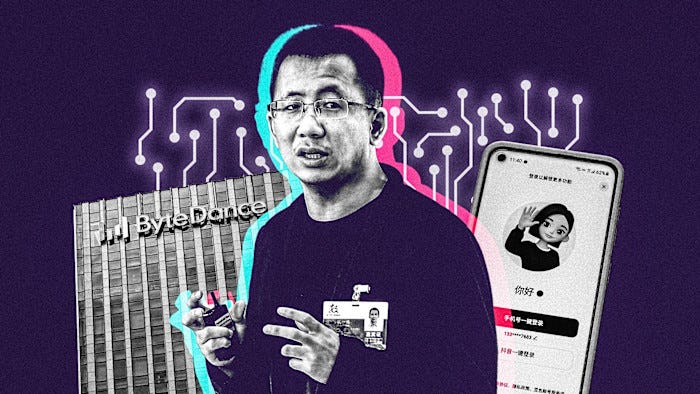
ByteDance restructured its enterprise business, folding Lark (Feishu) into Doubao and Volcano Engine under one unified ToB organization; Caixin reports the large-model business is now running at a $4 billion ARR pace. (SCMP/FT)
Tesla began integrating ByteDance’s Doubao assistant into its China-market vehicles, and separately began testing Alibaba’s Qwen in its in-car infotainment system—two competing Chinese AI assistants now piloting inside the same automaker. (36Kr/36Kr)
Zhipu opened subscriptions for its GLM Coding Plan after expanding its compute data centers, pushing further into the developer-tooling subscription business that Moonshot and DeepSeek are also chasing. (36Kr)
Tencent Hunyuan’s Hy-MT2 model, open-sourced in May, says it has passed 700,000 downloads with its 1.8B variant hitting #1 on Hugging Face’s trending list. (@TencentHunyuan)
Research
WIRED profiled a wave of Chinese AI researchers becoming more visible and vocal on X, a shift in how China’s AI community engages with the global research conversation. (WIRED)
Tencent’s AI virtual-cell algorithm was published in the flagship journal Cell, which Chinese media described as a domestic first for the modeling approach. (36Kr)
Pew Research surveyed American public opinion on the US-China AI race — baseline data for understanding where Washington’s AI competition rhetoric is landing. (Pew Research)
Carnegie Endowment analyzed parallel US-China approaches to AI safety—the regulatory and strategic backdrop for this week’s policy moves. (Carnegie Endowment)
At both research and funding front neither the US or China is short on each other. As US models already made the leap into global market, Chinese are starting to is well.
In a way that’s not just intelligence, but also in deployment, where common audiences who have lesser time can also experience the benefit…. Two way of approaching the global market, who will come on top?