

(Kudos to Benita Zhang张小珺, the author of this story, for granting me permission to translate and publish it. You can find the original Chinese story here, and follow the author’s future coverage here.)
Once bustling with Texas Hold’em games, China’s investment community has suddenly fallen silent.
“We don’t really play poker much anymore,” says Zhu Xiaohu, managing partner at GSR Ventures. He mentions that gatherings with other investors have shifted from poker games to wine tastings, where they discuss new thoughts on the industry and projects, as well as the secondary market stocks.
While the poker tables have quieted down in real life, these shrewd players have shifted their focus elsewhere. They are now silently playing a different game in the Chinese LLM industry.
Following the launch of ChatGPT, China’s LLM industry took off in 2023, showcasing some unprecedented phenomena: a company’s first external financing round valued at $1 billion, entering the unicorn club without any products; significant figures hurriedly jumping on the bandwagon and collectively placing their bets from the very first round of financing; and previously competing investors like Hongshan, Hillhouse, Alibaba, and Tencent now sitting together at the same shareholder meetings. The “poker style” of Chinese venture capital has dramatically changed over the past couple of years.
“This is a typical ‘Club Deal,’” explains a partner at a leading investment institution. A “Club Deal” refers to a group of investors, typically private equity funds, institutional investors, or high-net-worth individuals, who form a club to jointly invest in the same project. This approach helps spread risks and pool larger capital sums—in layman’s terms, “a bunch of well-known acquaintances pooling their spare change.”
“It’s the typical FOMO, Fear of Missing Out,” Zhu Xiaohu once said. Known for his conservative investment style in poker, Zhu has not invested in any Chinese LLM companies. “Because everyone is uncertain, everyone does Club Deals.”
On one hand, the wealth creation myth of the mobile internet has made many individuals wealthy, providing them with capital, and Chinese VCs have ample cash. On the other hand, due to the uncertain prospects of AGI (Artificial General Intelligence), most people lack the courage to take big risks. Few are willing to invest heavily, and none are going all in. “Honestly, there’s a lot of money in Chinese VC, but everyone’s hands are very tight,” says a managing partner at an investment firm. Hence, “I’ll put a little money in and see how it goes” has become the common choice for most.
Entrants into the game somewhat share this mindset. Several founders and managing partners of Chinese investment institutions described the psychology of those at the table almost identically: “Everyone wants to see the cards.”
This article interviewed 20 key entrepreneurs, investors, and ecosystem partners in China’s LLM industry over the past year, documenting the most comprehensive inside story of China’s capital in the LLM sector.
The Beginning
Just over a year ago, a high-profile entry by a superstar figure instantly enlivened the entire game.
In February 2023, Wang Huiwen, co-founder of Meituan, who had retired for two years, suddenly announced his return to the arena—establishing an AGI company named Light Years Beyond (光年之外), aiming to become China’s OpenAI.
Before Wang’s announcement, his plans had been changing back and forth. “He changed his mind every day during that period,” said someone who was in frequent contact with him at the time. Initially, he considered investing $50 million, with a few possible options: solely becoming an investor, distributing $50 million among five projects; participating personally while also being an investor, splitting $50 million into $30 million for his own project and $20 million for others.
In a dinner arranged by investors, Wang met with Li Zhifei, the founder and CEO of Mobvoi, who also declared a mission to become China’s OpenAI. The dinner was filled with cautious probing, as everyone wanted to see if Wang was willing to buy Li a “first-class ticket” while securing his own “luxury cabin ticket.” However, these plans quickly fell through.
Wang made an unexpected decision: he would not only participate personally but also go all in with $50 million of his own money.
“Wang bought himself a ‘family ticket,’” said someone close to both Wang and Li. “Wang said he felt most assured putting everything on himself.”
Another source close to Wang said, “Wang initially wanted to invest but later decided it might not work. After talking with people, he felt he needed to do it himself. He didn’t necessarily need to be the CEO, but clearly, if he wasn’t the CEO, others would feel pressured.” Therefore, the plan for Light Years Beyond was for Wang to be the CEO and look for a technical partner externally.
With a personal investment of $50 million at a valuation of $200 million, Wang, sitting at the “Big Blind” position in poker terms, raised everyone’s stakes. From then on, $50 million became the standard entry fee for LLM companies. New players who wanted to join the game had to match this price.
However, this level of funding didn’t deter new entrants; instead, it attracted even more.
Light Years Beyond soon began external fundraising, with a group of “big names” joining the table.
“It was quite crazy. Usually, founders meet investors one by one, but Wang did a single roadshow for all interested investors who had made offers,” said a source familiar with the transaction. This high-profile “unified roadshow” took place at the Light Years Beyond office in Beijing’s Sohu Network Building.
The most decisive bet came from Cao Yi, founding partner of Source Code Capital. He promised to allocate a significant portion of his fund to bet on Wang Huiwen even before Wang made up his mind. As a result, Source Code became the lead investor with a $60 million investment in Light Years Beyond.
More than ten institutions and individuals also participated in this round of financing, forming an all-star lineup, including but not limited to Hongshan, 5Y Capital, Tencent, ZhenFund, Capital Today, Shunwei Capital, and individual investors like Su Hua (co-founder of Kuaishou) and Wang Xing (founder and CEO of Meituan). Since the negotiations were led by the heads of each institution, such as Shen Nanpeng from Hongshan, Xu Xin from Capital Today, and Dai Yusen from ZhenFund, the capital deal in China’s LLM industry was referred to as a “CEO project,” indicating its high level of importance.
This move went against some investors’ natural instincts. For instance, investors usually value the solidity of the founding team, yet Wang Huiwen’s team members, technical partners Yuan Jinhui and Cao Yue, were not previously acquainted. As a tech-centric venture, investors also typically emphasize the technical background of the founder, but Wang Huiwen lacked expertise in LLMs. Most importantly, seasoned investors understand the rule that “projects born with a silver spoon rarely succeed.”
Although this project had an exceptionally shiny silver spoon, they set aside these concerns. Like Cao Yi, they bet on the person—Wang Huiwen, a super product manager, a serial entrepreneur, and the second-in-command at a company once valued at over a trillion Hong Kong dollars. Wang Huiwen was too tempting to pass up, providing everyone with a sense of security.
“During the fundraising, Light Years Beyond was far superior, achieving a $1 billion valuation the fastest, with each investment institution putting in significant amounts, like tens of millions of dollars,” recalled a source involved in the financing of several LLM companies. “Source Code invested tens of millions of dollars, Su Hua invested tens of millions of dollars, all in an all-in stance. Other companies didn’t have this. Xiaochuan’s side was initially taking a few million dollars, and there weren’t any large institutions.”
According to several insiders, due to the high enthusiasm, the total intent for the first round of external financing was $500 million. However, Wang Huiwen did not take that much, capping the financing at about $300 million.
Thus, Light Years Beyond quickly raised funds without a complete technical solution or any product, pushing its post-investment valuation to over $1 billion.
At this moment, many founders who are also committed to China’s AGI endeavors are benchmarking against Light Years Beyond’s valuation as they seek funding in the market. Whether it’s Yang Zhilin, founder and CEO of Moonshot AI, who started around the same time as Wang Huiwen, or Wang Xiaochuan, founder and CEO of Baichuan AI, who joined the industry slightly later, their beginnings have not been as smooth as Light Years Beyond. One reason is that “Wang Huiwen raised too much money.”
“You have to accept it; this is a reality,” said Wang Xiaochuan. He attributes part of Wang Huiwen’s initial advantage to the latter’s business acumen — “Meituan is a company that climbed out of the heap of dead bodies.” However, tactics are not the most critical factor for winning. For these seasoned dealmakers who are willing to take risks in the world of uncertainty and place their bets immediately, there is only one fundamental reason: Wang Huiwen has helped more people make money, and these people still want to gamble big.
“Many people want to buy a ticket,” said an investor in the LLM industry.
Not only in terms of capital, but Wang Huiwen also quickly gathered massive compute and talent due to his personal influence. Capital, talent, and compute are the three essential elements for LLM startups (compute also depends on capital). It is revealed that at that time, Light Years Beyond had already secured over 4,000 GPUs, the most sufficient among startups at the time.
If we think of Wang Huiwen as one of the “players at the table,” Light Years Beyond as the pair of “hole cards” he holds, and the amount of funding as the “chips.” Player Wang Huiwen started with the biggest pair of “hole cards” and the deepest “chips.”
“From February to March, many people were worried about fundraising, but Light Years Beyond quickly sorted it out,” revealed a person close to Light Years Beyond. However, once the production factors were in place, “work had to begin.” What no one expected was—” he instead encountered problems.”
The Flop
Poker is a game of probabilities. Even with strong initial cards, you might end up losing, while weaker cards might win.
In many retrospectives, Wang Huiwen’s sudden “suspected depression” was attributed to his extreme dedication. An employee recalled that from February 2023, during the first three months of Light Years Beyond’s formation, Wang Huiwen maintained an intense and exhausting work schedule. This billionaire lived in a nearby rented place, arriving at the office earliest in the morning, leaving the latest at night, and rarely going home on weekends, holding meetings until late at night. People saw him putting in the same effort he did when founding Meituan, but this time, “his body couldn’t take it.”
By May, with capital, talent, and computing gradually in place, issues began to emerge when Wang turned his attention to specific AI model tasks.
Wang proposed a “dual-engine” strategy of simultaneously advancing technology and product development. He led the product team while co-founders Yuan Jinhui and Cao Yue led the technical team. Although technical issues were shared among co-founders, “as the first in command, Wang had to make high-quality decisions.” The critical decisions regarding LLMs were complex and invaluable. Outsiders need to quickly supplement a large amount of technical knowledge to make an effective decision, while insiders might rely on intuition.
For example, deciding whether to rent or build computing resources in a few months involves a huge cost and high risks. “Wang was very responsible,” and these decisions added pressure on him.
According to multiple sources within Light Years Beyond, Wang Huiwen was reliable and wanted to think things through, but the scientific research aspect far exceeded his capabilities. Each decision regarding LLMs could cost at least $100 million, and he couldn’t be sure of the correctness of these paths. “For Wang, he couldn’t alleviate this pressure,” said one source. “Unlike the internet, where no one doubted you could make Didi or Pinduoduo, it was just a matter of execution. But AI has many scientific aspects, leading to ‘I don’t know how to do this.’”
Internally, by May, Wang began experiencing insomnia and difficulty concentrating during the day. “There wasn’t a specific incident; it was just that doing concrete work was different from the previous excitement. You need to gradually develop the technology and produce products, which brings endless problems.” Another issue was team management. “These AI companies faced the problem of quickly assembling teams, with 100 people working together who hadn’t done so before. Wang is meticulous about management,” said an employee.
By June, news of Wang Huiwen’s “suspected depression” spread. As competition among domestic AI model companies intensified, some even tried to poach Light Years Beyond’s staff. While people were still in shock, Meituan announced the acquisition of Light Years Beyond for approximately 2.065 billion yuan.
“It happened in a jiffy,” said an investor at Light Years Beyond. From learning about the CEO’s illness to refunding investors, “the whole process took about a day.” As everyone now knows, Wang Xing stepped in, acquiring Light Years Beyond to return the investors’ money.
If Wang Huiwen’s high-profile entry into the game pushed up the valuations and financing amounts of Chinese AI model startups, his exit indirectly facilitated the financing of other companies.
“The sudden disappearance of Light Years Beyond meant other AI model companies immediately had money—investment institutions had to choose—and suddenly, a strong competitor was gone,” commented a source familiar with the financing of multiple AI model companies.
Light Years Beyond’s exit in mid-2023 marked the most astonishing “turn” in China’s LLM game. The situation quickly changed, and within six months, the landscape was vastly different.
One person from Light Years Beyond later reflected, “Wang’s one idea changed the trajectories of many people.”
The Players
If we compare entrepreneurs to poker players, six “players” are currently at the table, each backed by numerous ambitious institutions and individuals providing the chips for this game.
The six LLM startups are: 1) Zhipu AI, led by CEO Zhang Peng and Chief Scientist Tang Jie, 2) MiniMax, founded by Yan Junjie, 3) Moonshot AI, founded by Yang Zhilin, 4) Baichuan AI, founded by Wang Xiaochuan, 5) StepFun, with Jiang Daxin as CEO, and 6) 01.AI, founded by Lee Kai-fu (order based on company formation date).
Starting at the same time as Light Years Beyond were two others: a 1990s-born AI researcher Yang Zhilin, and Wang Xiaochuan, former CEO of Sogou. Yang founded Moonshot AI in March 2023, while Wang announced Baichuan AI with the Sogou team in April, quickly becoming Wang Huiwen’s direct competitor.
Wang Xiaochuan, also an entrepreneur, is of similar age to Wang Huiwen, both graduates of Tsinghua University, and both veterans of the Chinese internet battlefield—adding to the sense of competition between the two. In reality, most of China’s leading funds placed their bets on Light Years Beyond.

While Light Years Beyond raised $1 billion, Wang Xiaochuan started with $50 million at a valuation of $500 million. “Baichuan’s first round had no institutional investors, only individuals,” a source said, indicating that the funds came from Wang Xiaochuan’s network, including Chen Danian (co-founder of Shanda Group) and Zhang Bangxin (founder and CEO of TAL Education Group).
“Last year was a rapid rush,” Wang Xiaochuan recapped. Due to entering the game later, “we were late in talent and capital competition.” Hence, upon entering, he adopted a “follow strategy.” “It’s not sophisticated,” he said, “but at least in business, there’s a simple logic—if your opponent is more mature, just follow them; in your areas of advantage, perform better.” He saw his main battlefield as technology, “Meituan’s success wasn’t driven by technology.”
According to Wang Xiaochuan, “In the first round, some top investment funds wanted to invest in us and thought our price was good, but we chose to take money from friends, not VC funds.” His choice was simple: face the market, follow, and learn.
Baichuan lagged behind Light Years Beyond in raising funds. It completed its second round of $300 million in October 2023, still lacking significant VC presence. However, this time it featured many strategic investors—Tencent, Alibaba, Xiaomi/Kingsoft/Shunwei Capital, and TAL, along with Tsinghua Holdings, Shenzhen Capital Group, and Redpoint China Ventures. Wang Xiaochuan noted that unlike Wang Huiwen, who helped VCs make huge profits with Meituan’s IPO, he had made money for big companies like Sohu, Alibaba, and Tencent through the sale of Sogou.
Therefore, the capital’s measure of these two entrepreneurs was simple: who had made more money for more people?
While Wang Xiaochuan and Wang Huiwen were in a direct duel, Moonshot AI, founded by Yang Zhilin, was a less prominent project with the lowest valuation.
Yang Zhilin, a graduate of Tsinghua and Carnegie Mellon University, had extensive academic and work experience related to LLMs. His style leaned more towards Silicon Valley, focusing on consumer products by offering Kimi. Although Yang had some reputation in the AI community, compared to well-known entrepreneurs, scientists, and executives, he seemed less remarkable.
In the beginning, many considered Yang as a CTO-type talent. Early in 2023, someone introduced Yang to Wang Huiwen to see if he would join as a technical partner, but Yang declined.
“At that point, he seemed to fit the non-consensus view,” said a Moonshot AI investor, noting that the general opinion was that Yang was young and his previous startup wasn’t very famous. “Many thought, in China, being technically good might not be enough.”

“We pulled him from obscurity,” another Moonshot AI investor said. “In discussions within the community, people would occasionally mention him—some said he was great, others were skeptical. By the third mention, I felt he was important.”
Hongshan (formerly known as Sequoia China), the keenest on Yang’s project, was an investor in his previous startup. Early in 2023, Hongshan realized Yang might be suitable for LLMs, and they quickly agreed. However, there were several twists regarding whether Hongshan would invest alone or with others.
A source close to the deal explained, “Initially, Hongshan valued the project at around $100 million, but Yang found that raising $30 million at a $100 million valuation wasn’t feasible, so it was increased to about $200 million.” The deal was about to close.
Unexpectedly, Capital Today suddenly intervened.
“They aggressively raised the valuation,” multiple sources said, pushing it to $300 million. To secure the deal, Capital Today persuaded Yang: “You should take more, take it all.” Weeks later, Monolith Management and FunPlus (a gaming company) joined the first round at the last moment.
“Capital Today raised everyone’s valuation except Hongshan,” several sources revealed. Finally, the deal was split into two parts at different valuations: Hongshan at $200 million, others at $300 million, totaling $60 million. Thus, while Light Years Beyond kicked open the unicorn door with a $1 billion valuation and Baichuan followed with a $500 million valuation, Moonshot AI raised $60 million at a $200-300 million valuation.
Yang Zhilin recalled that for them, the key to this round was the timing window. In February 2023, before the company was established, he started the first round of financing while researching in the US. “If delayed to April, there would have been no chance. The real window was a month.” He calculated that they needed to raise at least $100 million within months.
Unlike the three contemporaries, MiniMax and Zhipu AI were earlier established LLM companies.
Zhipu AI, established in 2019, originated from the Knowledge Engineering Group of Tsinghua University’s Computer Science Department. Early investors included Qiming Venture Partners and Legend Capital, generally leaning towards RMB funds. Zhang Peng said that LLMs gave this generation of AI companies an opportunity to become “technical platform companies” rather than “top-down vertical companies.”
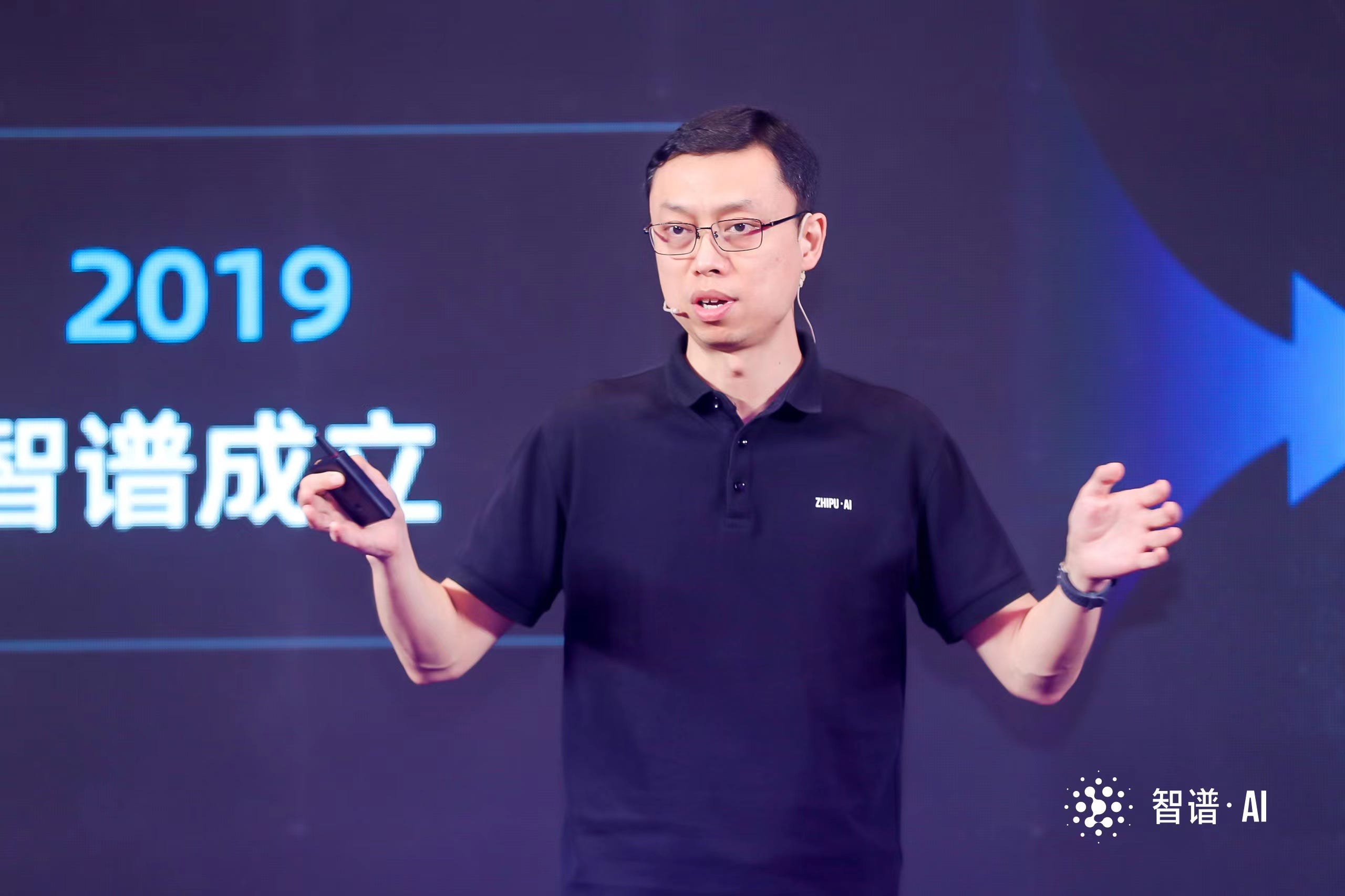
As of early 2023, MiniMax was the only one capable of competing with Light Years Beyond in fundraising. Founded in 2021, with a core team from SenseTime, MiniMax had relatively mature technology and products and was in its third round of financing.
Yan Junjie, born in 1989, graduated from the Chinese Academy of Sciences and started as an intern at SenseTime, rising to Vice President. He was the CTO of SenseTime’s Smart City Business Group, a major revenue source. “He was the first to talk to me about Foundation Models,” said Chen Yu, a partner at Yunqi Capital and an angel investor in MiniMax. They had connected early in 2021. “They have this ‘hammer’ (Foundation Model) now and understand that to grow, they need to find the right ‘nails.’”

Chen found Yan to be “very rounded.” In early conversations, they discussed not only technology but also commercialization—digital humans, smart cities, and 3D reconstruction projects in museums.
According to several shareholders, MiniMax had completed two rounds of financing early on: the first in late 2021 at a $200 million valuation, raising $20 million from Hillhouse, Mihayou, IDG, and Yunqi Capital. “They met with Zhang Lei (founder and CEO of Hillhouse) and Li Liang (founding partner of Hillhouse Investment), who immediately made the bet. Hillhouse set the price, and others followed.”
The second round was six months later, in May 2022, at a $500 million valuation, raising $50 million from the same old shareholders and Ming Capital.
So, after ChatGPT ignited a global frenzy, MiniMax quickly became China’s second unicorn in the LLM space. From late 2022 to April 2023, it raised over $200 million at a pre-investment valuation of about $900 million, with a post-investment valuation of nearly $1.2 billion. Besides old shareholders, the third round of investors included Oasis Capital, Tencent, Xiaohongshu, and Shunwei Capital.
MiniMax’s products have undergone several adjustments: starting from digital humans to the AI social product Glow, and later as an app factory, launching Hailuo AI, Talkie, Xingye, and other products. An old shareholder expressed some surprise at its development, saying, “Surprisingly good.”
Other players, StepFun and 01.AI, were established in April and May 2023, respectively.
By mid-2023, all six “players” were in place. Their start times differed, and the founders and company genes varied, but they all caught the golden time of dense capital investment in China’s LLM industry. This was largely driven by unprecedented investor fear—FOMO (Fear of Missing Out) on technological change—and the strong greed for AI, potentially a larger business wave than mobile internet. For those who came later, the time and psychological windows had both closed.
However, the winning odds and probabilities for the six “players” on China’s LLM table were still unclear.
“Nobody can see clearly,” said a founding partner of a leading investment institution. Hence, many investors made a very consistent choice: “Each person puts in $10 million to tens of millions of dollars to see the cards.”
The Betting
LLMs brought a unique capital feast to China.
On one hand, it was born in a series of constraints—tighter international relations, limited funds, narrower exit paths, more cautious investors, and fewer entrepreneurs; on the other hand, it supported a grand technological vision. Thus, participants were both excited and fragile.
The excitement was because this might be the only capital story that fit the aesthetic of dollar VCs. “Thank goodness, otherwise, I would have felt idle,” an investor described the sentiment after the AI wave broke out. “Since autonomous driving and online-to-offline (O2O), there have been few rounds of financing worth hundreds of millions of dollars.” Another investor said.
The fragile part was because the risks faced by LLM companies were immense. If scientific research failed or giants crushed them, the massive funds might disappear without a trace.
In this context, the mindset of VCs changed collectively. A fund partner described their psychology: “Everyone wants to invest but worries about losing too much, so the approach becomes maintaining close contact with entrepreneurs, investing a little money, and watching the cards.” Many funds think, “I can only invest $100 million, so I’ll wait and see. I’d rather invest more expensively for certainty.” This led to a long period where institutions took an incredible “club deal” attitude — “you invest $10 million, I invest $10 million, he invests $10 million.”
Although the mindset was similar, each institution’s timing, strategy, and amount varied.
According to several core investors, Hongshan was the most aggressive one among VCs. Besides Light Years Beyond, it invested in four of the six companies on the table: Moonshot AI, Zhipu AI, MiniMax, and StepFun.
Hongshan’s concentrated investment was in the first half of 2023. “Their approach was not to miss any opportunities,” the industry categorized this as “sector coverage.” At that time, Hongshan’s founding and executive partner Shen Nanpeng personally met with AI model entrepreneurs. While other funds hesitated among a few startups, Hongshan placed money in multiple ventures.
As mentioned, Hongshan naturally became an angel investor in Moonshot AI. However, investing in MiniMax wasn’t as easy—the company’s board included Hongshan’s old rival, Hillhouse.
“Hillhouse didn’t block them, just didn’t want them in so early,” a source close to MiniMax said. Dramatically, Hongshan’s entry resulted from an accident.
In mid-2023, ByteDance entered the LLM game, considering investment possibilities. “They were following two companies, MiniMax and StepFun.” MiniMax opened a round for ByteDance at a pre-investment valuation of about $1.6 billion, planned as its fourth round of financing. “We saw the SPA (Subscription Agreement),” a MiniMax investor said. Unexpectedly, ByteDance backed out, deciding “to either do it themselves or acquire a company.”
“ByteDance’s withdrawal led to Hongshan stepping in at a higher price,” he said.
So, Hongshan invested in MiniMax at a relatively expensive price. “At that stage, many things are unclear. No one can say for certain at that moment who will definitely succeed, you can only make the best choice available. When every possibility could succeed, you have to bet on the ones with the highest probability,” analyzed an industry insider. “What if MiniMax does well?”
Internally, Hongshan’s comprehensive strategy is related to its management mechanism. They have many investors, and each project requires a partner sponsor. In Hongshan, four projects are listed under different partners and teams: according to multiple people close to Hongshan, Moonshot AI is under Zheng Qingsheng, Zhipu AI under Guo Shanshan, MiniMax under Zheng Qingsheng, and Jieyue Xingchen under Sun Qian. “Neo (Neil Shen) listens to everyone,” said an industry insider.
In reality, although many institutions want to “peek at the cards,” the “peeking fee” each can afford varies greatly.
Talking about “peeking fees,” a partner of a fund calculated: suppose Hongshan (USD) has about $9 billion, $100 million is roughly 1% of its fund size, “so giving 0.5 points, $50 million to peek at the cards is acceptable.” But for some funds managing a few hundred million dollars, “losing 1% means a few million dollars, which is the limit they can afford for peeking at the cards.” From this perspective, a few million dollars for these institutions is roughly equivalent to $100 million for Hongshan - the depth of the pockets determines the peeking fee.
However, Hillhouse, which is comparable in strength to Hongshan, did not adopt an “investing-in-all” strategy and only made bets on two companies. Among them, Hillhouse heavily invested in MiniMax from the angel round and also invested money in Zhipu AI.
The contrast in investment strategies between Hongshan and Hillhouse may partly be due to their different predictions about the market endpoint. An experienced industry insider proposed: will LLMs in China be a winner-takes-all industry?
The first possibility is yes. If so, it must not be missed because “if you miss it, the returns on your fund will be vastly different from others.” The second possibility is no, and the market share will not be concentrated. “In this case, whether you invest in many or just one or two, the returns will not differ significantly. The person who bets on the first place may only earn 20% more than you.”
“The current issue is that no one can say for sure whether it is the first or second,” the person continued. Hillhouse might lean towards the second—domestic LLM companies are still in the stage of replicating OpenAI, “there is no magic trick to make them leap to the top.”
After looking at the two deepest pockets in Chinese VC, let’s look at another wave of funds. Their ranges and pocket depths vary, but they all made a common decision: to invest earlier and earlier.
“In the LLM industry, it’s better to invest early than to invest well,” said an early investor in a large model company. (Even Hongshan and Hillhouse have adopted this strategy at stages.)
Capital Today is a fund that uses this strategy actively but quietly, betting on Light Years Beyond, Moonshot AI, and Zhipu AI. It bet on the first round of Light Years Beyond and Moonshot AI. So did ZhenFund. It is worth mentioning that although Capital Today has many chips, it stopped adding to any LLM companies from the second half of 2023 due to risk considerations — “Their guiding principle is not to invest,” said an industry insider.
“The best window for LLM investment is just one month (from February to March 2023). After that month, valuations skyrocketed,” said another early investor. “For long-term tracks like artificial intelligence and autonomous driving, there are risks whether you invest in the first, third, or fifth year. You might as well invest early in the angel round.” In his view, “The risk hasn’t fundamentally changed with the valuation increase—you put money in early to buy the same chips for less; later, you need to spend more to buy the chips, and the risk hasn’t decreased.”
Primary market traders are high-risk bearers, constantly calculating probabilities and odds in their minds, choosing the right timing and strategy accordingly.
There are also some unusual ways of investing. Monolith Management (Monolith), founded by former Hongshan partner Cao Xi, is a new institution established just two years ago. Cao prefers to place a heavy bet on the company he most favors.
Cao recalled that in early 2023, he received investment opportunities from several LLM startups. His idea was, “First ensure qualification to get to the table, then decide which one to choose with limited funds.” He pondered for a whole month and made an extremely difficult decision at that time: he didn’t put money into any of the star projects amid the market enthusiasm.
Then he found the younger Yang Zhilin and consecutively invested in the first, second, and third rounds of Moonshot AI. So far, this new fund has risen to become the second-largest VC shareholder of Moonshot AI (the first is Hongshan) with an investment of about $38 million.
Investment and poker have similarities. In both activities, “players” need to calculate probabilities based on their cards and limited information on the table, along with behavioral and psychological games with other participants, making betting decisions accordingly. As the information on the table becomes more complete, the chips are heavier. “Isn’t this like every round of investment?” Moreover, “players” also need to manage their chips and allocate them reasonably, avoiding significant losses from one hand that ruin the whole game.
In the game of Texas Hold’em, players categorize styles as tight-aggressive, tight-passive, loose-aggressive, and loose-passive. Cao said he doesn’t play much poker, mainly to make friends, but he likes to use poker as an example. If it’s an investment, he hopes to maintain a style that is “definitely tight-aggressive” — not investing in many, but placing heavier bets on the ones with higher winning probabilities.”
In the game, tight-aggressive players strictly select only high-quality starting hands and once they decide to play, they actively bet and raise to seek the initiative.
However, Cao emphasized that investment is a serious business activity, and using Texas Hold’em as an analogy is just for illustrative purposes. Additionally, there is a fundamental difference between the two. “In Texas Hold’em, the cards you fold are gone. In investment, you can buy back the cards you previously folded—if you didn’t invest in round A, you can invest in round B; if you didn’t invest in round B, you can invest in round C.” He said, “So, swallow your ego, admit when you’re wrong, and get back in.”
Additionally, some investment institutions previously reluctant to act now want to wait for clearer signs.
For example, Matrix Partners China did not bet in 2023. Several people close to Matrix said they prefer to wait until the situation is clearer and then confidently bet on one—” putting $50 million or even more into one company.” They learned from the autonomous driving sector to first figure out “who is the ideal car company” before investing, so they can cover the industry chain up and down with a core enterprise.
However, in the first half of 2024, we exclusively learned from multiple sources that Matrix finally acted—they put money into MiniMax, “quite a significant bet.”
Source Code Capital, which heavily bet on Light Years Beyond and led the company’s round, withdrew from the game passively because of Light Years Beyond’s exit. After that, they didn’t immediately re-invest. Also, in the first half of 2024, Source Code Capital put money into Moonshot AI.
Gaorong Capital is also preparing to act. After holding back for more than a year, they might put money into Moonshot AI (the deal is not yet officially signed).
An interesting observation is that besides the top fund managers, many 1980s-born investors are actively investing in this wave of large models. They have either been promoted to managing partners or are partners themselves. For instance, Wang Huadong from Matrix, Chen Yu from Yunqi, Zhou Zhifeng from Qiming, and Cao Xi from Monolith. They are more ambitious, hoping to push their investment careers to new heights through a bold venture.
However, outside the game, there is a rather special investor. He described himself as, “I rarely play poker now, so I’m not willing to look at the cards now. My hands are tight, and I’m very cautious about looking at the cards, hahaha.”
He commented on his peers: “They don’t care; they have a lot of money, to be honest. Everyone is just putting some money in to see the cards, that’s the mentality.”
So, Zhu Xiaohu doesn’t care about the hustle and bustle of the game, he neither looks at the cards nor bets, shaking his head and walking away.
Club Deal
The LLM industry has rewritten the rules of the Chinese venture capital game.
Unlike the situation in Silicon Valley, where there was a ‘nearly full-line miss of LLM investment’ and ‘all LLMs are supported by tech giants’, Chinese VCs have actively joined forces with giants in the past year to support the domestic LLM companies from 0 to 1. The reason they are willing to invest is simple — “because there is a benchmark in the US,” said Shixiang Tech founder and CEO Li Guangmi. “We are good at copying and modifying, creating products similar to GPT-4 that fit Chinese needs and performing well in the Chinese market.”
However, in this card game, the players’ styles have uniformly changed.
This is partly due to the global economic downturn, but more importantly, the capital required for AI is enormous—single investments can range from hundreds of millions to billions, with a significant portion going into high-risk scientific research. Therefore, the VC strategy of “small bets for big returns,” investing from the Early Stage to the Growth Stage in a relay manner, has become ineffective.
“The classic VC is to write checks for no more than $5 million each. Writing ten checks would total $50 million. Although each one is high-risk, two or three out of ten will succeed, creating a huge leverage,” said Wang Mengqiu, founding partner of Crystal Stream Capital. “But now, for AI deals, because the check size for a single deal is so large, it starts as a Club Deal from day one.” This means that these LLM companies will not just have a few shareholders but many—” everyone is swarming in,” and “everyone is diversifying their risks.”
The distribution of funds has changed the hidden rules of the game. “Because everyone’s money can only be spread across a few companies, it means that there are fewer competitors in the same track for a single project, ultimately leaving 2-3 or even just 1 company. No one will believe that even one won’t succeed, so I have a 1/2 or 1/3 chance of winning,” Wang explained.
Thus, you see six startups emerging to compete in LLMs. The Club Deal phenomenon is evident in the financing structure of each of them. Take the highest-financed company, Moonshot AI, as an example. It has completed three rounds of financing to date:
The first round was in the first half of 2023, with a valuation of $200-300 million, raising $60 million from five investors: Hongshan, Capital Today, ZhenFund, Monolith Capital, and FunPlus.
The second round was in the second half of 2023, raising approximately $200 million, with a post-money valuation of about $700 million. This round saw strategic investors, with Meituan Longzhu, Alibaba, and Ant leading the investment, along with many others including Su Hua, Monolith Capital, Andon Health, Lanchi Ventures, and Xiang He Capital.
At the end of the year, Moonshot AI had a small additional round (equivalent to a plus round of the second round). “Two companies came in, 5Y Capital and Sky9 Capital, with not much money,” said a source. At that time, they were investors with a “look-and-see” mindset.
By the end of 2023, Moonshot AI had raised a total of less than $300 million, falling behind in the capital race. During the Chinese New Year, a special deal at a critical time turned the tide for them.
On the night of New Year’s Eve 2024, intense business negotiations lasted until the last second, which was the final deadline for signing the third round of financing documents for Moonshot AI. “Because there were many existing shareholders, there were no objections around midnight on New Year’s Day, which was the close day of the transaction,” said an insider. At this point, Moonshot AI completed over $800 million in financing, led by Alibaba and followed by Monolith, with a post-money valuation of over $2.5 billion. However, the third round did not end there.
“What was closed before the New Year was only part of the deal,” several insiders revealed. “There was another term allowing them to raise an additional $200 million in the next 60 days.” Ultimately, the total third-round financing exceeded $1 billion, the largest single round of funding for a Chinese LLM company to date. Currently, it is raising its fourth round with a pre-money valuation of $3 billion.
In just one year, this company rose from obscurity, its valuation increasing 15-fold, becoming one of the players with the most “chips.”
On the field, Alibaba has been the biggest variable since the beginning of 2024. From multiple sources, we learned that the negotiations between Moonshot AI and Alibaba were very short. To facilitate the deal, the two sides made some special arrangements:
1. Part of Alibaba’s investment was placed in a co-managed account to purchase Alibaba Cloud services;
2. The founding team of Moonshot AI has Super Voting Rights;
3. Alibaba occupies a seat on the board but does not have a veto right on financial terms such as financing and mergers and acquisitions—this means Alibaba cannot block other investors.
Afterward, Alibaba’s ambitions did not stop with Moonshot AI. A few days later, it further invested in MiniMax. This was MiniMax’s fifth round of financing, raising over $600 million, with Alibaba leading the $400 million investment, bringing the post-money valuation to over $2.5 billion. According to its shareholders, this financing came with no restrictive terms.
A strategic investor commented on the situation in the first half of 2024: “If Light Years Beyond doesn’t fail, it will be in a unique tier of its own, while others are in another tier. Today, that tier is gone. Now, in the tier of others, there are one or two more outstanding companies—and this is judged by Alibaba as the referee.”
“Everyone can see it clearly now,” Chen Yu said. “If you can’t raise big money, you don’t have compute, and you can’t produce the best model—that’s the current state of LLMs.” However, as things progress, VCs become increasingly powerless, and the development of China’s LLMs depends on the giants.
Among the giants, Alibaba, despite its late start, has been the most aggressive, investing in five out of the six players on the field—Moonshot AI, MiniMax, Zhipu AI, Baichuan AI, and 01.AI.
Many fund GPs analyzed that Alibaba’s aggressive moves are related to the appointment of Eddie Wu Yongming, who has an investment background, and Alibaba’s emphasis on the cloud business. “Eddie (CEO of Alibaba Group) is more decisive and willing to make moves.” Additionally, Alibaba’s urgent need for transformation is also a driving force—one GP noted that Alibaba did not fully hold onto its ticket in the mobile internet era, with Pinduoduo and Douyin aggressively attacking the e-commerce territory, “AI is a ticket for survival.”

Tencent has also invested in Light Years Beyond, MiniMax, Zhipu AI, and Baichuan AI. “Tencent is more cautious,” said the CEO of an LLM company that received investments from Alibaba, Tencent, and Lei Jun’s funds. “They clearly expressed that they would develop their own model, but they are also worried about not doing it well and losing the opportunity, so they also invest.”
Lei Jun’s funds and Meituan’s approach are more similar to Tencent’s. Lei Jun’s funds (including Xiaomi, Kingsoft, and Shunwei Capital) bet on Light Years Beyond, Baichuan AI, MiniMax, Zhipu AI, and Moonshot AI. Besides acquiring Light Years Beyond, Meituan has invested in two teams—Meituan Strategic Investment in Zhipu AI and Meituan Longzhu in Moonshot AI. However, according to sources close to Meituan’s top management, Wang Xing’s mindset leans towards learning and observation.
Unlike the “self-research + investment” dual strategy of these companies, ByteDance and Baidu are currently betting on developing their own models.
Many well-known entrepreneurs are also actively engaging with LLM companies. They either aim for strategic offense, strategic defense, or simply want to participate in the AI transformation. They hover over the card table, strategizing and waiting for the right moment.
You will see China’s top entrepreneurs, individual investors, and institutions gather at this high-stakes large model card game. They set aside past grievances and collectively invest with a pragmatic rather than exclusive strategy, reflecting the practical tendencies of China’s venture capital today.
“Making money is tough now, and no one can afford much loss, so they only invest in the best. But the best are well-known, and their valuations become very high,” observed a managing partner of an investment firm. “This has turned into a Fly to Quality.”
Wang Mengqiu even feels, “The concept of VC (Venture Capital) is no longer valid. We are not Venture; we hope to avoid risk as much as possible.” She said that VCs used to make money through non-consensus investments, but now, “Because the market has limited funds, everyone must believe in one direction to keep investing.” This has led to VCs relying on consensus to make money.
This is a unique Chinese capital story at a unique time—it is both silent and noisy, withering yet opulent, united yet shrewd, full of contradictions.
It is worth noting that today’s players still have a “small card” in their hands: their model capabilities have yet to surpass the level of overseas open-source models.
At the same time, the financing amounts of around $1 billion are still a drop in the bucket in the global model competition. According to statistics, OpenAI has raised over $10 billion, with the latest valuation exceeding $80 billion, a magnitude higher than Chinese companies.
In the past year, while six LLM unicorns emerged in China, multiple deep alliances between giants and LLM companies have formed in the US. For example, Microsoft + OpenAI, Amazon + Anthropic, Google with its own DeepMind, and Tesla + xAI. The industry believes that to obtain massive capital and resources, binding with giants is one foreseeable path for LLM companies.
In this regard, some Chinese investors’ mindsets have subtly shifted. The giant’s significant investments have increased VC’s sense of security, but on the other hand, they feel a sense of loss about the possibility of LLM companies being acquired by giants. Several investors expressed similar sentiments: they hope to bet on a “high-risk, high-reward company,” yearning to capture a mega-unicorn worth hundreds of billions or even more.
But what if a startup ends up being sold to a giant for $5 billion or even $10 billion?
“I can understand,” said one investor. “For me, this is a very successful failure, not a failed success.”
In the poker game of LLMs, the complexity lies not only in the models but also in the human gambits.