

China’s AI race is unfolding among the country’s three largest technology giants: ByteDance, Alibaba, and Tencent. As we enter 2026, these tech behemoths are going all-in on what many see as a war that will determine their futures.
ByteDance operates China’s most popular AI chatbot, Alibaba has built what many consider the country’s—and possibly the world’s—leading open-source LLM, and Tencent, though late to arrive, wields an ecosystem of apps serving over 1 billion users and is racing to catch up.
LatePost, my favorite Chinese business media (reminiscent of The Information), recently published a viral piece documenting the latest AI developments at these three companies.
Below is the full translation, assisted with Claude’s assistance and reviewed for accuracy.
Head-to-Head Fight At Chinese New Year
In November 2025, Yao Shunyu appeared at an internal Tencent meeting wearing casual shorts and flip-flops. This 27-year-old former OpenAI researcher and technical genius who proposed the ReAct paradigm had just been recruited by Tencent with a substantial offer.
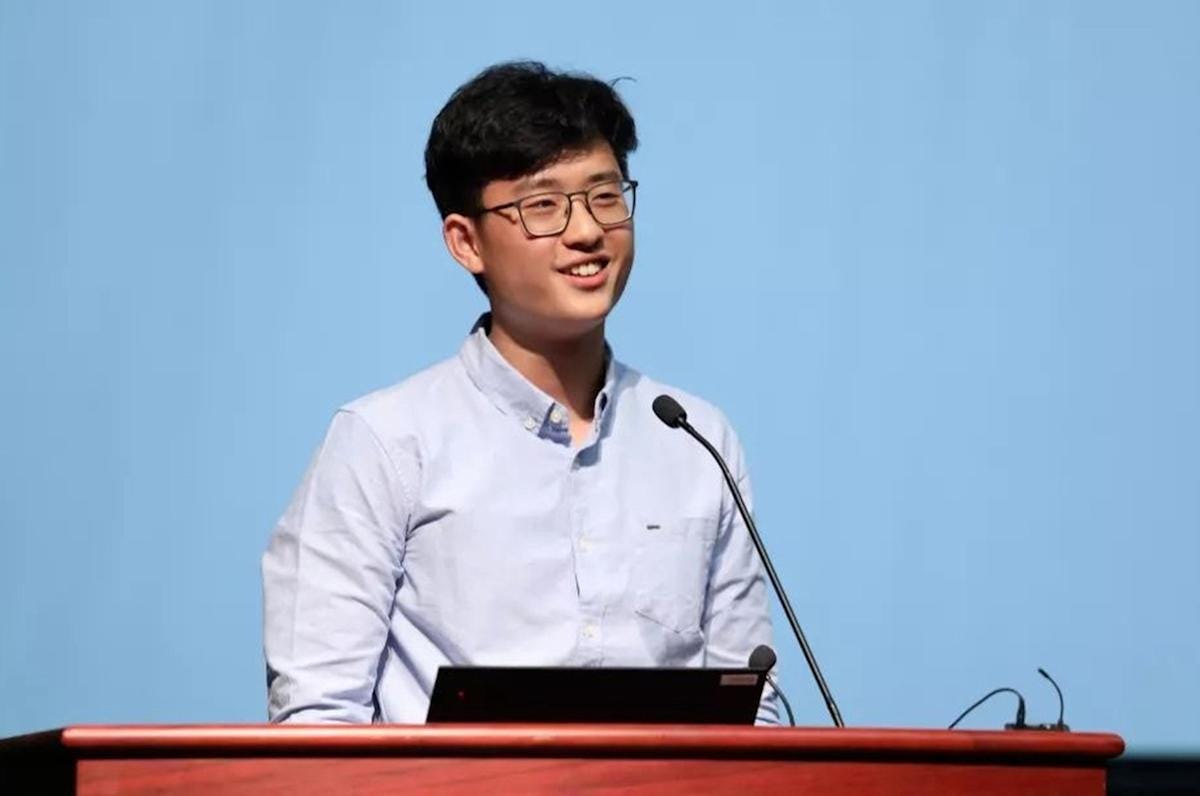
After joining, one of his key tasks was to help Tencent identify why the Hunyuan LLM had been underperforming over the long term, and report the situation directly to Tencent President Martin Lau. Yao Shunyu meticulously examined every link in the chain, frequently exchanging ideas with colleagues and interns until midnight—things his predecessors rarely did. He quickly became the top figure for Tencent’s large language models (LLMs).
“Hunyuan’s evaluation has major problems,” said one person present at the meeting, paraphrasing Yao Shunyu’s remarks. The gist was that the model was overly focused on chasing leaderboard rankings, incorporating benchmark data into the training set, which led to data contamination. Although the model excelled at answering questions, its performance in real-world scenarios was unstable. He hoped the team would stop chasing leaderboards and stop organizing work around rankings. At the meeting, Hunyuan’s relevant leaders also mentioned past problems with data, pre-training, and infrastructure.
Over the past two years, this Chinese internet company with the highest market capitalization and the largest traffic gateway has been relatively cautious about AI—whether in terms of investment intensity or organizational and product advancement speed, it lagged behind Alibaba and ByteDance. Until 2025, this state began to change: offering high salaries to attract technical talent, large-scale reorganization of model and AI product teams, and continuously tilting resources toward “Yuanbao (Tencent’s AI chatbot).” Yao Shunyu’s arrival marked the clearest turning point in this series of changes.
“Completely disrupting the previous pace and inertia is the first step back to the right track,” said one person from the Hunyuan LLM team.
Tencent is rallying its forces, while Alibaba is attempting to define the AI narrative.
Alibaba has proposed a new concept: “Tong通-Yun云-Ge哥”—Tongyi Laboratory, Alibaba Cloud (云yun means cloud in Chinese), and Pingtou Ge (平头哥T-Head), representing the trinity of AI, cloud computing, and chips. Alibaba considers itself one of the few technology companies in China with full-stack AI capabilities—from chips and AI models to cloud services and products. This is also Google’s story.
Among the three major internet giants, Alibaba’s core business has the lowest profit efficiency. According to reports, ByteDance’s net profit in the first three quarters of this year was around $40 billion; during the same period, Tencent and Alibaba’s net profits were around $30 billion and $10 billion respectively (calendar year basis). But this hasn’t affected its determination to invest.
According to a source familiar with the matter, Alibaba is considering increasing its investment in AI infrastructure and cloud computing over the next three years from 380 billion yuan (~$55 billion) to 480 billion yuan (~$69 billion). Domestically, Alibaba has its self-developed chip Zhenwu 810E; overseas, it is “using truckloads to transport purchased GPUs,” said one insider. At its most aggressive, “even consumer-grade graphics cards like the RTX 4090 were purchased in large quantities to build inference clusters and supplement inference throughput.”
In December 2025, the daily user acquisition spending for Qwen App, Ant Group’s Lingguang and Afu, each exceeded 10 million yuan (~$1.4 million); Qwen App’s single-day spending peak once reached 15 million yuan (~2.2 million).
For ByteDance, “AI is an opportunity that can affect the entire world,” said someone close to ByteDance’s senior management. From TopBuzz and TikTok to TikTok Shop, since its founding, the company has been searching for such opportunities. “Only things closer to the center of the world have greater exploratory value.”
Compared to Tencent and Alibaba, which have weaknesses in models and products respectively, ByteDance’s capabilities are more comprehensive. By the end of 2025, Doubao became the first AI product in China to break 100 million daily active users; Doubao’s AI models (including their LLMs and other multimodal models) processed an average of 63 trillion tokens daily, growing over 200% in six months.
In 2023, ByteDance founder Zhang Yiming said that the operating system-level opportunity of this era is AI + computing.
In 2026, ByteDance will fully accelerate the globalization of its AI business, with regions like Southeast Asia as priorities; it won’t enter the United States for now. According to reports, ByteDance’s goal is to become at least the third-largest player globally in generative AI. By the end of 2025, Doubao’s overseas version Dola had surpassed 10 million daily active users globally.
China’s current wave of AI enthusiasm began in 2023. In the early stages when star startups attracted the most attention, internet giants weren’t particularly prominent. The three chose different paths: Tencent emphasized AI application implementation and therefore waited relatively quietly for model capabilities to mature; Alibaba pushed its AI model toward open source, betting on building a larger ecosystem to open up incremental space for its cloud business; ByteDance started late and could only make up for technical shortcomings through saturated investment as quickly as possible.
Until early 2025, DeepSeek redrew a starting line for the entire industry, and the giants became active—the battlefield began to smell of gunpowder.
The 2026 Spring Festival (Chinese New Year) became the flashpoint of this war.
According to reports, ByteDance secured the Spring Festival Gala partnership at the highest price—its Volcano Engine became the AI cloud partner for the Spring Festival Gala, and Doubao will also launch various interactive features during the gala.
Tencent hasn’t sponsored any gala-type programs since 2015, but it clearly understands the value of the Spring Festival. Just a month ago, Tencent CEO Pony Ma inquired with the Yuanbao team, concerned about whether they had sufficient GPU resources. “He wanted to ensure that Yuanbao wouldn’t be constrained by computing power at this critical moment during the Spring Festival, affecting its performance.”
The two companies that missed the Spring Festival Gala decided to take the initiative on the product side.
Tencent Yuanbao prepared 1 billion yuan in cash red envelope incentives and a brand new AI social function called “Yuanbao Pai” for battle. At the group employee meeting on January 26, 2026, Pony Ma said they would give the marketing budget saved to users, letting everyone relive the joy of grabbing red envelopes from years past, and hoping to recreate the glorious moment of WeChat red envelopes in 2015.
Next to the facial recognition entrance on the first floor of Building C4 in Alibaba’s Xixi Park, every Monday morning and Friday evening are filled with suitcases belonging to Qwen App employees. They fly in from Guangzhou, Beijing, and other places for closed development, then fly away like migratory birds on weekends. This situation continued at least until the Spring Festival.
Alibaba sources told us that Qwen App will send red envelope benefits to users during the Spring Festival (turns out it’s 3 billion yuan, or $431 million). No company controlling traffic wants to give up the battle for gateways. Baidu also offered 500 million yuan in Spring Festival red envelopes, and Wenxin’s AI social features appeared on the Spring Festival battlefield.
Over the past twenty years, China’s three major internet giants have fought almost every key battle in the internet space—from e-commerce and lifestyle services to long and short videos, social media, gaming, mobile payments, and enterprise services.
Previously, they fought local battles—losing one card, the game could still continue. This time it’s more like the “Battle of Midway”—a turning point in the overall war. Once lost, they might lose the entire future.
After DeepSeek, the War Truly Began
Among all of China’s major tech companies, ByteDance was one of the later starters in LLMs. Before OpenAI’s ChatGPT launched at the end of 2022, Baidu, Huawei, and Alibaba (in order of release) had all released large language models, but ByteDance had not.
Starting mid-2023, ByteDance began accelerating its catch-up, quickly addressing shortcomings in infrastructure, LLM R&D, hardware and software products, and talent; by late the following year, Doubao became the AI product with the largest user base.
In January 2025, High-Flyer’s reasoning model DeepSeek-R1 emerged, directly driving an explosion on the product side: within less than a month of DeepSeek Chatbot’s launch, its daily active users broke 10 million, immediately surpassing Doubao.
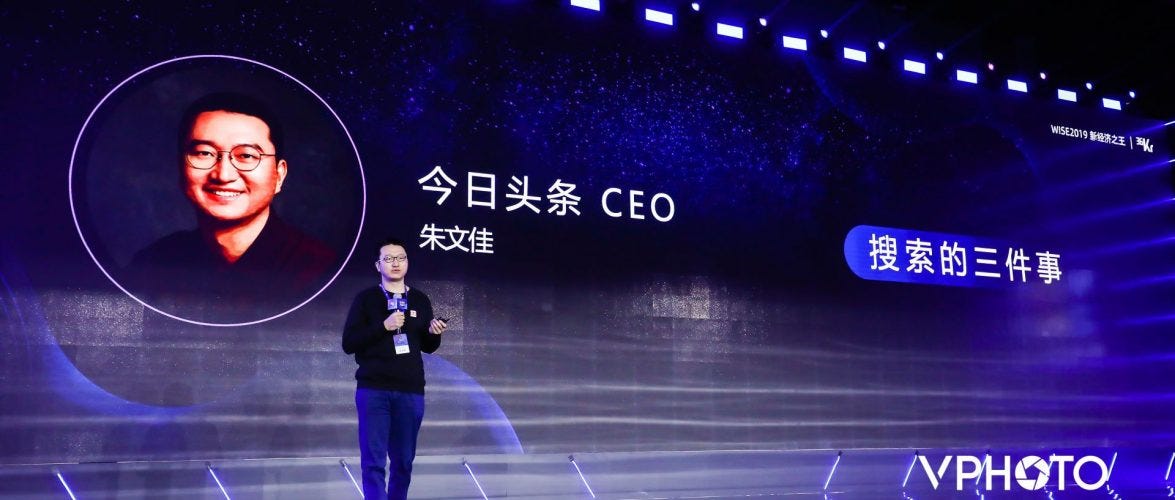
This reasoning model wasn’t a novelty. After OpenAI’s o1 model preview appeared in September 2024, ByteDance paid attention to this direction and attempted to train its own reasoning model. Three months later, the results weren’t ideal. Later, in multiple settings, Zhu Wenjia, then head of ByteDance’s AI model department Seed, said “it was my mistake,” according to someone close to ByteDance’s senior management.
ByteDance’s model and product teams urgently convened to discuss countermeasures. The initial approach was to implement the capability in the frontend product first—that is, not making a breakthrough in the AI model from scratch, but first training/fine-tuning a smaller reasoning model for Doubao to quickly catch up—on one hand doing supervised fine-tuning with synthetic/annotated samples that included reasoning steps, and on the other hand trying DeepSeek’s data. However, the final results were poor, and they decided not to rush it but to carefully refine the foundation model.
After the Spring Festival, more and more internal ByteDance products considered integrating DeepSeek. At a product requirements meeting for Jimeng (ByteDance’s Sora-like video generator app), everyone assessed feasibility. People close to management told us that the legal and compliance teams had the strongest objections, believing that ByteDance’s products shouldn’t promote other companies’ models. The discussion yielded no conclusion, and finally the business leader made the call to continue integration.
In early February, former Google DeepMind Vice President Wu Yonghui joined ByteDance to lead fundamental theoretical research for AI models in the Seed department. Several algorithm and technical leaders who previously reported to Zhu Wenjia began reporting to Wu.
The person close to ByteDance’s senior management told us this was a long-planned adjustment unrelated to DeepSeek. ByteDance knows what kind of people to use at what time. Zhu Wenjia wasn’t a native AI talent, but in the early stages when ByteDance developed AI models and lacked sufficient influence to attract top practitioners, he was indeed the most suitable choice—understanding both technology and products, and having served as business number one; more importantly, he had sufficient rapport with group management.
When ByteDance’s senior management initially approached Zhu Wenjia to lead AI models, both sides had a consensus: ultimately someone who better understood AI should take the top position. “Wenjia had long been prepared to hand over at any time; it just happened that at this juncture, Yonghui arrived.”
Wu Yonghui largely continued ByteDance’s previous technical route, but after taking office, he led the breaking down of barriers between model departments and groups, achieving data sharing across various stages and teams. At a Seed all-hands meeting, Wu Yonghui emphasized the importance of long-term research, making it clear they would explore longer-cycle, uncertain, and bold topics.
Someone close to ByteDance’s senior management said ByteDance’s current infrastructure (engineering capability) is already stronger than any domestic company. But compared globally, the biggest problem is the lack of people like those at OpenAI who can propose directions and conduct frontier exploration, such as GPT-4o and Sora. “China hasn’t had real corporate research institutes in the past because private enterprises were too poor; now we can finally try.”

Unlike ByteDance, DeepSeek’s emergence allowed Tencent to see new opportunities.
Starting in 2023, Tencent’s investment in AI models was relatively cautious—it didn’t recruit AI talent on a large scale, nor did it actively stockpile computing power. It consistently emphasized externally that it valued AI’s practical applications more.
However, by the end of 2024, ByteDance’s Doubao daily active users had climbed to a high of 20 million, while Tencent Yuanbao only had a few hundred thousand, which made Tencent nervous.
Yuanbao not only launched a year later than Doubao, their initial positioning was also vastly different—Doubao’s goal was always to be an independent all-knowing, all-capable assistant; Yuanbao was Tencent’s product for testing Hunyuan LLM’s technology. So for a long time after its birth, Yuanbao was in a state of “seeking cooperation with various businesses within the company,” said an early Yuanbao strategy person.
At Tencent’s Binhai Headquarters Tower in Shenzhen, senior management discussed how to respond. Jiang Jie, Tencent Vice President and head of the Hunyuan LLM, issued a military order: “We must catch up to Doubao within six months.” After the meeting, Jiang Jie began recruiting a new number one for Yuanbao and expanding the team to rally forces.
Before joining Tencent, Jiang Jie was Alipay’s BI Chief Architect. At Tencent, he was responsible for Tencent’s big data platform and advertising technology system, but had never led a consumer-facing product; the Technology and Engineering Group (TEG) where Yuanbao belongs had never incubated a consumer product. Ultimately, Tencent decided to look for candidates elsewhere within the company.
A source told us that Wu Zurong, head of Tencent Meeting, and Zhang Xiaochao, head of QQ, were the two candidates senior management considered most suitable.
Both had experience building products from zero to one. The former had fought tough battles—during the pandemic, with a rhythm of stress testing at dawn and iterating during the day, he pushed Tencent Meeting to break out of its niche; the latter focused on social products, going from QQ to WeChat and back to QQ, and was also the first head of Video Accounts.
In large companies, innovative businesses are opportunities but also mean enormous risk. Finally, with the support of Dowson Tong, head of Tencent’s Cloud and Smart Industries Group (CSIG), Wu Zurong took on this task.
Wu Zurong’s appointment came at just the right time. A month later, during the Chinese New Year, a huge growth opportunity arrived. After the DeepSeek-R1 model appeared, Tencent became the most active large company in embracing it. Pony Ma personally pushed all businesses to integrate it. At the same time, Tencent began ordering GPUs to supplement computing power, ensuring DeepSeek could run smoothly within Tencent’s products.
After Yuanbao integrated the DeepSeek model, it leveraged the momentum to launch promotions, even advertising in county towns and rural areas. The result was meteoric—in one week, daily active users grew tenfold, approaching 2.6 million, later gradually climbing past 10 million, currently ranking among the top three domestically.
Alibaba appears to be the giant least affected by DeepSeek. Before DeepSeek emerged, its Qwen LLM was already one of the most popular models in the open-source community, even rivaling Meta’s Llama 3—in terms of downloads on distribution platforms like Hugging Face and developer ecosystem activity, it has long been stable in the global first tier.
As one of the few players in China with “full-stack capabilities,” the improvement in intelligence still allowed Alibaba to see a new future: AI models could serve as a trump card for Alibaba Cloud, using self-developed models to keep enterprise customers on the cloud and drive consumption and revenue from computing power and platform services—a path validated in the United States.
The self-developed chip business also has an opportunity to accelerate its entry into the market. According to our understanding, Alibaba’s PPU (Parallel Processing Unit) Zhenwu 810E has become one of the main chips in China’s new AI computing power market, finally receiving its first external major customer order in 2025. On January 22, 2026, Alibaba decided to support its chip company Pingtou Ge (T-Head) in pursuing an independent IPO in the future.
An Alibaba source revealed that in 2025, Alibaba’s senior management set the tone at an internal meeting that the new year would no longer prioritize e-commerce GMV growth as the top goal. Strategically, they decided to temporarily scale back categories like consumer electronics and Maotai that “can drive volume but have thin margins,” and invest more resources in categories like cosmetics and apparel that can better contribute revenue and profit. An Alibaba source analyzed that the underlying logic is—prioritize thickening revenue and profit, and invest the money earned more intensively in AI.
When AI finally has the opportunity to become infrastructure, the giants’ competition is no longer just about comparing models themselves, but quickly shifts toward the race for super gateways.
Doubao’s Ferocity: The Formation of a Super Gateway
Among the three giants, Tencent has a stable social moat and the world’s number one gaming business; Alibaba has rapidly growing cloud business beyond e-commerce. ByteDance’s foundation is almost tied to Douyin—this is its most core source of traffic and revenue, with advertising, e-commerce, and lifestyle services all relying on this product.
In 2023, the AI wave arrived. Old products like Toutiao and Douyin all launched new explorations. Zhang Nan, former head of Douyin, led the team to incubate the AI creation platform Jimeng, with her goal being to become the Douyin of the AI era. However, the product that first gave ByteDance hope of succeeding Douyin wasn’t them, but an AI assistant called Doubao.
Over the past two years, the landscape of AI super gateways has been constantly changing: in 2024, Moonshot’s Kimi initially showed its edge; in early 2025, the obscure DeepSeek made great strides to catch up, with downloads once topping the charts, and Tencent Yuanbao also squeezed into the top three; at the end of 2025, Alibaba’s Tongyi, renamed Qwen, made a renewed push. But throughout this process, Doubao has always been number one. By the end of 2025, it became China’s first AI product to break 100 million daily active users.
A ByteDance person said few people know that Doubao is a strategic-level product with relatively restrained advertising spending in ByteDance’s history. The choice stemmed from two reasons: early LLM capabilities weren’t strong enough, and after large-scale user acquisition, user retention wasn’t good.
Jimeng was similarly conservative in early advertising spending, with new users mainly from organic traffic. The team at most placed some cheap brand ads on Xiaohongshu and Bilibili. A person responsible for Jimeng’s growth told us that Jimeng’s advertising strategy wasn’t to first calculate “how much money a new user will make me in the future, how long they’ll stay,” but more like drawing a red line first: the advertising cost for acquiring a new user can’t exceed a certain amount—keep buying if below this line, stop if above.
Second, the larger the user base of AI products, the higher the cost, and current Chinese AI products have no clear commercialization path.
Since launching in 2023, Doubao’s strategy has undergone multiple transformations. ByteDance once tried introducing “supply side” and “consumption side” concepts in Doubao, guiding users to customize more bots (chatbots), then importing them to the recommendation page and distributing them to other users. But later they found that except for the official bot “Doubao,” other bots didn’t significantly impact the data. Later, the focus shifted to building it as an efficiency tool.
In early 2024, Moonshot’s Kimi became popular for its ultra-long text processing capability. At the same time, Kimi was also heavily advertising on Bilibili and Xiaohongshu. “We were also on the road, but didn’t expect to be preempted by a startup,” said someone responsible for Doubao’s long-text direction.
In fact, Kimi’s cost-effectiveness in buying users on these two community platforms was extremely low—dozens of yuan for one user, with customer acquisition costs even higher than some financial products, burning hundreds of thousands in a day. Doubao also began accelerating, with the algorithm team compressing the model iteration cycle to one version every three days.
Doubao’s leader is Zhu Jun (Alex), who once captured changes in young people’s social patterns on a train and later created Musical.ly, a short video product that became popular in the United States. People familiar with him describe him as an “internet poet.” He often writes his current state of mind in his Feishu signature—sometimes comparing himself to the “Nanke Prefect,” using allusions to express feelings about fame being like a dream; sometimes casually sharing a novel he recently read. Zhu Jun also has many romantic imaginations about AI—when ChatGPT seemed to define the AI assistant product form, he insisted that AI should be more “anthropomorphic” and “human.”

“We also joked about creating a Bot universe similar to the Marvel universe in Doubao, hoping users could find various companionship in it, jokingly calling it the ‘Xiaoning Universe’ at the time,” said a Doubao employee. Xiaoning is a Doubao Bot focused on emotional companionship, with the full name “Xiaoning Who Loves Chatting.”
At the end of 2024, the industry trend leans toward multimodality. Doubao launched the Seedream 2.0 model to strengthen text-to-image capabilities, video dialogue capabilities, and video generation capabilities. The previous year, it also launched real-time voice call functionality, with “emotion” as a key refinement direction—they traveled across the country to collect dialects, with accent granularity refined to district and county levels within cities; deliberately named Doubao’s default voice “Taozi,” which was also the voice actor’s online name; and did a series of stylized dialogue training on the model to give it a distinct personality.
In early 2025, videos of users creatively “voice-training” Doubao suddenly went viral on Douyin; a few months later, gameplay around Doubao for photo editing, group photos, and background changes became popular on Xiaohongshu. In half a year, Doubao pulled users’ imagination of AI from “deep conversation” back to more daily use. “It was so similar to Douyin back then—a fun feature appears, a group of creators and young people make it popular, ultimately forming viral spread,” said a Douyin person.
“We were all stunned because this wasn’t decided at all,” said a Doubao person. These gameplay features began bringing millions of new users to Doubao daily.
“The battlefield returned to Alex’s area of expertise,” said a Doubao person. Doubao tasted success and thus upgraded its strategy, beginning to accelerate “building a matrix”—because they weren’t sure which scenario would explode first, they had to try every scenario, gameplay, and feature. They knew that even though many feature points couldn’t withstand scrutiny and users would stop using them after playing for a while, they could slowly accumulate mindshare.
Zhu Jun and the team spent more effort recruiting product strategists, whose core job was to seek scenarios, gameplay, and features more proactively.
A Doubao business leader once provided a talent requirement document to the recruitment team, opening with a world-famous painting. “We just wanted to find people who could resonate with that painting, understand that painting,” said a person responsible for Doubao recruitment.
In the second half of 2025, as Doubao’s user numbers continued growing, the proportion of non-AI core users was also increasing. They had a characteristic: after opening Doubao, they rarely asked questions proactively, mostly clicking on preset questions that came with the system or simply chatting a few sentences. The team needed to accurately judge from the overall data which features truly had growth potential and whether users were satisfied with the generation results.
Doubao decided to adjust its user acquisition and growth pace, spending time accommodating new users and clarifying user needs. In the first round of competition, scale is always greater than efficiency, and user numbers are the only standard. But entering the second round, they gradually realized the importance of user quality.
“Doubao’s real challenge actually arrives after breaking 100 million daily active users,” said a Doubao person.
Yuanbao’s Catch-Up: From Engineering Debt to Product Rhythm
During the 2025 Spring Festival, Yuanbao completed a beautiful explosion. After the heat subsided, Tencent accelerated its catch-up.
After Yuanbao leader Wu Zurong took office, he pushed two things. First was team expansion—not only drawing core staff from Tencent Meeting, which he previously led, but also recruiting intensively from outside with a standard of “directly doubling salaries.” He personally appeared for important candidates, scheduling another meeting if one wasn’t enough, with extremely fast rhythm; second, he clearly benchmarked against leading competitors, first catching up to ChatGPT and Doubao in basic capabilities, not talking about differentiation but first filling shortcomings.
But organizational adjustments didn’t automatically clear historical problems. The engineering and data debt that Yuanbao accumulated in the Technology and Engineering Group (TEG) was carried into the Cloud and Smart Industries Group (CSIG).
Someone close to Yuanbao told us that in the past, TEG’s data cleaning and annotation in small model training wasn’t standardized. Taking the LBS intent recognition model as an example: when users ask “What’s good to eat nearby?”, this is clear intent; while “Any recommendations for good food?” is ambiguous intent.
If these two types of samples are mixed together in the training set, the model easily “learns incorrectly,” increasing the misclassification rate. The new team’s first step after taking over wasn’t to add models or stack parameters, but to return to the most basic engineering work—unify annotation caliber, rebuild evaluation sets, remove ambiguous samples, and then retrain all related small models according to the new data system.
After integrating DeepSeek, Yuanbao’s capabilities improved significantly. For example, when users search for “Yu Hua’s novels,” the team’s vision was for Yuanbao to pop up four reading cards while answering, allowing users to jump to WeChat Reading with one click; keywords in the answer body should also support underlining and link jumping. “Hunyuan’s two models often failed, but DeepSeek could perform stably,” said the Yuanbao person above.
But DeepSeek is after all an external model, making it difficult to help Yuanbao do specialized specific training. Tencent’s own Hunyuan large model has relatively weak capabilities and has its own technical improvement goals, also needing to chase leaderboard rankings. This resulted in the Yuanbao team being unable to validate some ideas on the product, with many desired features unable to be implemented.
A Yuanbao person gave an example: if Hunyuan’s new version tightened answer rules with the purpose of making the model “talk nonsense” less, this is often the correct choice in technical evaluation; but when it comes to a frontend product like Yuanbao, users might feel “the answers became colder, the experience actually got worse.”
Search is another challenge. Chatbot products don’t just compare whether models can accurately understand user intent, but also test whether they can quickly and clearly provide the right answer. Yuanbao once conducted internal evaluations showing Doubao’s search accuracy was considerably higher than Yuanbao’s. “ByteDance has years of accumulation in algorithmic recommendations; this is its advantage,” said the person above.
At the end of December 2025, with senior management coordination, Tencent transferred the Model Application Center and Search Algorithm Center, originally under the AI model team, to the Cloud and Smart Industries Group (CSIG) where Yuanbao belongs. Hunyuan and Yuanbao established joint design, cross-deployment, code review and sharing mechanisms to reduce mutual attrition.
But Yuanbao really came to the table too late. The team has calculated that Doubao currently has over forty basic feature points, and in a year, “we’ve only caught up to thirty-plus.”
They set a “three-step annual” rhythm for Yuanbao: first catch up to Doubao in a few advantageous scenarios, then achieve local superiority, and finally complete overtaking through innovation points. The North Star metric is very clear—the frequency of users inputting prompts, followed by the number of high-quality prompts. Only when these two metrics work can product innovation be meaningful. At the same time, Tencent is also accelerating the embedding of Yuanbao’s AI capabilities into national-level products like WeChat, QQ, Docs, and Meeting to amplify synergy effects.
Compared to Doubao’s “chaotic punches beating the master” approach, Yuanbao appears more restrained. It chooses to cut in from clear, controllable vertical scenarios—education, image generation, office, shopping. “The temperament is like an engineering man,” described a Yuanbao algorithm person. Tencent’s product approach is very classical: not aggressive, emphasizing experience, with each feature required to reach at least 80 points before being allowed to launch. This is an advantage; but the cost is also obvious—”AI needs to let imagination fly and even make many trial-and-error attempts to touch the technical boundaries and realize the value of technology, and this is precisely where Tencent is most cautious.”
“Ultimately it’s that Tencent’s traffic anxiety is far lower than ByteDance’s,” evaluated a ByteDance AI product manager. The latter seemingly has traffic engines like Douyin, Fanqie, and Toutiao, but the user profiles inside are very homogeneous, leaning toward entertainment attributes, with limited space for cross-business traffic. Meanwhile Tencent has leading products in almost every track—WeChat, QQ, Tencent Video, Tencent Meeting, QQ Browser, QQ Music—and can find whatever kind of users it wants. This is its confidence.
“Doubao and Yuanbao are at two extremes of the spectrum,” said a ByteDance person. One extremely free-flying, one extremely cautious—both could succeed.
“Doubao’s opportunity lies in running fast enough to maintain absolute leadership in speed; Tencent’s opportunity lies in having strong enough judgment to do the right thing at the right time.”
This is more like a public intelligence war. A Yuanbao person said: “We discuss a feature today, and Doubao can know about it the next day.” Doubao is also under pressure. “They’ve basically poached our people all over.” Sometimes, the winning move isn’t in a single feature point but in each group’s resource mobilization: Douyin’s mature stickers, effects and other content assets continuously contribute to Doubao’s image and video generation; Yuanbao turned to ecosystem collaboration, and after cooperating with “Honor of Kings,” activity clearly rose.
Compared to native AI applications like Doubao and Yuanbao, the transformation of older products like Alibaba’s Quark and Tencent’s QQ Browser is even more difficult.
A Quark person told us that the industry previously had a consensus: after Chatbot appeared, search scenarios would be the first to be disrupted. Based on this judgment, Alibaba believed that transforming the search experience starting from Quark browser was the smoothest path toward AI product forms. But in fact, Quark’s user mindshare is already very fixed—cloud storage, photo-based problem search, web browsing.
In 2025, Quark launched the concept of an AI super box, but the final result was that the vast majority of people using Quark’s AI capabilities were new users who came to try it after seeing promotions, while the original loyal users still used Quark’s old features according to past habits.
QQ Browser’s user profile is older and more downmarket than Quark’s, with even more solidified mindshare. They also discovered a new problem: QQ Browser launched an AI web assistant feature, hoping users could use it to interpret web content at any time while browsing. However, “high-quality content on web pages is extremely scarce, and the proportion and frequency of content needing interpretation are very low, far lower than WeChat Official Accounts,” said a QQ Browser person.
The transformation paths of the two browsers led to the same destination, ultimately having to seek other routes.
QQ Browser had planned to create a more lightweight, exploratory new browser product; at this time, another team within the department was also exploring an independent note-taking product—this was also one of the hottest AI product directions in Silicon Valley at the time. Ultimately, they decided to merge three capabilities—AI web assistant, lightweight AI browser, and AI note-taking product—into one product, thus giving birth to the intelligent office platform ima.
Under the push of Alibaba’s senior management, Qwen App (renamed from Tongyi App) replaced Quark as Alibaba’s core role in competing for the super gateway.
In earlier years, when this product was still in Tongyi Laboratory, it wasn’t the most watched product but was more like a technical testing ground: used to verify new capabilities, run evaluations, and make demos. Compared to building up its user base, the Tongyi team cared more about building up the ModelScope open-source community.
Some team members had tried many consumer-facing products, such as digital humans and image/video generation mini-programs, “but couldn’t get support,” said a former Tongyi Laboratory person. Even after being transferred to Alibaba Intelligent Information Business Group, its status was still inferior to Quark browser.
In November 2025, Qwen App finally ushered in a turning point in its fate. It began chasing Doubao and Yuanbao, with various businesses within the Alibaba system, including Ele.me Fresh and Fliggy, actively developing relevant capabilities for Qwen. In less than two months, Qwen App iterated more than a dozen times, maintaining an ultra-high frequency of 2-3 updates per week, with some requirements taking only 1-3 days from design to launch.
The Invisible Battlefield: Organization, Collaboration, and Internal Gaming
Giants’ wars affect the whole body when one part is pulled. Core AI departments lead the charge, but how far they can go depends to a certain extent on the support and cooperation of other business departments within the company.
At Tencent, WeChat’s traffic and ecosystem are the most critical resources. When the QQ Browser team was making the AI web assistant, they discovered that high-quality content on PC websites was too scarce, and users had no need to use AI to interpret content, so they partnered with WeChat to obtain Official Account API interfaces, allowing users to forward Official Account articles to the browser with one click for content analysis—this was the product’s biggest moat at the time.
As a new product, Yuanbao also needs to borrow power from Tencent’s other businesses, such as obtaining resources from WeChat, Music, Gaming, and Video; but sometimes, it also needs to provide its own value.
Tencent News was very proactive about cooperation with Yuanbao. A Tencent News product manager told us that after integrating Yuanbao, they found users really liked @ing Yuanbao in the comment section and liked having Yuanbao help interpret content, with activity greatly improved, so they began frequently urging Yuanbao to update and iterate quickly, saying they could provide any support needed.
But interests between departments always have inconsistencies: new businesses value gateways, resources, and growth speed; old businesses controlling traffic and budgets need both to defend interests and prove they can transform.
Doubao’s success is inseparable from Douyin. This is a super traffic gateway with over 800 million daily active users and is also the most efficient advertising platform for user acquisition and growth domestically. A Douyin person revealed that ByteDance’s internal products buying traffic on Douyin go through an internal settlement system, with advantages in both cost and efficiency.
But Douyin doesn’t always keep its doors wide open to Doubao. In 2024, Doubao hoped to obtain a more direct product gateway in Douyin, but ultimately wasn’t approved. The surface reason was: Douyin’s volume is too large, and Doubao needs to figure out itself which users to select and how large a scale to test. The two sides repeatedly discussed for several months without forming consensus. Finally, Douyin’s suggestion was—first try in products with smaller volume, like Kesong, a community product benchmarked against Xiaohongshu.
This ambiguous, restrained attitude reflects the complex competitive-cooperative relationship within ByteDance. On one hand, Douyin hopes to firmly grasp AI capabilities and key gateways related to AI within the app; on the other hand, this also means higher uncertainty.
Management style sometimes also determines the collaboration mode between different teams.
A Tongyi Laboratory person said the Qwen team grew up in a corner with almost no attention, but with less interruption and less pulling, the team could focus energy on the model itself’s iteration. This also gave the team stronger motivation for cross-boundary exploration. “Job scope is one thing, what you can actually do is another,” said the person above.
In 2025, the Qwen model team formed an embodied intelligence group; at the same time, some were also advancing directions like voice and text-to-image, while Tongyi Laboratory already had teams doing similar research internally. Team boundaries became more blurred.
According to our understanding, Qwen is also recruiting infrastructure talent responsible for engineering-related affairs. In infrastructure division of labor, Qwen has been collaborating with Alibaba Cloud’s artificial intelligence platform PAI: Qwen does more agile development within a unified framework, while PAI focuses on usability and platformization integration. “But both sides have their own leaders and pursue their own indicators, making it very difficult to truly work as one,” said a Qwen large model team person.
“Qwen appears to be silently swallowing more businesses,” said the former Tongyi Laboratory person. In 2025, after merging from DAMO Academy into Tongyi Laboratory, multiple technical leaders successively left, including Huang Fei, former head of natural language processing direction at Tongyi Laboratory, Yan Zhijie, former head of the speech team, and Bo Liefeng, former head of the applied vision team.
A Tencent person told us that Hunyuan’s current thinking is similar to Qwen’s. Yao Shunyu mentioned the Co-design (joint design) R&D model at a recent internal meeting: model R&D shouldn’t only pursue efficiency at the algorithm level but should connect infrastructure, algorithms, and the product side to form an integrated development process, thereby shortening iteration cycles and reducing internal friction.
Unlike Alibaba’s Qwen team which leans more toward “bottom-up” exploration of infrastructure and algorithm linkage, Tencent directly placed the AI Infra department under Yao Shunyu’s management system.
“Relying on self-consciousness for collaboration over time will turn into pulling, requiring a new variable to break the deadlock,” said a Tencent person. “Yao Shunyu is this external force.”
Talent Arms Race: “Are There Still Positions?”
In the AI race, talent is a key resource, and no giant hides its desire for them.
We mentioned in our article “Revealing ByteDance’s HR System: The Rise and Fall of China’s Internet’s Most Extreme Talent Factory” that one of ByteDance’s habits in recruitment is creating talent maps for fresh graduates—inventorying all core majors at the top dozens of universities nationwide, then obtaining contact information for all undergraduate, master’s, and doctoral fresh graduates from these schools and majors through various channels. The hard requirement for frontline HR is that outreach rates for key majors at key universities must be above 80% for undergraduates and above 90% for master’s students.
In the early catch-up phase, ByteDance would relatively loosely issue offers in batches when recruiting AI talent. “Using this method to build an organization may not guarantee the ceiling, but at least can align basic capabilities neatly,” said a ByteDance recruitment team person.
After the business got on track, they focused on the most excellent talent, with vision extended to the global scope—recruiting at least 10-20 of the best graduates globally each year. They also had a new standard for “excellent”—people who have the opportunity to squeeze into OpenAI’s top 40.
They also launched a plan to recruit entrepreneurs. “The internal judgment is that the vast majority of AI startups will fail,” said someone familiar with the plan, so whether it’s the company’s top management or the HR department, they will continuously communicate with excellent entrepreneurs, persuading them to join ByteDance.
Another question ByteDance repeatedly ponders is how to escape the gravity of an organization with hundreds of thousands of people.
ByteDance began discussing doing AI business in the manner of startups in early 2024—the organization should be more independent relative to the old system, and compensation should also be closed-loop.
According to our information, fresh graduates entering Seed may directly obtain higher job levels, with compensation standards possibly higher than traditional businesses; the AI department’s performance evaluation is every six months, with Seed Edge focusing on frontier scientific research having even longer evaluation cycles and no strict mid-process evaluations. They also specially designed Doubao shares—a virtual stock incentive system built around Doubao and related AI businesses, enhancing core talent retention through granting Doubao shares and supporting option buyback mechanisms.
But over the past two years, quite a few technical talents have still left Seed. They have some commonalities—mostly scientists with strong academic abilities but insufficient engineering capabilities, and relatively sensitive to organizational environment. A ByteDance employee said their biggest challenge is that group of young people in the company who have energy, desire, and want to climb up—this high-intensity atmosphere forces many technical talents to leave.
Zhou Chang, former technical head of Alibaba’s Qwen, is the most stable among this group of technical talents recruited by ByteDance. He currently leads multimodal interaction and world models at Seed. “Because Zhou Chang isn’t a scientist, but simultaneously has many pursuits for technology that exceed current practice,” said the ByteDance employee above. In 2025, Zhou Chang also began managing the vision foundation team and vision multimodal team.
This atmosphere creates poaching opportunities for opponents. “In most cases, technical bigwigs in large companies are hard to poach, but you can observe their organizational state. For example, when a company’s horse-racing culture is particularly severe, someone will definitely feel uncomfortable, and that’s the opportunity to make a move,” said a large company recruitment team person.
In 2025, Tencent became the biggest talent catcher among internet companies. According to our statistics, Tencent recruited over a dozen technical talents from Microsoft, Alibaba, ByteDance, Moonshot, OpenAI, DeepSeek and other companies in one year, completely changing its previously cautious and conservative image.
For Tencent, insufficient AI talent density is a long-standing problem.
A Tencent employee told us that Tencent in the past emphasized product engineering more, lacking native AI research teams, and even more lacking overall AI research. “Doing AI without a research team is like making products without product managers—you’ll ultimately lose direction.” Under this configuration, teams easily move toward “safe follow-up” and leaderboard-only results.
Hunyuan’s 3D model is a reverse example. A Tencent Hunyuan employee told us that its leader personally has clear technical judgment, has the ability to convince management to approve projects, and doesn’t have too strong performance catch-up pressure, ultimately delivering a good answer sheet. As of now, the Hunyuan 3D model has over 3 million community downloads, making it the world’s most popular 3D open-source model.
Since 2024, the technical recruitment team has frequently appeared at various top academic conferences, seeking the world’s top AI talent; departed executives from overseas major companies are also key targets they’ve locked onto. When there are suitable candidates, Tencent President Martin Lau will also personally meet with them to communicate and persuade them to join Tencent.
They initially met Yao Shunyu at a top academic conference in the United States and established contact. Yao had no intention of leaving OpenAI at the time, but the two sides maintained communication for over a year afterward. In 2025, Yao Shunyu decided to return to China. “He proactively contacted Martin (Martin Lau), and both sides hit it off immediately,” said the person above.
In mid-2025, Tencent reorganized its AI Lab (AI Laboratory), recruiting several technical talents in the AI field, forming an organization model centered on “researchers.” An AI Lab person told us that each researcher focuses on a direction related to AGI and ASI, leading teams to explore topics with longer cycles and higher uncertainty. They have no hard assessment indicators, and research doesn’t need to be bound to Hunyuan model or Tencent’s businesses, pursuing more technical influence. This is similar to ByteDance’s AI research department Seed Edge.
A person familiar with both ByteDance and Tencent’s recruitment systems said ByteDance first grabs people in, and as for what they’ll do after joining, they match later. But talents aren’t fools either—many times their calculation is simple, just five words: are there positions available. For example, when Yao Shunyu left OpenAI, Tencent happened to have a position, but at ByteDance and Alibaba it would be very difficult to find space to play.
“Recruiting a good talent requires the right time, place, and people,” said the person above.
Rebuilding the Tower of Babel: Will AI Make the World More Open or More Closed?
In 2010, Wired magazine editor-in-chief Chris Anderson and author Michael Wolff wrote a judgment for the era: “The Web is Dead.” At that time, people were leaving the open web and turning to increasingly independent and powerful Apps. For Google, this was almost a fatal prophecy—“That’s a world Google’s crawlers can’t reach, a world no longer ruled by HTML.”
But later facts proved that technological change doesn’t necessarily overthrow the old order. Not only did it not shake Google’s dominant position, it even forced the company to develop even stronger dominance. Google used Chrome to remake the browser into a system-level mobile gateway, making the web browsing experience approach native Apps as much as possible; Android helped it seize mobile distribution rights, extending search, browser, and advertising advantages to the mobile era.
Six years later, Chrome’s monthly active users reached 1 billion, and Wired magazine had to overturn its own conclusion: “Wait! The Web Isn’t Dead After All. Google Made Sure of It” Today, Google’s market value is close to $4 trillion, making it the world’s second-largest commercial company after Nvidia, and AI will most likely further consolidate or even amplify the advantages it has accumulated in the past.
In China, the AI war among giants is erupting exactly at the turning point of paradigm reshaping. On one hand, traditional internet innovation is weak with no new stories to tell. Among non-AI internet applications launched in the past five years, only two have broken 100 million daily active users: ByteDance’s Fanqie and Hongguo. And their success is essentially still an extension of the “Douyin methodology.” Giants more urgently hope to find new breakthrough.
On the other hand, large companies’ dominance has further solidified in the stock competition of recent years. Douyin’s traffic siphoning effect is increasingly obvious, Hongguo has formed nuclear deterrence against long video platforms, and Douyin E-commerce has ended the chaos of live-streaming sales. In the early AI era, giants’ leading advantage over other companies is greater than in the early mobile internet era.
In 2024, a LLM star entrepreneur felt pressure when meeting with a giant company founder. The two were competing head-to-head in the same track, and the other’s demand was also very direct—hoping he would give up entrepreneurship and join their camp. “Even if you have a 20% chance of success, I would choose to support you,” said that giant company founder.
Many originally believed that LLMs were as important as recommendation algorithms once were, but unlike Taobao and Douyin each guarding their own closed-source algorithms, Alibaba and DeepSeek have open-sourced LLMs, and entrepreneurs are only a few lines of code away from the most advanced intelligence. But reality presents another scene.
An AI entrepreneur calculated an account for us: ByteDance, Alibaba, and Tencent all have GPU scales basically above 100,000 cards. For startups, an 8-card H100 server’s monthly rent is about $10,000; by the conservative caliber of $10,000 annual cost per card, 100,000 cards would require about $1 billion investment per year—and this is only the minimum threshold to stay at the table when competing with giants.
The gap in data accumulation is even more significant. “Of all the data in the world, only 3% can be found on public clouds; the remaining 97% is either offline cold data or held in private enterprises,” said a ByteDance employee. “The reason ByteDance and Kuaishou are so strong in video models is precisely because they have data.”
From a scenario perspective, WeChat has a huge mini-program ecosystem, with large numbers of developers and merchants providing services, and even 70% of people’s government services can be completed on WeChat—this is WeChat’s natural advantage for Agent-ization. “These ecosystems most likely have little motivation to go to a new platform, sign a new set of agreements and build a new system,” said a WeChat emoloyee.
“Why doesn’t ByteDance invest much externally? Because it feels there’s nothing it can’t do,” said an investor at a leading angel investment fund.
Three years after the U.S. market was ignited by ChatGPT, hundreds of startups were established, raised funding, and explored new products, but so far there haven’t been enough good applications to bring AI close to everyone. On the contrary, giant Google’s Gemini, and ChatGPT deeply bound to giants, are swallowing more possibilities.
Over the past thirty-plus years, the scientific community and tech companies have continuously created new technologies that seemingly can deliver beautiful visions, but they still inevitably become alienated in commercial competition—the internet’s original intention was efficient interconnection, but in fact it cut the world more fragmented. Various platforms formed their own independent account, content, and recommendation systems, with algorithms continuously subdividing interests, ultimately pushing people into information cocoons and circles.
In December 2025, ByteDance released the Doubao Phone Assistant preview version, deeply embedding the Doubao large model into the phone system, bypassing various Apps, allowing users to complete operations that originally required repeated clicking with voice or light taps; a month later, Qwen App, which had been online for less than two months, announced high-profile integration with Taobao Flash Sale, Alipay, Fliggy, and Gaode. Its “task assistant” function can complete multi-step tasks for users, such as ordering food and making calls, organizing reports, processing financial documents, and even developing websites.
A ByteDance employee said that when users mainly obtain information or complete tasks through a dialogue box, on the surface it seems freer to do things with one sentence, but there are actually fewer control points determining what they can see, what they can do, and in what order various services appear, with more platform-determined rules emerging.
“Humans always try to unite everyone with a unified, grand plan, but perhaps evolution and development naturally resist singular order,” said the person above. “We may now be in the process of building another Tower of Babel.” In legend, the Tower of Babel was humanity’s “unification project” attempting to reach heaven using the same language, but God made people’s languages split and no longer understand each other, causing the project to collapse.
Anthropic CEO Dario Amodei wrote in “Machines of Loving Grace” that AI might bring humanity to a more humane, more abundant future. But he is equally vigilant: some people discussing AI risks in public discourse—not to mention AI company leaders—often describe the arrival of Artificial General Intelligence (AGI) like a “personal mission,” as if they want to lead humanity to salvation single-handedly like prophets.
“It’s dangerous to view companies as unilaterally shaping the world,” Dario Amodei said.
Super thorough and thoughtfully put together. Thank you for sharing these insights.
One line that stayed with me: “Completely disrupting the previous pace and inertia is the first step back to the right track.” Something so universal even across all the innovation driven teams :)
Great post. I see many adverts for Tencent & Alibaba AI services in airports around SE Asia. They are in a hyper growth phase