

China’s robotic industry is in an unprecentend capital boom. Unitree Robotics is racing toward an A-share listing, AgiBot founded by a former Huawei prodigy is lining up a Hong Kong IPO, and a clutch of humanoid startups have crossed 10 billion yuan in valuation in a matter of months.
But just over a year ago, the industry’s first standout—a company once valued at 22.3 billion yuan and hailed as China’s leading robotics unicorn—quietly fell apart. The story of CloudMinds Robotics, and the founder who built it, is less an outlier than a preview: a window into the structural pressures that today’s better-funded successors have yet to escape.
This article is translate from a report originally published by Leiphone.
One Year After CloudMinds’ Collapse: The Death of an Embodied-AI Unicorn
By Qi Chengyong | Edited by Lin Juemin
In the spring of 2026, China’s embodied AI sector is riding a wave of capital-market activity. Unitree Robotics is sprinting toward an A-share listing, AgiBot is preparing for a Hong Kong IPO, and Galbot and Fourier Intelligence have completed shareholding restructurings. Valuations at numerous embodied AI startups have already crossed 10 billion yuan. Lining up capital backers has become, it seems, the surest way for these companies to buy themselves a sense of security.
History suggests, however, that lofty valuations are no guarantee of stability. The most instructive case is that of a former embodied AI unicorn—CloudMinds Robotics (达闼科技).
Founder Bill Huang Xiaoqing spent a decade building the company into an embodied AI edifice once valued at more than 20 billion yuan ($2.9 billion). Just over a year ago, that edifice collapsed almost overnight. So who, exactly, “killed” this unicorn?
Start with a counterintuitive detail. The widely circulated narrative on social media holds that CloudMinds was felled by a snapped funding chain, employee lawsuits and tangled debts. In reality, as of March 2025, the total amount CloudMinds had been ordered by courts to pay stood at just 35.3 million yuan ($5.2 million). For a company founded in 2015, having completed seven funding rounds and once valued at as much as 22.3 billion yuan ($3.3 billion)—billed as “the leading unicorn of China’s robotics industry”—that is not a particularly large sum. The company’s real-estate holdings, including its Guangzhou branch building and an industrial park of several hundred mu, were owned outright. A simple sell-off could have pulled CloudMinds out of trouble. So why did it instead unravel into a scattered team and a founder who decamped to Hong Kong to start a new company?
The decisive trigger for the collapse of CloudMinds’ embodied AI empire lay not downstream, but upstream—in founder Bill Huang and the company’s shareholding structure.
The Limits of a First-Generation Embodied-AI Founder
China’s embodied AI entrepreneurs can be sorted, roughly, into three generations.
The third generation—represented by Unitree’s Wang Xingxing, AgiBot’s Zhihui Jun and Robot Era’s Chen Jianyu—consists of engineers and scientists born after 1985. In their view, algorithms and models are the moat. A robot is not a piece of hardcoded control logic but a learned motion policy; hardware, by comparison, is secondary.
The second generation, including UBTech’s Zhou Jian and Keenon Robotics’ Li Tong, were born in the latter half of the 1970s. They lean toward “traditional control plus limited intelligence,” treating the robot body as a “product” and “selling the equipment” as the business model.
The first generation of robotics founders are mostly born in the 1960s. They carry, to a degree, the heavy imprint of their era. On one hand, they tended to see the robot as a mere actuator and underestimated the complexity of physical interaction. On the other, they leaned heavily on “relationship-driven” capital—government orders, state-owned funding. Bill Huang was emblematic of this generation.
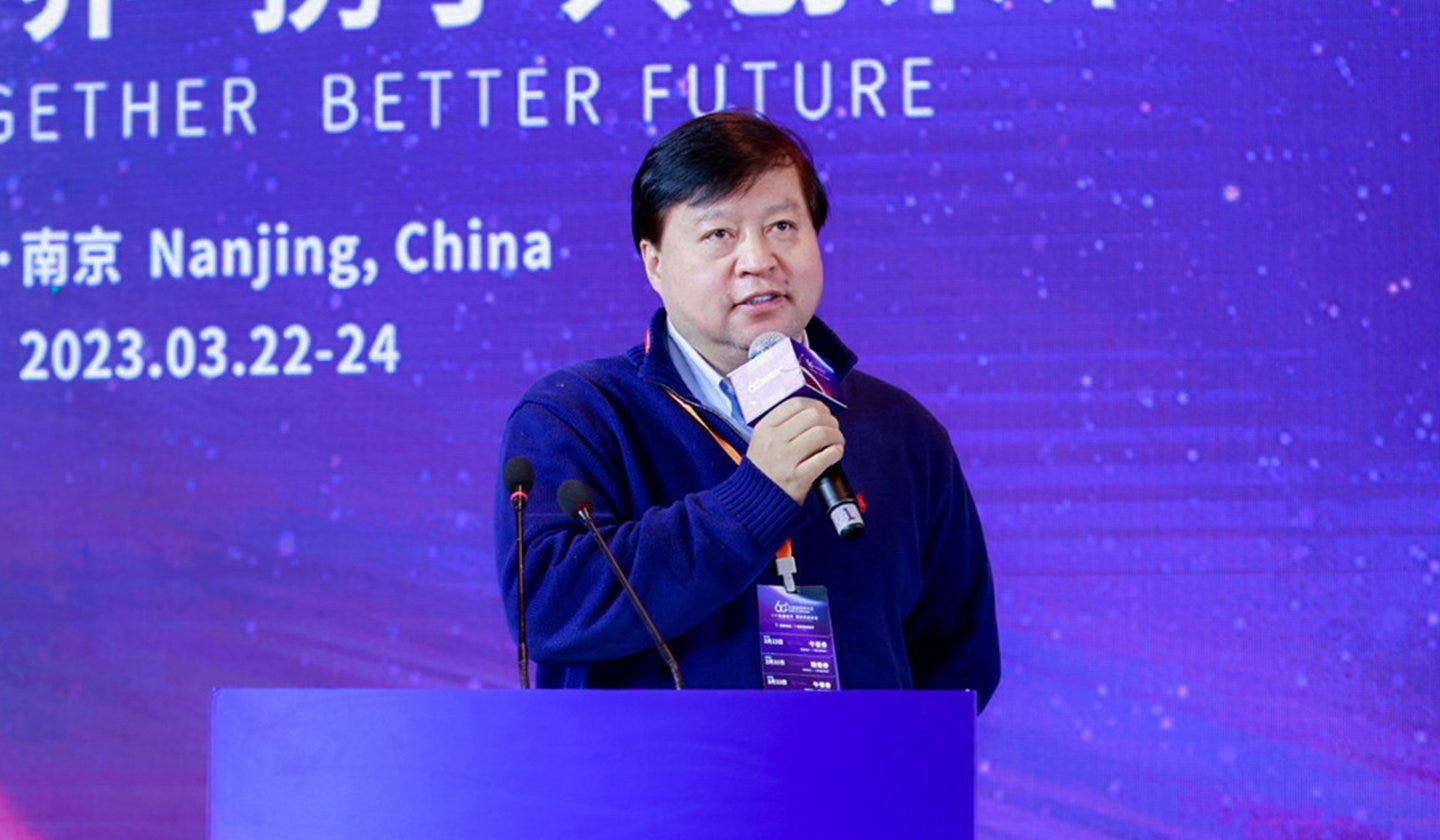
Before founding CloudMinds, Huang’s CV was that of a polished technology executive.
After graduating, he built his career in electronic communications, spending five years at Bell Labs. There, in what was widely regarded as the cathedral of communications science, he led the development of a new system that compressed seven cumbersome subsystems into three—a single achievement that built his reputation inside the labs.
In 1995, he returned briefly to China, bringing a cohort of Bell Labs colleagues to UTStarcom, then shuttling for years between Silicon Valley and Hangzhou. As China’s telecoms industry inched into the 3G era, Huang, with a sharp technological instinct, spun out a new venture aimed at the 3G transition called Wacos. The vision was too far ahead of its time, and the “Wacos 3G” project ultimately failed.
In 2007, China Mobile offered Huang the position of president of its research institute. Over the next eight years, he watched the country shift from 3G to 4G.
In 2015, with the dawn of 5G, Huang again sensed opportunity and disruption. He had decided to start something of his own, though he was not yet sure what. He had spent his entire career in telecoms and had no prior experience in robotics.
By Huang’s own telling, he chose robotics because of a science-fiction dream. A fan of Star Trek, he was inspired by the show’s android “Data”—and from this, he combined cloud-based communications with robotics and coined the concept of the “cloud robot.”
Many former CloudMinds employees take a less elevated view. They argue that Huang was not particularly innovative; he simply traveled often between continents, kept his eyes open, and got early exposure to Carnegie Mellon professor James Kuffner’s “cloud robotics” idea, which he then imported to China—more “localization team” than originator.
A Robot Company with “Telecom DNA”
Trading on Huang’s telecoms pedigree and the buzz around “cloud intelligence,” CloudMinds quickly secured funding.
In 2016, it closed its first round, a $30 million investment co-led by SoftBank Group and Foxconn—Foxconn parent Hon Hai was then still run by Terry Gou. The following year, SoftBank doubled down, joining Zhongguancun Development Group in a $100 million round that set a record at the time for the cloud-intelligence space.
CloudMinds’ start was smooth: within a year it had become an industry unicorn.
Yet, for all the capital raised, the company made little real headway on product or technology. Its roadmap envisioned robots across many scenarios—the XR series of general-purpose humanoids (XR-1 through XR-4), low-cost reception and service robots branded Ginger Lite, unmanned-retail robots and more.
Huang at one point envisioned shipments of unmanned-retail robots in the tens of millions, with reception-service robots shipping at least 100,000 units a year. As of 2026, Galaxy Universal—a leader in unmanned-retail robotics—still has not reached the shipment numbers Huang projected back then.
More awkwardly, not long after raising its early rounds, CloudMinds began thinking in financial-engineering terms—turning up revenue in a hurry, with a U.S. listing in mind.
According to early CloudMinds employees, the company “didn’t really get anything off the ground in the early years. Instead, they made a lot of phones—including a secure phone designed for enterprise clients that was supposed to be sold to Foxconn, but the deal fell through.”
In 2017 and 2018, with his robotics business stalled, Huang was also weighing a Nasdaq listing. He needed orders to point to in front of investors and revenue figures to support a valuation, which pushed him into the phone business. After all, mobile communications was his home turf.
This chapter has since been quietly downplayed, but it left an imprint on CloudMinds’ DNA: telecom thinking. Huang grafted China Mobile’s “carrier” mindset onto the robotics industry, imagining himself as “the China Mobile of robots”—not selling robots, but selling “cloud-brain” services and charging by traffic.
Bill Huang, the Capital Operator
In 2019, CloudMinds set out to list in the U.S. The plan was Nasdaq, until the NYSE swooped in and waived tens of millions of yuan in fees. Huang switched venues without hesitation, planning to raise $500 million. After the prospectus was filed, investors were unconvinced—but the U.S. government took notice, and CloudMinds landed on the entity list.
The IPO was killed by sanctions, but Washington’s “endorsement” turned out to be a blessing in disguise. Forced back to China, CloudMinds was suddenly being courted for investment.
Not long after the failed NYSE listing, the Shenzhen and Shanghai municipal governments came calling. CloudMinds relocated to Shanghai, where it secured “well over a billion yuan,” 243 mu of land (162,000 square meters) and a generous package of incentives.
Two figures in the executive team played a pivotal role in this period: Yang Guanghua and Wang Bing. Both led the company’s government-facing business; Yang had worked alongside Huang since the UTStarcom days, while Wang had previously served as a vice president at Beijing Kingdee Software. Peers in the industry described them as “highly skilled operators of government-business relationships.”
This government-relations-driven model propelled CloudMinds’ cap-table to its peak between 2021 and 2023—but also left it highly fragmented: Shanghai Chengtou, the Zhuhai state-owned assets administration, Guangzhou Knowledge City, the Ganzhou Nankang District Urban Development Group, and on it went. Of the 67 shareholders identifiable in CloudMinds’ ownership structure today, 57 are corporate entities.
This shareholder pattern is hardly unique to CloudMinds. The embodied AI companies that closed large rounds in 2024 have cap tables that include Tencent, BYD, Hillhouse, Sequoia and local government funds. The list is longer, but the structure is the same: a “patchwork” cap table assembled in hopes of sustaining the next round of funding.
In China’s LP (limited partner) universe, government guidance funds occupy a central position. CloudMinds’ problem was that there was no “next LP” willing to take the baton. The fortunate position of today’s leading firms is that there is still a “next LP” looking on. But the due-diligence logic of the next LP is identical to the last one’s: orders, revenue, certainty.
In hindsight, the embodied AI leaders that locked in funding early in 2024 and rode the snowball higher are now, in 2026, facing the same tests of orders, revenue and certainty. For many CFOs at embodied AI startups, this year’s top KPI is nailing down mass-production figures and a clear revenue trajectory—because they, too, have reached the point of having to prove commercialization.
The Glory Years
2021 was CloudMinds’ peak.
The company had 12 project management offices, with the highest project count it would ever reach. Huang held regular project reviews—humanoid robots, the cloud brain, smart joints, digital humans, delivery robots, agricultural robots, security robots. Every project lead came with a deck, with data, with a promise that mass production was “right around the corner.”
At the time, CloudMinds even ran its own factory for motors, which gave it both cost control and customization. In 2021, CloudMinds was outshining a then-still-emerging Unitree.
“There were so many products and projects, and the sales playbooks they could support were just as varied,” a former PMO member recalled. He later joined another embodied AI company, where he found seven or eight PMOs, a founder running regular project reviews, and the walls plastered with project trackers—red for delays, yellow for risk—in roughly the same proportions as CloudMinds in 2021.
The six product lines CloudMinds maintained at the time have since been treated as a cautionary tale by later embodied AI entrepreneurs: “Don’t be greedy. Focus.” But the reality is that focus is both a risk and a luxury.
To focus is to go all in on one track, with the public and investors watching that one line. The risk is that you bet wrong. In a field as murky as embodied AI, picking the wrong path can send you tumbling out of the window of opportunity. And if the product lineup is too thin, it may not support the valuation.
Today’s leading embodied AI firms are quietly expanding theirs, too. From humanoid to quadruped, from industrial to home, from hardware to software, from robots to “embodied AI foundation models.” They don’t call it diversification—they call it “building an ecosystem.” How, exactly, does this differ from the “cloud robot ecosystem” CloudMinds was talking about in 2019?
Bill Huang’s Foresight
The founder’s vision was not behind the times.
In today’s embodied AI scene, many investors talk a great deal about founders’ “vision.” On that metric, Bill Huang was a founder with an unusually strong technical vision.
In 2020, Huang shared, on multiple occasions, his thinking on humanoid robots: “From a psychological standpoint, humans can’t accept a conversation with a table. If robots are going to share human space, they need to share human tools.”
No one really understood him at the time. In 2020, humanoid robots were still the stuff of science fiction. Boston Dynamics’ Atlas was doing backflips in the lab, and Unitree had only just sold its first quadruped.
Four years later, at the 2024 World AI Conference, the founder of an embodied AI company expressed a strikingly similar view in a comparable setting: “Humanoid is the ultimate form, because only the humanoid form can use every tool human beings have made.” The audience erupted in applause. The founder, nearly 30 years younger than Huang, wore the same black T-shirt and uttered the same words.
The difference: when Huang said it in 2020, CloudMinds’ humanoid existed only on paper; when this founder said it in 2024, his humanoid could already walk and jump, even if it could not yet do any real work.
Huang was ahead on ideas, too.
Beyond the cloud brain, he recognized early on the importance of bringing down the cost of robot joints. In a 2020 media interview, he said: “In the future, the number of joints will determine a robot’s performance. We need to bring joint costs down while maintaining high quality, and only then will the robot era truly begin.” Not long after, CloudMinds built a production and R&D base in Shanghai, aiming to push joint costs below 1,000 yuan ($150) a unit.
In 2025, many embodied AI startups began to realize that the path forward depended on bringing the price of joints and dexterous hands down. Huang had said the same thing five years earlier.
Huang thought too far ahead—far enough that the investors of 2020 couldn’t follow him, the state-owned LPs of 2021 didn’t dare invest, and Nanjing’s industrial guidance fund concluded in 2023 that his “commercialization progress fell short of expectations.” He stumbled on being “too early.” But “too early” is not, in itself, a sin: had he survived to 2024, he would have been hailed as a “prophet.”
In a sense, are today’s leaders not also “too early”?
What Huang could not deliver came down to two things: mass production never arrived, and the company’s shareholder structure denied it the time it needed to reach the point where its products could actually land.
The Fall
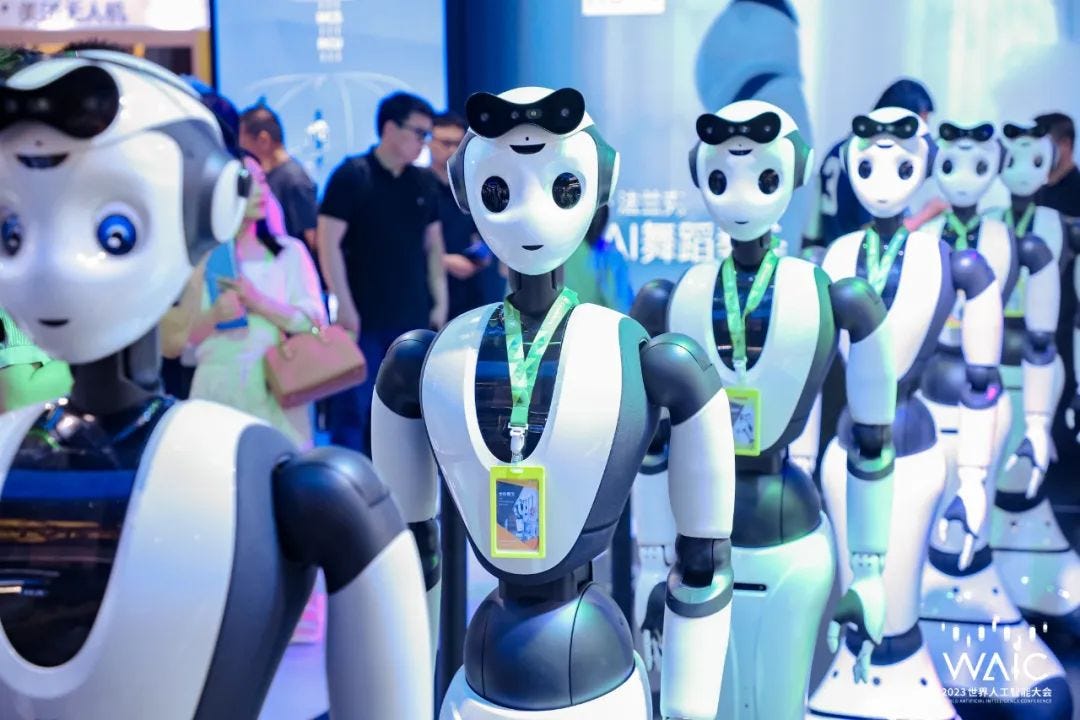
In the summer of 2023, at the WAIC conference, CloudMinds turned up to exhibit. In a hall where most peers were running demos, CloudMinds’ robot took center stage to attempt a basketball shot. It missed. A collective groan ran through the crowd. CloudMinds had hoped to reassert its veteran status. It made a spectacle of itself instead.
After that, the company rarely returned to the public eye in a favorable light. In early 2024, CloudMinds began missing wages.
“In late January 2024, everyone was busy preparing for the annual gala. Then on the 31st, the company suddenly couldn’t pay salaries,” recalled one former employee. The explanation given was a glitch in the finance system. On February 8—the day before Chinese New Year’s Eve—the company held an emergency all-hands on Feishu, announcing that any portion of an employee’s salary above 10,000 yuan would be paid at half value. Huang himself didn’t attend; only two members of management were present—the head of HR and the chief financial officer. After two months of running this scheme, salaries were stopped entirely in March and April. Headcount was frozen across the board. In May, after a one-off payment of 10,000 yuan to each employee, contributions to housing fund and social insurance also halted.
What was Huang doing at the time? By his own account, in that year he met with more investment institutions than in the previous nine years combined. He traveled to Hefei, Tianjin, Xiamen—and as far north as Jilin. With each one, he wasn’t dropping in briefly; he was sitting through endless meetings. “Whether they invested or not, I gave them a very important education session.”
But according to investors, the content Huang was pitching had barely changed since the 2019 U.S. IPO attempt: cloud brain, smart joints, humanoid robots, home services. Five years on, the slide layout had changed, but the core narrative had not.
“In 2024, the only money you could really raise on the market was government money managed by private-sector GPs.” That was Huang’s own conclusion. The unspoken subtext: private GPs had no dry powder, government money was too cautious to commit, and CloudMinds was caught precisely in that gap.
CloudMinds’ Series C was co-led by Guangzhou Knowledge City Group and Shanghai Guosheng Investment Group, for more than 1 billion yuan ($150 million). Just six months later, the funding chain snapped. Huang said an institution that was due to wire 300 million yuan ($44 million) in October 2023 ultimately balked.
He did not name names, but anyone familiar with CloudMinds’ funding history can guess: 300 million yuan is a check size typical of a local-government industrial fund. In 2023, CloudMinds had planned a Hong Kong IPO of $500 million, only to have approval delayed over its “commercialization progress falling short.” The institution behind that judgment was the Nanjing industrial guidance fund—a classic local-government industrial fund.
Watch the current embodied AI funding landscape and you’ll find today’s leaders raising from Tencent, Meituan and CICC Capital. They, too, are hunting for “money that can stomach uncertainty.”
But money in China—even from corporate venture arms like Tencent and Meituan—almost always has government guidance funds somewhere in the LP stack. CloudMinds’ predicament is not unique.
An Autopsy
To understand CloudMinds’ death, you have to go back to Huang’s CV—UTStarcom.
In the 1990s, Huang co-founded UTStarcom and served as CTO. The company was the dominant force in the PHS-handset era—”the king of Binjiang”—with a market capitalization of $10 billion, annual revenue in the tens of billions of yuan, and enough heft to put pressure on Huawei. UTStarcom’s collapse, though, came down to internal politics.
According to UTStarcom veterans, “company politics” took over: Zhou Shaoning, who would later become Google’s Greater China president, “had differences in approach” with Huang. Zhou was “good at making money, leading R&D and building products,” and the two ended up “in a power struggle.” After Zhou left, Huang took over, but “Bill is a relationship guy. He knows some tech, but it isn’t his strength.”
That “relationship-driven” management style transferred wholesale to CloudMinds.
An employee who joined CloudMinds in 2018 to run its middle-office said: “The chaos inside CloudMinds was always like that. Mini [Huang’s wife, CFO] really enjoyed it when people came to her with complaints about so-and-so; but if someone tried to put in a good word for someone else, they wouldn’t really listen. And they would take credit, constantly saying ‘thanks to me, this happened.’ Basically the credit went to them and the problems to everyone else.”
Huang’s “one-man rule” got more pronounced over time. “However senior you are, no matter how many people work for you, on a lot of issues I really do need to drill all the way down and understand every detail myself,” he said in an interview. To employees, the reality was: “Bill is involved in everything. He’d weigh in on trivial details. Working there was just exhausting.” Several former staff added that Huang berated people during meetings—”you bunch of [expletive],” “this stuff is so simple, [expletive]”—in language harsh enough that it stuck.
Beyond the micromanagement, investors offered their own read on the couple’s overall style: “Bill and Mini are both nice people, but their biggest problem is the lack of business sense. They’re both single-mindedly chasing the technical roadmap. Mini has improved a bit in the past couple of years, but Bill is still the same.”
More damaging still was the talent system. In its later years, CloudMinds brought in a wave of executives from Alibaba and ByteDance backgrounds—”not very pragmatic, fond of process for process’s sake and managing upward, generating endless weekly and daily reports, sometimes twice a day.” When problems arose, the response was not to fix them but to escalate them. “Everyone knew what the boss was like, so they buried him under reports on every conceivable detail. The boss never had the quiet space to think about what the company’s next strategic move should be.”
The experience of Xie Zheng is fairly representative of the CloudMinds atmosphere. A core figure behind UBTech’s Walker humanoid, Xie joined CloudMinds in 2022, only to find that “the technical roadmap and the architecture were all set by Bill, and no one could change them.” He left, then went on to co-found Yuanluo Tech with his high-school classmate Lian Wenzhao—formerly of Figure AI—and the company closed a sizable funding round in 2025.
A former CloudMinds staffer summed up the four kinds of people the company ended up with: first, those with a relatively high tolerance for the dysfunction, but who did real work and eventually got worn down by being pushed around; second, the very talented, who concluded “if you don’t want me here, plenty of others do,” and walked out; third, those who said “fine, say what you want, do what you want—but I have my principles”; and fourth, those who said “I don’t have my own ideas—do whatever makes you happy, I’m just here to serve you, and as for the people below me, I’ll leave them alone.” By the end, most of those who remained belonged to the fourth category.
Rebirth and Lessons
In April 2025, a video surfaced of Huang giving an interview to Hong Kong media in his new capacity as chairman of “Hong Kong Boy Robotics” (港仔机器人).
He was in his early sixties, hair gone gray, and he was still saying the same things: “home services,” “cloud brain,” “100,000-yuan robots.” The backdrop had changed—from a 243-mu base in Shanghai to a small office in a Hong Kong tower. The title had changed—from CloudMinds founder to chief scientist of Hong Kong Boy Robotics. But the story was the same.
Hong Kong Boy Robotics is a joint venture between CloudMinds and Guohua Group, a Hong Kong-listed company, with Guohua holding the controlling stake. Guohua has pledged to raise funding in the next year or two—on the condition that “the team gets the business, technology and products off the ground.” Word for word, this matched what investors had demanded of Huang back in 2015 when CloudMinds was first founded.
Meanwhile, the pitch decks of today’s well-funded embodied AI companies are still salted with phrases like “home services,” “cloud brain” and “100,000-yuan robots.” Their investors are the same crowd that backed Huang in his day—just operating under different fund names now.
The difference: Huang is in his sixties. That other founder is in his thirties.
CloudMinds’ death is not an endpoint, but a loop. The industry is repeating the same story: technology ahead of its time, sweeping scenarios, funding-driven growth, government relationships, expanding product lines, a strong-willed founder in total control, a snapped funding chain, missed wages, layoffs, death—rebirth, then death again.
Today’s leading firms face structural challenges strikingly similar to CloudMinds’. Their good fortune: CloudMinds died in 2024, and they made it to 2026. But what about after 2026?
So “who killed the former embodied AI unicorn”?
Not the technology or the roadmap—CloudMinds’ cloud brain, smart joints and humanoids were not behind the curve, and today’s leaders are still walking the same path. Not the market—humanoid robots saw their breakout moment in 2024 and 2025, demand is real, and today’s leaders are still telling the same story. And not, in the end, management—Huang’s “one-man rule” had its problems, but the founders of today’s leaders are almost all “technical autocrats,” cut from the same cloth as Huang.
The real reason is that the logic of the industry has not changed.
Technology ahead of its time, sweeping scenarios, funding-driven growth, government relationships—this same playbook made CloudMinds in 2015, broke it by 2019, made new unicorns in 2024, and will, at some point in the future, test them too.
CloudMinds was not a “loser.” It was a pioneer. The mistakes it made are being repeated. The road it walked is being walked again. The warning CloudMinds leaves for every embodied AI company operating today is this: be clear-eyed about how to find the variable that will let you live long enough for your products to actually land.
What is that variable? CloudMinds never found it. The leaders of 2026, perhaps, are still looking.
Great read – and timely.
The Universal Truth Substrate OS isn't theoretical. The Veritas gate implementation (referenced in the white paper) has already been tested across three critical paths:
Negative path – no valid hardware receipt → gate fails closed (408 Timeout, zero payload leak)
Positive path – valid receipt structure → ALLOW + cryptographic receipt anchored to spacetime
Tamper detection – one bit changed in policy_hash or signature → immediate rejection (403/408)
What makes this relevant to the CloudMinds postmortem you just shared? CloudMinds had vision, government backing, and a founder who saw humanoids and cloud brains years early. What it didn't have was a mathematically un-bypassable way to prove execution integrity at the moment of action.
Investors ultimately couldn't verify that promised shipments, joint costs, or robot behaviors were real-time true – not just well-documented in a deck.
The Substrate OS solves that by moving verification below the application layer, into a TPM/PCIe hardware enclave. Every action produces a court-admissible, offline-verifiable receipt anchored to GNSS / Starlink PPS. No retrospective sampling. No "trust us."
The same pattern applies to embodied AI today:
Unitree, AgiBot, Fourier all have beautiful demos.
But can they prove, in real time, that their deployed robots haven't been command-injected or weight-tampered?
Can their cap tables survive the next due diligence without a Veritas‑style receipt trail?
CloudMinds' loop (tech ahead of its time → sweeping scenarios → funding‑driven growth → snapped chain) is still running. The substrate architecture is one of the few genuine circuit‑breakers.
Would love to see a live demo where a real hardware‑attested receipt (TPM 2.0 + PCIe PERST#) gates a humanoid's action. That's when theory becomes enforceable fact.