

Hi, this is Tony! Welcome to this issue of Recode China AI, your go-to newsletter for the latest AI news and research in China.
When I first started covering AI companies in 2017, the brightest stars in China were SenseTime, Megvii, Cloudwalk, and Yitu—collectively known as China’s “Four Little AI Dragons” (déjà vu, right?).
Founded roughly 10 to 15 years ago, these startups rode the wave of convolutional neural networks (CNN) following AlexNet’s breakthrough win at ImageNet in 2012. They ambitiously aimed to become the next generation of tech giants by building technologies in facial recognition, smart cities, and autonomous driving. At their peak, their collective valuations soared to over 100 billion RMB.
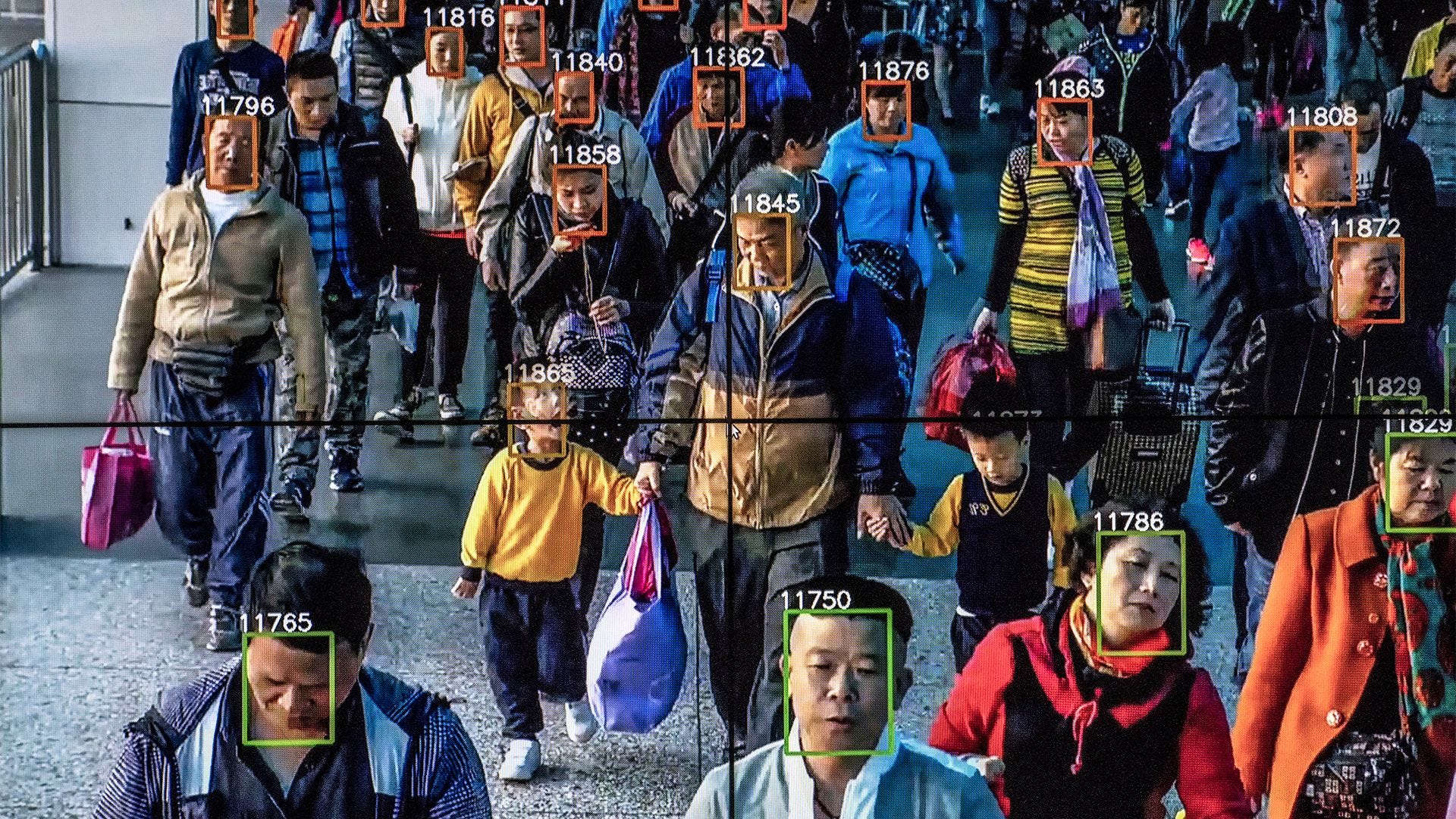
But by 2025, all four are struggling to stay afloat. They have been sanctioned by the U.S. government over their facial recognition programs being used as surveillance, and their commercialization never scaled up. In 2024, SenseTime posted a net loss of 4.31 billion RMB (~$600 million). Even more devastating, two of China’s top AI minds—SenseTime founder Tang Xiao’ou and Megvii’s chief scientist Sun Jian—passed away in 2023 and 2024, respectively.
Today’s story centers on Yin Qi, the founder and CEO of Megvii, long regarded as an AI prodigy. Megvii was once a powerhouse in computer vision. They won six top-track titles at CVPR in 2019, placed in the top three in the well-recognized ImageNet Large Scale Visual Recognition Challenge (ILSVRC), and filed over 1,100 AI-related patents by 2020. Their facial recognition tech was used for early face-based payment systems at Alipay and mobile unlocking in Xiaomi’s smartphones.
Born in 1988, Yin is a Tsinghua Yao Class graduate (a top-tier computer science honors program) and a former Columbia Ph.D. student. He was named to MIT Technology Review’s 2018 Innovators Under 35 List.
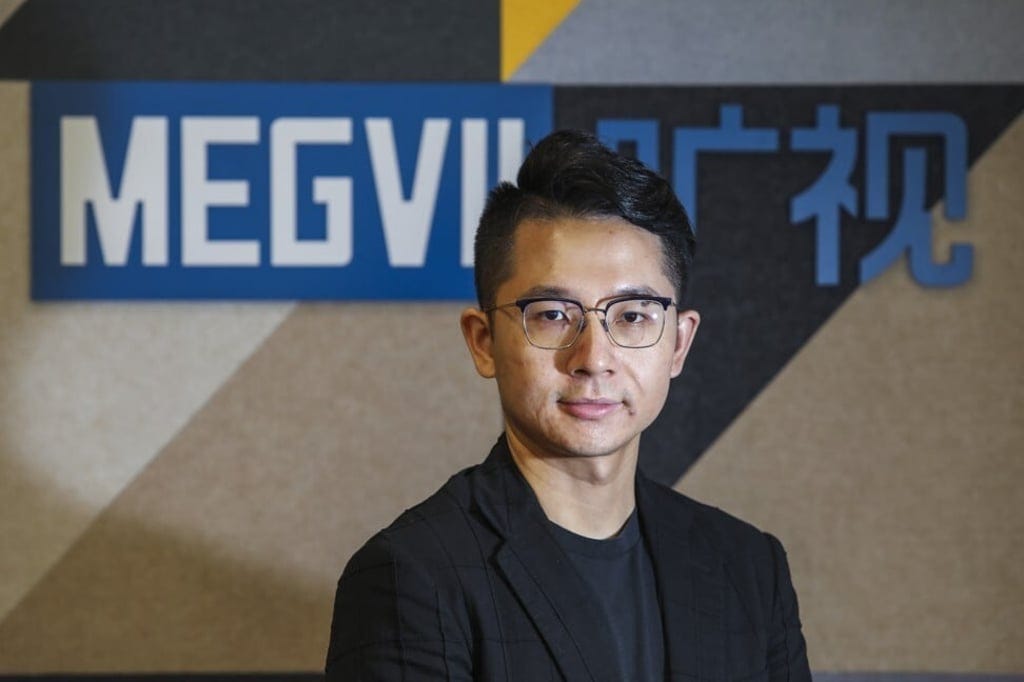
But over the past six years, the company has failed to go public three times, burned through over 15 billion RMB ($2 billion) in three years, and has yet to achieve profitability. Recently, Yin surprisingly joined another company as chairman, beginning a new chapter in his career as well as Megvii.
I decided to translate this LatePost piece (with help from ChatGPT) because Yin’s journey offers a cruel side of the previous AI boom. Back in the computer vision era, Yin was praised just like today’s “Liang Wenfeng”, DeepSeek’s CEO—but Megvii ultimately failed, and many of its AI promises never materialized.
If you're short on time, I recommend reading Chapter 2, All Unclosed Loops Are Temporary Triumphs, and Chapter 4, Timing Matters More Than Direction—The Starting Gun for Smart Driving Has Already Been Fired.
LatePost Interview with Yin Qi: The Lesson from AI 1.0 — All Glory Without a Closed Loop Is Temporary
At 37, Yin Qi has already spent 14 years as an AI entrepreneur. He recently emerged from his darkest moment.
Just over six months ago, Megvii, the company he founded in 2011, was stuck in the IPO process on the Science and Technology Innovation Board for over three years. Everyone was waiting to see how the once “AI prodigy” would end his story.
A surprising turn of events occurred: in July last year, Yin bought shares in Lifan Technology, a listed company, and by the end of the year, became its chairman. This February, Lifan officially changed its name to Qianli Technology.
Behind Qianli were two major shareholders — Geely Group and the local government. After adjusting the shareholding structure, Qianli’s new goal was to focus on “AI + cars” and become a leading supplier for automotive intelligence. This continued Megvii’s unfinished mission: to integrate AI with hardware, moving AI towards robotics.
This wasn’t a fresh start done lightly. As one of the founders of the first wave of “China’s Four Little AI Dragons,” Yin carried many experiences and setbacks from the past: rising to fame in youth, being chased by capital, then facing U.S. sanctions, two failed IPO attempts, and the struggle to commercialize. He had seen the highs and lows of the last AI cycle.
When DeepSeek caused a frenzy during the Chinese New Year, the mainstream view in the AI industry quickly shifted to “expanding the boundaries of intelligence” as the top priority, with less focus on current commercialization. But for Yin, “commercial closure” remains a high priority:
Once you’ve had to scrutinize every dollar spent, your thinking changes. No matter how noble your tech ideals, without a truly viable business model, there’s no way to sustain your team’s belief in that vision—because no one is going to fund you forever.
Megvii’s long-standing values are “faith in technology, pragmatism in value,” aiming to build the best AI lab in the Eastern Hemisphere. Now, Yin has a new understanding of the relationship between “practical value” and “technical faith”:
I’ve since reflected—that kind of faith can’t stand on its own. It’s more like a grand mission, which also needs to be paired with concrete business or customer value.
Maybe it’s something I took away from the AI 1.0 era: any glory that doesn’t complete the loop is only temporary.
Yin says he’s still pursuing AGI, but no longer in the headlong, fearless way of his 22-year-old self.
This three-hour interview with Yin Qi is a story about AI — but not a feel-good one.
What Drives Us Isn’t Fear, It’s Hope
LatePost: Your transition from co-founder of Megvii to chairman of Qianli caught many by surprise. We heard it all began with a meeting between you and Geely Chairman Li Shufu in the fall of 2023. What happened during that conversation?
Yin Qi: The idea came from Chairman Li. It was visionary and strategic. But to be honest, when I first heard it, I was still carrying a lot of baggage from the past.
LatePost: Were you still focused on taking Megvii public at that time?
Yin Qi: Yes. By the end of 2023, Megvii was in a critical and difficult phase. The A-share IPO process had dragged on for a long time, and we couldn’t raise funds during that period. Our cash flow was very tight. Meanwhile, AI was developing rapidly, demanding more capital and resources to attract talent. It was a conflicting situation.
So when Li first mentioned the idea, I didn’t seriously consider it right away. But later, as more factors piled up, I realized it might be not only the only path—but also the best one.
LatePost: At that point, you faced at least three options: continue pushing Megvii’s IPO, jump into the foundation model boom in early 2023, or take this opportunity with Qianli and become chairman.
Yin Qi: Honestly, it wasn’t like I had a bunch of real options.
I wanted a path that could genuinely take Megvii’s AI team and ecosystem where we always aimed to go. Starting something completely new was never my plan. On the other hand, if going public only solved short-term difficulties without ensuring long-term growth, it wasn’t a real solution either. Joining Qianli was a natural extension of Megvii’s strategy—integrating software and hardware, connecting more deeply with devices, and pushing AI toward robotics.
LatePost: In March 2024, Megvii’s IPO attempt failed again. Was that the final trigger for your decision?
Yin Qi: It was a factor, but not the most important one. Internally, I told the team: we are making this decision not out of fear, but out of hope. I didn’t choose this path to avoid a bad outcome—I chose it because I saw the potential for a better one.
LatePost: You're still focused on integrating AI with hardware. Why didn’t you go with the hotter trend—embodied intelligence? One of Megvii’s co-founders told me there was heated debate over whether to focus on robotics or cars. Megvii had years of experience in robotics, with more technical depth and commercial traction. The auto industry is cutthroat, and you entered late.
Yin Qi: The timing for a robotics explosion still hasn’t arrived. The prerequisites are mostly in place this year, but I believe it’ll take another five years to integrate the supply chain and produce truly great products.
In China’s business environment, you need both a long-term vision and a short-term plan that can close the commercial loop within three years. Robotics has always been our goal since day one. That hasn’t changed. That’s my loop—I still hope to make it a reality in the end.
LatePost: What about large language models (LLMs)? Aren’t they a more attractive direction than robotics?
Yin Qi: First of all, I think LLMs—or foundation models more broadly—have essentially broken the boundary between the digital and physical worlds. Ultimately, if you're doing AI, you need full-stack large model capabilities. That’s become essential.
But the reason I gravitate toward robotics—AI in the physical world—is tied to values. I want AI to improve people’s lives in a natural way, not detach us from the real world. I’ve always been against purely virtual experiences. Robots can help us in physical space and even become companions. That’s the AI I imagine.
Second, I believe AGI needs a physical component. From both an evolutionary and data distribution perspective, I don’t think data from purely virtual environments can develop into true AGI.
Third, from a business perspective, after 20–30 years of internet and mobile internet development, many companies already have strong moats in the digital space. Given our team’s strengths, we’re better positioned to build for the future—something more innovative and differentiated.
LatePost: So not focusing purely on digital—is that a lesson from your last venture? Megvii initially focused on pure algorithms, but you later realized that wasn’t enough, and shifted toward integrating software and hardware to create defensibility.
Yin Qi: I still believe many of the AI 1.0 principles were correct—they just weren’t closed loops yet. Or perhaps the tech wasn’t mature enough at the time.
From AI 1.0 to AI 2.0, some logic continues: First, focus on the endgame. The ultimate application of foundation models is definitely robotics—nothing else comes close. Second, consider your strengths and advantages. Hardware companies rely on a three-layer structure of supply chain, R&D, and market—completely different from the internet. We’ve already evolved into a more integrated organization. Our DNA is about combining software and hardware—it should be reinforced, not constantly changed.
LatePost: If Li Shufu hadn’t made that proposal—if the Qianli option didn’t exist—what would you have done? Did you consider the worst-case scenario?
Yin Qi: The fallback was to withdraw Megvii from the IPO process and go raise funds again. I had already set a mental deadline for pulling out—around mid-2024, which is also when I made the decision about Qianli.
LatePost: Why didn’t you pull out earlier?
Yin Qi: I actually always had a timeline—it just kept getting pushed back. Many business decisions are like step functions with changing variables, always hovering near a “yes or no” tipping point.
My approach was that major decisions should be made as late as reasonably possible. First, because you have to try everything. Second, because you need time to gather more information. It’s just like training an AI model: the more data you collect, the better your final decision.
As I learned more about Lifan (the listed entity behind Qianli), Geely’s broader ecosystem, and their strategic direction, I became increasingly convinced this was the better choice.
LatePost: During those months of deliberation, what did you learn about Lifan and Geely?
Yin Qi: Lifan, as a listed company, is attractive because of what it doesn’t have—it’s relatively unburdened by legacy issues. Much of that was dealt with during its restructuring. So it’s a clear, foundational platform.
With Geely, it’s more about what it does have. I wanted to see whether their talk of AI + cars was just lip service or whether Chairman Li and the senior team genuinely had deep insights and long-term commitment. And they did. Choosing Lifan really meant choosing to integrate deeply with the Geely ecosystem.
LatePost: On the day you finally made the decision, what were you thinking? What did you tell yourself?
Yin Qi: Honestly, it wasn’t that dramatic. When a decision is big enough, you don’t feel a strong emotional jolt at the final moment—because it’s the product of long anticipation and struggle. You might even feel a bit of relief—like, finally, it’s happening. By that point, you’ve already mentally rehearsed it so many times. The decision just becomes real.
All Unclosed Loops Are Temporary Triumphs
LatePost: In the spring of 2024, when we discussed AI 1.0, you said startups building large models would inevitably clash with giants like ByteDance. A year later, how has China’s foundation model landscape changed?
Yin Qi: My core view hasn’t changed. First, building large models is a resource war. You need speed, scale, and capital. Without resources, you fall behind. Second, tech alone won’t get you a commercial loop. You need real scenarios to trigger a data flywheel. So you need to build both “super models” and “super apps” together.
LatePost: But take DeepSeek—they barely do applications. They’re focused purely on models.
Yin Qi: First, DeepSeek isn’t a regular startup—it’s backed by a major player. Its parent company, High-Flyer Quant, is one of the top quant funds in China.
For foundation model startups, it’s fine to focus on model development for now. But that’s like sprinting 100 meters in the middle of a 10,000-meter race. It doesn’t determine the final outcome. I still believe true success means using models to unlock super applications that form a data and commercial loop. Otherwise, model building is just a painful process—it’s not the destination.
When we assess a company, we shouldn’t treat it like a research institute. That’s a different animal. DeepSeek might produce dazzling research and open source it widely, but that doesn’t automatically make their business sustainable or closed-loop.
LatePost: Megvii once aspired to build “the best research institute in the Eastern Hemisphere.” You also tried to build a research culture inside a commercial company.
Yin Qi: I think we actually succeeded—we achieved many global firsts. But the explosive power of the tech wasn’t as strong back then. Public interest in AI wasn’t what it is today.
We had our own talent model at Megvii—basically, “young geniuses.” Very similar to DeepSeek’s approach now. We recruited medalists from math, physics, and informatics competitions and started grooming them at the undergrad level. Two of our co-founders, Tang Wenbin and Yang Mu, were IOI gold medalists. Tang even coached China’s IOI team. When we had just 40 people, 39 were from Tsinghua.
That talent model works really well, especially now when AI is evolving so fast. You don’t necessarily need PhDs or deep industry veterans—you need the smartest young minds with strong algorithm, coding, and fine-tuning skills. The essentials are: smart people, enough compensation, and timely feedback.
But getting to that point still wasn’t a closed loop. One of my biggest shifts recently is this: our original core philosophy was “faith in technology, pragmatism in value”—this principle guided everything we did. Now, we’ve flipped the order. We now say “pragmatism in value, faith in technology.”
LatePost: What does it mean to reverse the order—from “faith in technology, pragmatism in value” to “pragmatism in value, faith in technology”?
Yin Qi: Long-term endeavors still need a value anchor. That applies to scientific research and technical work too. Right now, AI research demands massive resource input—computing power, data, talent—all of which are extremely expensive. With this level of investment, there must be corresponding commercial value to make it sustainable.
And it’s not just about money. When people devote themselves to something for a long time, they need feedback. They need to see that what they’re creating is recognized by the market.
That’s why Tang Wenbin once said: “business model is the best model.”
LatePost: You've repeatedly emphasized "closing the loop"—meaning building a truly viable business model. Pushing Megvii toward an IPO was also meant to achieve that loop. But when Megvii later withdrew its listing plan, was that giving up on the loop?
Yin Qi: It was actually for the sake of a bigger loop.
To be honest, it wasn’t what I wanted—but I had no choice. Starting Megvii was incredibly difficult. What we really hoped for was to first achieve a clear, smaller loop—then transition into a more stable operating phase—and only after that, embark on building a much larger loop.
But this wave of AI startups all face extremely long feedback loops. Even after multiple fundraising rounds, the commercialization results are often disproportionate to the investment. At the time, everyone believed that once we hit a certain tipping point, explosive commercial returns would follow. I still agree with that general logic.
But the longer the loop, the easier it is for it to break.
LatePost: When you started your first venture at 22, did you have any idea this path would be so long?
Yin Qi: Definitely not.
That era was filled with revolutionary optimism. We naively believed that if a group of smart people shared a clear vision, had a meaningful goal, and worked hard enough, they could make it happen.
But looking back, the AI path is probably one of the hardest routes out there.
The first challenge is uncertainty—transforming fundamental technology into products and then into commercial results involves a huge amount of unknowns.
The second challenge is the sheer speed of the industry’s evolution.
And the third is competition—some of the world’s richest and smartest people are in this field.
For me, the original motivation to start a company was rooted in a kind of technological faith: I believed AI could be realized and could create value for society. But I’ve since reflected—that kind of faith can’t stand on its own. It’s more like a grand mission, which also needs to be paired with concrete business or customer value.
LatePost: Are you saying that "faith in technology" alone isn’t suited to driving a business organization?
Yin Qi: You can’t rely on it alone.
Once you’ve had to scrutinize every dollar spent, your thinking changes.
No matter how noble your tech ideals, without a truly viable business model, there’s no way to sustain your team’s belief in that vision—because no one is going to fund you forever. The only way to keep doing research is to be able to fund it yourself—to reinvest what you earn into the research you believe in.
That’s the sustainable path: use the value generated from one closed loop to build the next, bigger one. Step by step, layer by layer.
LatePost: ByteDance and Megvii were founded around the same time, but ByteDance was able to close a loop very quickly—and then go on to build bigger loops. In the end, could it be that ByteDance is more likely to achieve AGI?
Yin Qi: It’s possible. That outcome depends heavily on the “will” of the No. 1 leader.
I think a company’s trajectory is closely tied to its organizational DNA. That DNA comes from the founder, the core executives, and the company's history—all of which shape the team’s culture.
The basic assumption is: if a company has been around for ten years, entropy has already accumulated. It’s very hard to fundamentally change the organization at that point.
If that company did something extremely well in the last era, it means the organization was highly adapted to that one thing. If the next thing they pursue is closely related, that’s great. But if it’s vastly different, then it becomes difficult.
Ultimately, it depends on whether the organization’s DNA fits the next mission.
LatePost: “Each generation of products brings its own legends.” In your view, is this current wave of AI a minor version update within a large cycle—or is it something entirely new?
Yin Qi: I think we’re in the final stage of the deep learning era’s ten-year cycle.
The starting point of this “final” sprint was around 2020, when GPT models discovered a scalable learning mechanism that could handle more general-purpose tasks. That’s when the race toward the finish began.
LatePost: So how many big opportunities are still left for new companies? A lot of the top LLM startups were founded just in the last three years.
Yin Qi: There are two main kinds of teams with real opportunity:
One is teams that have deep learning experience and are capable of building super-scale models. The company might be new, but the team must have been through the full cycle—like OpenAI, which was founded in 2015.
The second is companies that already have strong applications. This space is indeed dominated by giants—like Tencent or ByteDance. They’ve already moved from application layers down into infrastructure, building cloud services, operating systems, and more. They have advantages in user ecosystems, monetization, talent density, and R&D investment.
But if we take a longer-term view, we have to return to first principles: as long as a technological shift is fundamental enough, it will give rise to new giants.
LatePost: Have you seen a clear path for how new companies might emerge?
Yin Qi: The key lies in three things: focus, commercial closure, and a new type of organization.
Focus means carving out differentiation within a specific direction for large models—not just at the infrastructure layer, but also in user experience and data pipelines.
A closed loop means your product must truly reach consumers, creating a feedback loop that delivers both value and data.
And to achieve those, you need a new kind of organization—with greater execution power and faster iteration cycles.
DeepSeek is a good example. It shows that despite the dominance of tech giants, there are still openings.
LatePost: Why are you so obsessed with the idea of “closing the loop”?
Yin Qi: Maybe it’s something I took away from the AI 1.0 era: any glory that doesn’t complete the loop is only temporary.
The First Step for Qianli’s Transformation Is to Become an Open and International ‘Car BU’
LatePost: You're now the chairman of Qianli, working on “AI + Cars.” Why is this a direction that you believe can close the loop more effectively than large models?
Yin Qi: Qianli already controls the terminal hardware. Going forward, our core strategy is a dual flywheel of “AI + Car”: one wheel is the terminal device, the other is the technology.
In terms of terminals, Qianli covers “two wheels, four wheels, and two legs.” The “two wheels” refers to our original motorcycle business, which also has strong demand for electrification and intelligence. “Four wheels” refers to electric vehicles. And “two legs” refers to robots—this is part of our long-term plan, but we’re not emphasizing it right now. We focus on one stage at a time, and the current focus is vehicles.
The “technology” wheel refers mainly to intelligent driving and intelligent cabins.
Among all these directions, what’s most important at this stage is to get intelligent driving and intelligent cabin systems right. These are the heart of what we call the “Car BU,” because that’s where the industry’s current needs are.
LatePost: It sounds a lot like what Huawei is doing. So how will you compete with Huawei?
Yin Qi: There are two main differences: openness and internationalization.
Openness, first of all, means that while we’ll anchor around our strategic partnership with Geely, we’ll also integrate Megvii’s accumulated experience in intelligent driving, along with Geely’s ecosystem in intelligent driving and cabin systems. We’ll offer a complete solution externally—we won’t only serve Geely vehicles.
Openness also means that we’ll work with the best partners in the supply chain—chips, lidar, and so on—instead of doing everything in-house. We want to build an open alliance with several major automakers, pushing standards forward together.
The second key difference is internationalization. Leveraging Geely’s global presence, overseas automakers will be a major focus for us.
LatePost: Huawei spun off its Car BU into a new company, Zhiyuan Technology, and brought in carmakers like Changan and Avatr as investors. Isn’t that a form of openness too?
Yin Qi: True openness lies in whether your solutions are open.
In other words: Are you building a system where every component—from chips to sensors to algorithms—is developed internally, or are you choosing the best global products at each layer to build your solution?
LatePost: Which approach has more competitive advantage—vertical integration or horizontal specialization? Huawei and BYD both seem to be pushing for vertical integration, which gives them advantages in cost, scale, and end-to-end solution control.
Yin Qi: It depends on the stage of the industry cycle.
Early in an industry’s development, vertical integration is often more efficient—because the supply chain isn’t mature yet, and doing everything yourself is more controllable.
But once the industry matures and scales up, I believe an open system performs better. Each player can focus on their strengths, and risks are distributed across the supply chain.
When the industry reaches a saturation point, where solutions are highly homogenized, it may cycle back to vertical integration again—at that point, everyone is just competing on cost-performance within very similar systems.
LatePost: At this stage, which parts of the stack must Qianli do itself? And which parts can be opened up to suppliers?
Yin Qi: We absolutely have to own the algorithms and the overall system solution. We also need a strong foundation in hardware. Among all hardware components, chips are the most critical.
LatePost: So you’re not making your own sensors? Megvii does have experience in camera tech. Some suppliers, like DJI’s car division Jouyu, say their dual-camera systems are a key differentiator.
Yin Qi: For intelligent driving companies, you can only build non-core sensors.
You can’t make mainstream CMOS sensors—this is a scale-driven industry. Sony and Will Semiconductor are supplying CMOS sensors for phones, cars, and many other terminals. There's no chance for an intelligent driving startup to break into that.
We might make some differentiated sensors, like LiDAR, 4D millimeter-wave radar, or stereo cameras—but even those aren’t the essence of the system.
LatePost: Then what is the essence?
Yin Qi: The main execution pipeline—the most critical chips in the intelligent driving system, the core algorithmic models, and the supporting cloud system. These are what most affect performance and cost.
If you can’t do those, and you’re only building around the periphery, then you're just adding packaging-level differentiation. It won’t meaningfully shift the competitive dynamics.
LatePost: On the client side, how do you plan to win more business? Some carmakers might see Qianli as simply part of the Geely ecosystem.
Yin Qi: People look at first impressions, but they care more about substance.
First, Qianli is a publicly listed company with a clear governance structure. Second, people will evaluate what kind of talent and resources Qianli has been able to bring together, and what outcomes we can actually deliver. That’s what really matters.
LatePost: Geely previously had its own self-developed intelligent driving platform called “Haohan.” In March this year, you announced a new platform called “Qianli Haohan” in collaboration with Geely. If you want to serve other automakers, would they be willing to adopt something that includes Geely’s self-developed tech?
Yin Qi: They’ll be using Qianli’s system.
We’ve formed a joint venture with Geely and Lotus to handle external deliveries—that joint venture is the outward-facing entity.
“Qianli Haohan” is the first solution we’ve developed in partnership with Geely. What we offer customers isn’t just a single solution—it’s a comprehensive product suite, covering high-, mid-, and low-end options. And Geely’s own deployments serve as strong proof points for those solutions.
(Note: On March 2, 2025, Qianli Technology announced in a filing that it would establish a new joint venture with Geely and Geely Holding’s Lotus, with total capital of 1.5 billion RMB. Qianli would be able to nominate 3 out of the 7 board members.)
LatePost: Do you currently have any prospective clients beyond Geely?
Yin Qi: Our model is to serve a few large customers—we’re not trying to chase a long tail.
First, although I don’t think the auto industry will be as concentrated as smartphones, there will still be strong head effects.
Second, whether it’s intelligent driving or model-based in-cabin systems, they both require deep integration with data loops. If we deeply serve just a few clients well, they’ll be more willing to share data.
If you’re serving a lot of clients, you inevitably tilt toward delivery-focused capabilities rather than building a true data cycle. Those are two very different skillsets.
LatePost: So in the long run, you believe it’s enough to go deep with just a few automakers?
Yin Qi: Three to four.
LatePost: Won’t there be competition among them?
Yin Qi: For clients in the same category, we’d serve at most one or two.
LatePost: You mentioned that the car industry has strong head effects. If leading automakers already have scale and capital, why don’t they just develop intelligent driving systems themselves? Tesla, BYD, and the new EV startups all talk about in-house R&D.
Yin Qi: Some may think that if you don’t do it yourself, you’re giving up your “soul.” But I believe the soul of an automaker isn’t AI.
Your soul is where your core competency lies.
For traditional automakers, their foundation is in mechanical engineering and powertrain systems. When Huawei entered the auto industry, they also started with what they were best at: electric drive systems, chips, ICT. That’s their soul.
LatePost: Even if you successfully win and go deep with several large clients, how will Qianli maintain profitability as a supplier in a B2B business model?
Yin Qi: You need strong moats—without moats, there’s no profit.
Pure R&D isn’t a moat, because any strong team can do R&D.
Moats come from integration—delivering a solution with both performance and cost advantages—or from high entry barriers, massive capital investment, and large-scale assets.
In intelligent driving, the moat is more likely to be the first kind: building a full-stack solution that is deeply integrated, forming a layered competitive edge.
“I’m No Longer Obsessed With Being Smart”
LatePost: From 2019 to 2024, many in the outside world felt that Megvii went quiet for five years. What did those five years mean to the company?
Yin Qi: From the outside, it looked like we were stuck. But I look at it more as a growth curve. Those five years were a period of “pressing down the soil and letting the roots grow deeper” for our team.
I remember vividly—during our listing hearing, one group of committee members asked, “Why didn’t you go build rockets instead?” while another group questioned, “Why are you losing so much money?”
Both views had a point.
In a highly competitive environment like China, only those who can do both—be ambitious and commercially viable—can become industry leaders. That’s the essence of “involution” (relentless competition).
LatePost: Your colleagues told me that during the years Megvii’s IPO was stalled, you made a lot of changes in how the company was managed. For example, you started paying much closer attention to the financials—something you used to leave to others while focusing more on the big picture.
Yin Qi: That was a great shift. Once you start looking at the financials in detail, you realize how much waste there is—from operations to management. When financing is easier, you often spend carelessly without realizing it.
In technology, we were always focused on quantification. But in operations, we weren’t.
Quantification means looking closely at things like product gross margins relative to the industry, and how our operating expenses break down—what proportion goes to management, marketing, R&D.
Previously, our R&D-to-marketing ratio was 3:1, sometimes even 4:1. Often we’d start developing the next generation of products before even selling the previous one.
Later, we adjusted to a 1:1 ratio. Naturally, some projects were shut down, which made us more focused and more profitable.
That’s what it means to be market-driven—or customer-driven. R&D needs to understand that it’s the frontlines—the market—that’s feeding them. The market should participate in setting R&D budgets. Otherwise, no matter how much you try to align or communicate, it won’t work.
Ultimately, you have to align along the value chain. The most critical thing is to create a value chain that runs from the supply chain, through product, to market—with the market providing the pull.
Behind that lies a reallocation of resources, budget, and power.
LatePost: Did you figure all this out on your own, or did you learn from other companies? I remember Megvii once aimed to be “the Google of China,” then later shifted toward a Huawei-like model when it started doing full-stack hardware + software integration.
Yin Qi: We learned from a lot of companies—Huawei, Alibaba, Google.
But eventually I realized that management is a craft. What matters most is recognizing problems and practicing your way through them. You can’t just copy someone else’s framework.
Take Huawei, for example. You need to understand what kind of competitive environment it faced at different revenue levels, how its organization evolved, and exactly what it did.
But right now, no one has really created a multi-dimensional, fully structured management system—because no company begins formalizing its methods when it’s still fighting to survive.
By the time they try to codify it, many of the key people are gone, the firsthand details are lost, and the story becomes a beautified version of reality—more like a rearview-mirror narrative than a real system.
LatePost: What’s your key lesson about management, now that you’ve been through all this?
Yin Qi: There are two things that matter most: goal management and performance management.
Everyone says they do them, but 99% of companies don’t really do them well.
For goal management, people set goals on paper, but there’s often a lack of deep discussion, no real risk analysis, no competitive landscape review. Critical context gets missed.
The hard part is: decisions are made under tight time and resource constraints, and external conditions change rapidly. That’s why you need a process that ensures you gather enough information before deciding.
The second thing is incentives.
When a business is profitable, incentives are easier—you create value, you share value.
But in early-stage or unprofitable businesses, incentives are tough. You still need people with high general ability and creativity—and you need to give them strong incentives and fast feedback. That’s expensive.
But many explorations will fail and never create value. So you need a whole separate incentive system for exploratory work—which often turns out to be structurally irrational.
Management is about doing simple but difficult things over and over again. I really dislike flashy new concepts in management. Organizations are made of people—and that hasn’t changed in thousands of years.
Once you understand that, you stop having such a big ego. You stop thinking you’ve invented something fundamentally new.
LatePost: You say there are no new concepts in management—but what about in technology? Isn’t technological progress full of disruption?
Yin Qi: One of my core beliefs about the world is: the world is continuous. All technological creation is the result of evolution and recombination.
I don’t believe in truly disruptive innovation. What you call “disruption” is often just something you don’t yet fully understand—it appears to jump because you haven’t seen the full underlying axis of continuity.
So everything has cause and effect. When something happens, it’s because the time was right and it naturally occurred.
LatePost: What follows from that worldview? How does it affect the way you make judgments or decisions?
Yin Qi: It makes me more grounded. I focus more on the causes—on getting the inputs right.
LatePost: Over the past five years, aside from shifting your priorities to “value pragmatism first” and improving management, what else have you done to improve the inputs?
Yin Qi: Strengthening the organization.
Management methods ultimately rely on a core group of leaders to carry them out. These are the people who stayed through the most difficult times—those who’ve proven they have real fighting capability.
LatePost: What builds that kind of fighting capability more—failure or success? Companies like Megvii and other top-tier AI firms have mostly gone through cycles of struggle: repeated failure and persistence. In contrast, many leading internet companies from your generation experienced mostly success.
Yin Qi: Most successful teams have faced failure too—BAT, ByteDance, all of them.
It’s just that the internet allowed for shorter feedback cycles, so they were able to close their first loop more easily. Overall, it was a smoother path.
LatePost: Have you ever doubted your choice of entrepreneurial path? Over the past decade, it seems the smartest, most credentialed, most “genius-like” people went into AI. But in hindsight, the internet may have been a better place to channel that intelligence. Zhang Yiming once said: “Your understanding of a thing is your competitive advantage—because in theory, all other production factors can be replicated.” Yet AI companies like Megvii often run into the gap between what they can imagine and what they can execute—such as with chips or hardware-software integration, which didn’t progress smoothly due to internal and external constraints.
Yin Qi: Mobile internet is a very rare kind of business model. Its ecosystem is elegantly structured: upstream is traffic, downstream is advertising, and in the middle is making a good product. The model is clear, the chain is short, and it lets teams succeed by leaning on their strengths.
But AI isn’t like that. Most other industries aren’t either.
In these spaces, there’s a huge gap between what you “understand” and what you can “achieve.”
That’s why I often say: in the internet world, what you know is your advantage. But in most other industries, it’s how you do it that counts.
You’ll have several teams who all understand the same things. The harder part is executing well.
Why can’t people replicate Haidilao? Because they can’t execute on the tiny, surprising details that delight customers.
There’s another point: your understanding is heavily shaped by the stage your business is at. The problems and perspectives at 1 million users, 10 million users, and 100 million users are totally different.
But many companies get stuck at one stage and never evolve their understanding beyond it.
It’s a flywheel. If your existing knowledge can help you smoothly reach the next stage, you’ll gain new insights—and the flywheel turns. But if you’re stuck too long, then even the best understanding is wasted—because you’re not touching the complexity of the next phase.
LatePost: Is that painful for you? Getting stuck at one stage and being unable to trigger the flywheel of insight—especially for someone who values intellectual growth?
Yin Qi: I’ve moved past that. I’m no longer obsessed with being “smart.”
In the end, what matters is outcomes. What matters is creating real value.
LatePost: How did that shift happen?
Yin Qi: It came from getting beaten down—again and again.
It also aligns with my original values. A lot of very smart people choose finance, because it offers a comfortable, decent life. But I never even considered that path. I always felt that was just a game—it didn’t give me any real sense of value.
LatePost: So what does give you a sense of value?
Yin Qi: If I can build a well-run company, create a great organization, and maybe even help move the whole industry forward—that’s meaningful to me.
LatePost: But that path involves a lot of messy, frustrating, even ugly moments—things that have nothing to do with your technical ideals. Was it hard to accept that?
Yin Qi: There’s nothing that can’t be accepted.
If you’re truly outcome-driven, then everything else is negotiable in the short term.
Timing Matters More Than Direction—The Starting Gun for Smart Driving Has Already Been Fired
LatePost: When we spoke last year, you said that when a company isn’t facing existential threats, it should maintain the slowest possible pace of development. But now Qianli is moving fast and launching new initiatives rapidly. Isn’t that a contradiction?
Yin Qi: It’s consistent. I’ve always believed: timing matters more than direction.
There are plenty of people who can see the right direction. But in the end, who wins often depends on whether you launch your sprint at exactly the right moment.
Timing has two layers: “slow” is for the technology accumulation phase—when you're building talent and capabilities, and you need to control ROI carefully. “Fast” is for the decisive moment when both technology and market are reaching an inflection point. That’s when you concentrate firepower—deploy resources, focus the team, and launch saturation attacks.
The purpose of moving slowly earlier is to be able to move faster later.
LatePost: When did the starting gun for the sprint in smart driving sound?
Yin Qi: The moment Li Auto released its end-to-end (E2E) system last year.
LatePost: Megvii started doing R&D for smart driving as early as 2017, but it wasn’t until 2021 that you set up a dedicated business unit and ramped up investment. Was that a matter of pacing—or was it because you didn’t have the resources to invest earlier?
Yin Qi: 2021 was actually the toughest time for us during the IPO process. We couldn’t raise capital, and smart driving burns a lot of money.
But we decided to go ahead anyway—because we believed the sprint window was close.
On the technology side, BEV (bird’s-eye view perception) and E2E architectures had started to come together. On the business side, Tesla, Li Auto, XPeng, and Huawei were all entering the game. The whole market was entering a volume production cycle.
It’s not about who enters first—it’s about who can win the sprint when the moment comes.
LatePost: When will the winners of that sprint start to emerge?
Yin Qi: Between the end of this year and next year.
LatePost: How many winners do you think there will be?
Yin Qi: If we’re talking about ecosystem-level players, no more than four. Tesla and Huawei will definitely be among them.
LatePost: What will be the key differentiator? XPeng’s He Xiaopeng once told us that the winner will be whoever can achieve L3 autonomy first.
Yin Qi: I think the winners will be decided based on three system-level capabilities:
Data Infrastructure: I firmly believe the mature form of intelligent driving will be powered by large models driven by data. So the ability to build a robust data loop tightly linked to the vehicle is critical.
Vertical Integration: The ability to integrate algorithms with chips. This determines both performance and cost scalability.
Strategic Customer Ecosystem: Whether you can form a mutual-benefit alliance with a few core automakers.
If you don’t have these three systems in place, you’re not really in the race.
LatePost: You believe that intelligent driving will eventually converge on large models driven by data. How did you arrive at that conclusion?
Yin Qi: Tesla has already validated this path. In terms of user experience, their system behaves more like a human—which builds trust and makes people feel like they can hand over control.
LatePost: But Tesla’s FSD still makes mistakes on Chinese roads. It fails to follow some basic traffic rules. A single trip could cost a driver all their license points.
Yin Qi: Tesla has said they only used Chinese driving data from the open internet for training. Even with that, the performance is already impressive.
Real end-to-end and VLA (Vision-Language-Action) models are black-box dominant. They rely on massive data to make vehicles “smarter.”
Huawei, on the other hand, uses a hybrid of white-box and black-box methods, with a lot of rule-based systems still in place. It’s like “cramming for the test.” Their results are also excellent, so they may not feel an urgency to switch.
But in the long run, whoever can make black-box systems outperform white-box ones will have the generational advantage.
LatePost: You said end-to-end and VLA (Vision-Language-Action) systems are “black-box.” What exactly do you mean by that?
Yin Qi: At its core, “black-box” refers to model-based systems.
This trend started around 2021, when the industry moved from map-dependent approaches to mapless ones. Since then, end-to-end, large model architectures, and VLA have all been extensions of the same idea: improving intelligent driving through AI models and data-driven learning, rather than relying on a massive amount of hand-coded rules.
Tesla has already built a generalizable, cross-platform system using this approach—purely through data and modeling.
In contrast, most Chinese solutions are not yet highly model-driven. The fundamentals aren’t solid. They still depend on stacking rules to create a usable experience.
LatePost: Is Tesla’s current FSD essentially a VLA model?
Yin Qi: Not quite. VLA is more suited to embodied intelligence.
It’s a multi-to-multi mapping system: inputs include visual information, language provides reasoning and planning, and the output is a robot’s physical movement trajectory.
Robots have hands and feet. They need rich sensory input and the ability to handle complex tasks, so their action space is broad and complicated. Cars, by comparison, have a much simpler control system—just a steering wheel, throttle, and brake.
If you apply VLA to a car, you end up taking something that’s originally simple and explainable and turning it into something opaque and hard to interpret. That increases the safety risk. You’d have to balance it with other systems.
LatePost: So the real challenge in China’s intelligent driving market isn’t adopting end-to-end or VLA systems—it’s building foundational capabilities?
Yin Qi: Exactly. The focus right now should be on the basics—making better, more sensitive perception models and more robust, generalizable planning and control models.
That’s how you build a truly data-driven intelligent driving system.
LatePost: Your long-term vision is to expand from cars into robotics. Is VLA the path to achieving embodied intelligence?
Yin Qi: I believe so. But that path is far from ready.
Especially when it comes to scaling laws, we haven’t yet found a clear formula—whether you're using real-world data from physical machines or simulated environments, there are still big challenges.
LatePost: VLA systems output very specific, low-level physical actions. But many tasks involve multi-step planning. For example, “I want to go to the airport” involves choosing a destination, flight, departure time, and transport. Humans don’t start by walking to the door—we start with intent and abstract planning. How would VLA models handle that?
Yin Qi: That’s a core question.
Right now, we still don’t fully understand how to define or express the “thought layer” that sits in the middle of VLA. Without that, it’s difficult to build a unified framework that connects high-level reasoning to low-level physical actions.
At this stage, most approaches are still manually defining certain spaces and building experimental embodied showcases.
LatePost: Is that why you said earlier that embodied intelligence isn’t ready for heavy investment?
Yin Qi: Exactly. A car is the clearest and most practical robot we have. And we haven’t even figured that out yet—Robotaxis aren’t even deployed at scale. So how can we talk about full embodied AI?
LatePost: Coming back to China’s intelligent driving space—when do you think companies here will begin to shift away from white-box approaches and increase the model-driven ratio?
Yin Qi: As soon as there’s a paradigm shift in the underlying tech, everyone will see it. But companies that have invested heavily in white-box systems will find it hard to go all-in on the new approach—because of legacy costs and existing momentum.
That’s why the next big shift might come from a Chinese team truly pulling off an end-to-end breakthrough.
Li Auto already made strong progress last year. The question is whether they can keep it up.
LatePost: What will determine that follow-through?
Yin Qi: In the end, it comes down to the strategic determination of the founder, and the technical ceiling of the team.
Strategic commitment depends on the founder’s judgment—how important they believe intelligence is, which technical and commercial path they choose, and how well they understand the pacing.
LatePost: And how does a founder—especially one without a technical background—develop that kind of judgment? Can it be learned?
Yin Qi: A lot of things can be learned through effort. The next step is refining it into a craft. And beyond that, sure—some part is talent.
But for business decisions, you usually don’t need to reach the “talent” level. Mastering the craft is enough.
LatePost: Is that craft sufficient to maintain conviction in a direction—especially when some tech investments don’t show returns for a long time?
Yin Qi: Not always.
But sometimes, you don’t get the chance to see that play out—because the battle ends before the path fully unfolds.
These days, information is fairly transparent. There are fewer “magical” secrets. In China, most teams are following existing paradigms. The main difference lies in execution feel—for example, whether you choose to first build a vision-language model or jump straight into an all-in-one model like Tesla did.
Beyond that, it comes down to execution strength—how solid the engineering team is beneath the top tech lead—and whether you can assemble a group of people who just get things done faster.
Third is resource integration: can you mobilize capital, talent, and supply chains?
And finally, the fourth piece is having the right business model.
LatePost: What’s the right business model for intelligent driving?
Yin Qi: Subscription.
Even if you charge upfront, that’s just another form of subscription. The point is: consumers must be willing to pay extra for intelligent driving.
Another common approach in the industry is charging for hardware and giving software away for free. That’s not sustainable.
Smart driving shouldn’t be a pure B2B model—it should be B2B2C. Only if consumers are willing to pay can you drive suppliers and the whole ecosystem to keep improving the experience.
Here is the final section of the translated interview. In this closing part, Yin Qi reflects on luck, hardship, responsibility, and his personal definition of success—offering a rare window into the mindset of a founder who has weathered AI's toughest winters.
In The Grandmaster, It Says: ‘See Yourself, See the World, See All Living Beings.’ But I Think the Right Order Is: See the World, See All Living Beings, See Yourself.
LatePost: Have you ever felt unlucky?
Yin Qi: I’m living in an era of rapid AI transformation, and the thing I most want to do is also the thing I actually get to do—that’s the greatest luck of all, even if it’s been incredibly hard.
LatePost: After everything you’ve been through, how do you view luck now? What does luck mean in life and in entrepreneurship?
Yin Qi: I’ve come to believe that luck isn’t random.
Sure, surviving one battlefield might be luck. But if you survive a thousand battlefields, there must be something more essential behind that.
Luck is how a person instinctively makes decisions. It’s the accumulation of those small, almost subconscious choices over time.
LatePost: Your partners and colleagues say you’ve become “tougher”—more decisive, more forceful.
Yin Qi: I think that’s true. More precisely, I’ve become more outcome-oriented.
We used to be more like a loosely structured creative organization—lots of ideas, lots of experimentation. But projects often stopped halfway. It was hard to execute rigorously or hit specific deadlines.
Over the past few years, we’ve built much more ability—across the organization, culture, and systems—to deliver on targets.
LatePost: What are some examples where that execution ability really crystallized?
Yin Qi: For example, the entire process of withdrawing from the IPO and me personally investing in Qianli—it was extremely tight on time.
I gave the team a few key milestones: shareholder communications, document signings. We didn’t miss a single one. Everything got done on schedule.
Another example was delivering Geely’s first intelligent driving platform. The chip we were working with didn’t have much computing power, but we still delivered the best performance in the industry—on time. If we had missed that, we wouldn’t have the full smart driving system we do now.
You only forge that kind of execution when resources are tight. When money is abundant, it’s much harder to push an organization to its limits.
LatePost: Were you always this resilient, or did entrepreneurship force you to become that way?
Yin Qi: One of my core values is: if you want to achieve something difficult, you have to pay the price.
I never expect to get outsized returns from small efforts. If I can get 1:1 input-output, that’s already ideal.
As they say: “Smart people use dumb methods.” What that means is: use the most fundamental, grounded approach—and accumulate steadily over time.
LatePost: You said business is about ROI. But what about life or entrepreneurship—do you also accept a 1:1 return there? Why not aim for higher leverage?
Yin Qi: In my earlier years, I did try shortcuts.
In high school I joined competitions, trying to win through clever tricks. But in the end, I still had to go through the college entrance exam like everyone else.
When you’re younger, of course you dream of winning fast and hard. But eventually, life forces you back onto the path of slow, solid progress—doing the work you’re meant to do.
LatePost: You haven’t had what most would call a "success" yet. But many people still choose to support you in AI—like Li Shufu. Why do they believe in you, even though you haven’t “made it” yet?
Yin Qi: First, no one in AI has closed the loop yet.
There’s not a single AI company in the world generating a billion dollars in profit. So we’re all still on the journey.
Second, I have a calling for this. I’m both skilled in it and passionate about it. Maybe they sense that in me.
LatePost: If you do manage to achieve a closed loop with “AI + Cars,” and gain more personal freedom—what would you want to do with that freedom?
Yin Qi: Of all the freedoms, time freedom is the most fundamental.
There are so many things I haven’t experienced: exercising consistently, living with rhythm, planning my time calmly. Since starting my company, I’ve never really had that.
Other jobs come with limited responsibility. But entrepreneurship is unlimited responsibility from day one.
LatePost: When you carry such a long-term belief in AI, how do you face the short-term realities?
Yin Qi: The longer you work in AI, the more you start to wonder: is the world a simulation?
One of my favorite old movies is Bicentennial Man—it’s about a future where humans and machines live together, and their boundaries blur. It makes you think: what truly makes us human?
LatePost: What’s your answer?
Yin Qi: One thing I know for sure: civilization must continue to climb upward.
And of course, humans will still love other humans. Like Elon Musk said—if this stage of civilization can be just a little longer, a little better, that would be enough.
LatePost: That’s the trajectory of technology. But maybe human uniqueness lies in artistic creation?
Yin Qi: I once had a conversation with the artist Xu Bing. I realized that an artist’s early years are spent finding their language. Xu studied printmaking. His signature visual element is the deconstruction and reimagining of Chinese characters.
That’s all pattern.
Large models are doing the same thing: extracting patterns from language, code, and images.
What determines the longevity of an artist’s work isn’t the language—it’s whether they have something worth expressing.
Xu Bing once said: as science expands its frontiers, the territory of art is shrinking.
LatePost: Do you think machines will one day have the motivation and intent to express themselves like humans?
Yin Qi: I think they can.
As long as the brain is still a physical structure built from biological materials, then it has a computational model—and it can be simulated.
But that would require new hardware and new ways of collecting data. For instance, right now, we don’t have video data that mimics how the human eye continuously perceives the world. Autonomous driving provides some of that—but the time span and context are limited.
LatePost: If you had known from the beginning that building in AI would be this hard, and take this long—would you still have chosen this path?
Yin Qi: It’s a process.
There’s a line from The Grandmaster that goes: “See yourself, see the world, see all living beings.”
But I think the correct order should be: See the world. See all living beings. Then, see yourself.
Because only after you’ve understood the world and worked with others to build things—only then can you truly understand what anchors you internally.